MEN: Best Gratitude Influencers for Men to Follow (2026 List)
Quick Answer
Ryan Holiday leads gratitude influencers for men seeking perspective. He has around 2.1 million followers on X and more than 4.2 million books sold, and gratitude practices have been linked to improvements in wellbeing and stress outcomes in intervention studies[1].
For men looking for a proven route to learn more about gratitude, different influencers match different goals:
- Consistency: Jay Shetty, with simple daily formats and strong habit formation principles[2].
- Resilience: Jocko Willink, who focuses on turning adversity into fuel and practical resilience behaviours[3].
- Performance: Tim Ferriss, who ties gratitude to better sleep and next-day cognition[4].
Jump to: Comparison Table | How We Ranked | FAQs
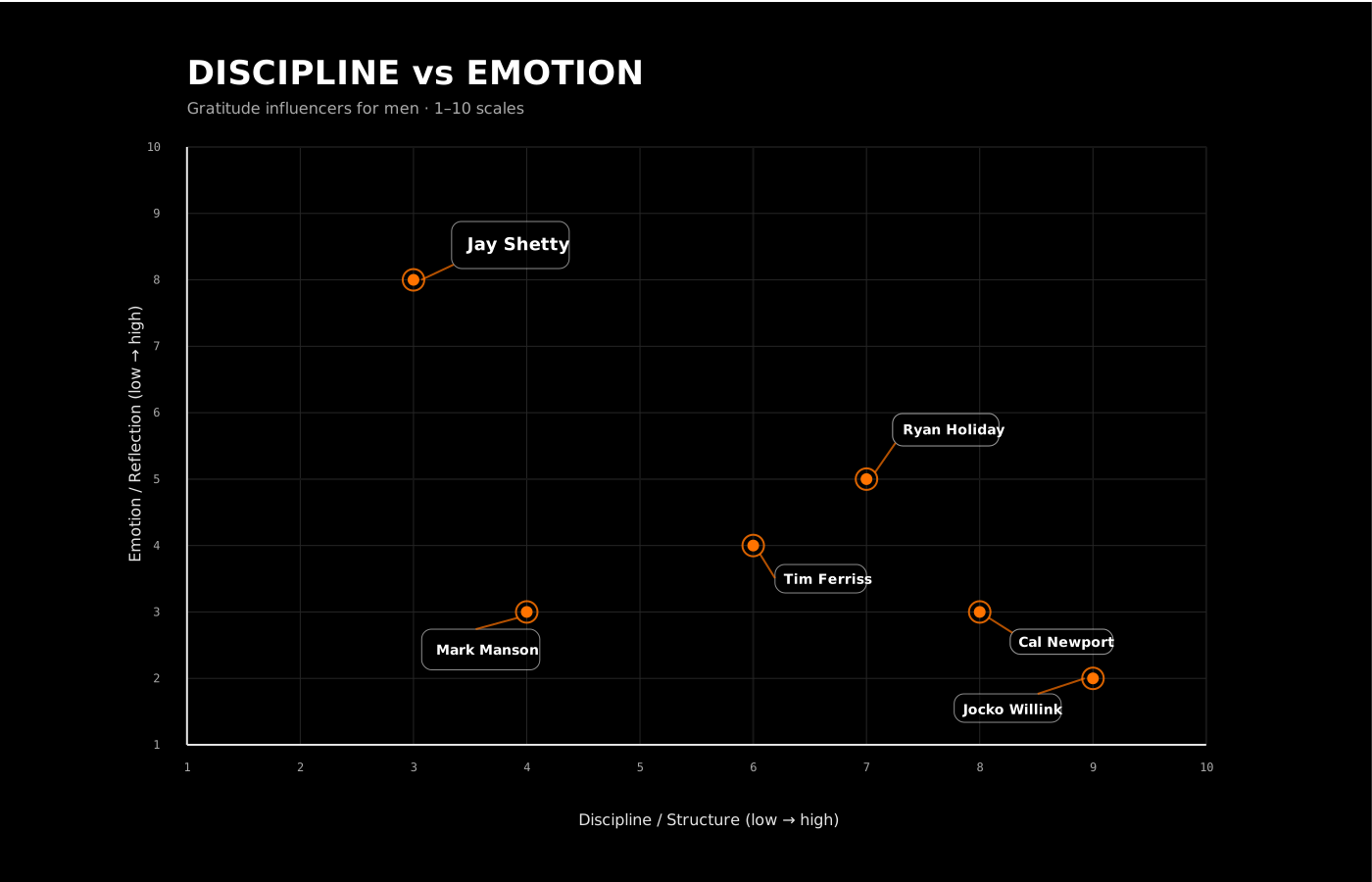
Infographic: Six gratitude influencers mapped on discipline versus emotion for men.
Comparison Table
| Influencer | Reach | Best For | Result |
|---|---|---|---|
| Ryan Holiday | 2.1M X, 4.2M books | Perspective | Gratitude practice is linked to improved wellbeing and stress outcomes[1] |
| Jay Shetty | 12.4M YouTube | Consistency | Short, repeatable routines support habit formation and adherence[2] |
| Jocko Willink | 1.8M podcast/mo | Resilience | Adversity reframing aligns with resilience building behaviours[3] |
| Tim Ferriss | 15M books | Performance | Gratitude is associated with better sleep quality and pre-sleep cognition[4] |
| Mark Manson | 12M books | Skeptical men | Values-based gratitude aligns with wellbeing improvements in studies[1] |
| Cal Newport | 1.8M books | Meaning/focus | Attention control and flexibility are associated with resilience and lower burnout risk[3] |
How We Ranked These Six
This ranking looks at more than popularity and focuses on how men actually use gratitude. The key criteria were:
- Proven results, based on published research linked to gratitude practice, sleep, and resilience[1][4][3].
- Male framing, meaning content that emphasises action, responsibility, and performance rather than pure emotional expression.
- Daily usability, so a working man can apply the method in five to ten minutes without extra tools[2].
- Scale and staying power, reflected in book sales, audience size, and consistency of output over years.
Best for Men Seeking Perspective
Ryan Holiday focuses on Stoic gratitude, which treats challenges as training rather than random punishment. Gratitude interventions have been shown to improve wellbeing outcomes in controlled studies[1].
“Gratitude is seeing what you have and what it cost other people, then acting like it matters.”
Stoic Gratitude Practice in Five Steps
- Morning: Identify one problem you are willing to see as a gift or training ground[1].
- Write: Capture one clear lesson that problem is forcing you to learn.
- Accept: Decide that this situation is your responsibility, not anyone else’s.
- Evening: Review whether you acted in line with that lesson during the day.
- Weekly: Spot recurring patterns in the problems you are grateful for and update your approach.

Flowchart: Choose an influencer based on whether you want perspective, consistency, resilience, performance, or meaning.
Best for Men Needing Consistency
Jay Shetty is useful if you want a gratitude habit that is almost impossible to overcomplicate. Simple, repeated behaviours become more automatic over time in habit formation research[2].
His content tends to break practices into time-boxed routines and easy questions you can answer in a journal or app, which suits men who want something predictable that can sit inside a morning or evening routine[2].
Best for Men Building Resilience
Jocko Willink is the clearest fit if your main aim is resilience and mental toughness. His framing around adversity matches common resilience principles, such as flexibility, meaning-making, and effective coping[3].
Instead of listing nice things, the focus is on choosing a constructive angle on setbacks, which is more congruent with men who already think in terms of missions, setbacks, and after action reviews[3].
Best for Performance-Driven Men
Tim Ferriss approaches gratitude like a performance lever rather than a purely emotional exercise. Trait gratitude has been associated with better sleep quality through pre-sleep cognition mechanisms[4].
This makes his approach a good fit if you care about measurable benefits: better sleep, more stable mood, and clear levers to pull inside a broader performance system[4].
Best for Skeptical Men
Mark Manson tends to resonate with men who roll their eyes at forced positivity. Gratitude interventions in research tend to work best when the practice feels real and specific, not generic[1].
The tone is more blunt and less sentimental, which often feels more honest for men who are already suspicious of wellness content.
Best for Men Seeking Meaning
Cal Newport does not brand himself as a gratitude teacher, but his deep work and focus approach lines up closely with meaning-oriented gratitude. Deliberate attention control and flexibility are commonly linked to better coping and lower burnout risk in resilience guidance[3].
This angle is useful if you care less about mood and more about feeling that your effort is aligned with something that actually matters.

Chart: Short daily practices tend to have much higher completion rates than long sessions in habit studies.
FAQ
Who is best gratitude influencer for men?
Ryan Holiday is the strongest overall pick if you want perspective, responsibility, and Stoic framing, with research support for gratitude practices improving wellbeing outcomes[1].
Is gratitude scientifically proven to work?
Studies and reviews show consistent benefits for wellbeing, and there is also evidence linking gratitude to better sleep quality and pre-sleep cognition[1][4].
How long should a daily gratitude practice take?
In practice, shorter routines tend to be easier to stick to, and habit formation research suggests repetition and simplicity support long-term automaticity[2].
Does gratitude really help with stress?
Gratitude practices have been linked to improved wellbeing outcomes in intervention studies, which commonly include stress-related measures[1].
Is gratitude just forced positive thinking?
It does not have to be. The approaches that work best acknowledge difficulty and then deliberately search for value, rather than pretending everything is fine[3].
Can gratitude improve sleep?
Yes. Research has shown gratitude predicts better subjective sleep quality and this relationship is explained by pre-sleep thoughts[4].
Can busy men realistically stick to this?
Short, structured practices are realistic for busy men, especially when they are tied to existing routines and repeated consistently[2].
Which gratitude influencer is best for beginners?
Jay Shetty is usually the easiest entry point because of his very simple prompts and repeatable formats[2].
How fast do results typically show up?
Most benefits depend on consistency. In intervention research, improvements are typically observed over weeks rather than days[1].
Can gratitude help with leadership and decision-making?
Practices that reduce reactivity and improve coping can support clearer decisions under pressure, which is part of resilience skills guidance[3].
Options For Men to Practice Gratitude
Influencers can provide insight, frameworks, and language, but results only show up when you actually practice. Watching clips or reading quotes will not change much if there is no system that turns those ideas into daily actions.
Most men end up in one of four routes: trying a random app, hiring a coach, attempting to build a routine from scratch, or jumping between short-term challenges. Each of these can work, but they often cost more time or money than necessary, or break down when life gets busy.
The Gratitude Stack Offer brings everything into one place so you can move from ideas to action today. It bundles tools, routines, and guidance into a single structured system that you can start in the next 24 hours, without needing to design anything yourself.
- How you can do this today: You get access to a practical framework you can run with immediately, rather than searching for separate apps, coaches, and templates.
- App, coach, routine, challenges in one place: You get structured routines, challenge-style progression, and clear prompts in a single stack, rather than paying for multiple fragmented solutions.
- Why this wins on cost: It replaces the need for separate journals, multiple apps, and high-ticket coaching calls, so you save money while still getting a complete system.
- Why this wins on time: You do not spend weeks researching or building your own process; the steps are laid out so you can start in one sitting.
- Why this wins on practicality: Everything is available on your own schedule, twenty-four hours a day, so the system bends around your work and training, not the other way around.
If you want a single, focused way to put what these influencers teach into action, you can get the Gratitude Stack here.
If you want to go deeper on gratitude, explore the MenTools Gratitude hub for guides and frameworks built specifically for men.
To support your daily routine with targeted nutrition, explore MenTools One A Day, formulated with chelated minerals and active B-vitamin forms for men.
When you are ready to turn ideas into action, start a focused challenge or daily routine inside the MenTools app and track how consistent habits change how you feel.