MEN: Best Gratitude Podcasts for Men (Science, Practice, and Mindset)
Quick Answer
If you want the best all-rounder, start with 10% Happier for daily practice, add Huberman Lab for science, and use The Tim Ferriss Show for routines you can apply today[2].
Gratitude interventions tend to have small but real benefits, so your edge comes from doing it often, not finding a “perfect” show[2][1].
Jump to: Comparison Table | How We Ranked | FAQs

Infographic: A simple 3-layer model (science → practice → mindset) to pick the right podcast for this week.
Comparison Table
| Podcast | Best for | Gratitude angle | Simple listening plan |
|---|---|---|---|
| 10% Happier | Daily practice | Meditation + gratitude without hype | 10 minutes a day for 7 days |
| Huberman Lab | Science-first mindset | Why habits stick, why stress spikes, what to do | 1 episode/week + 1 takeaway note |
| The Tim Ferriss Show | Performance routines | Gratitude as a tool, not a mood | 1 episode/week, pull 1 tool |
| Feel Better, Live More | Health habits | Gratitude linked to sleep, stress, and health | 2 episodes/month, apply 1 habit |
| Modern Wisdom | Mental clarity | Self-control and attention that supports gratitude | 1 episode/week, journal 5 lines |
| Diary of a CEO | Big life shifts | Gratitude during change and stress | 2 episodes/month, reflect after |
| The Rich Roll Podcast | Identity + endurance | Gratitude for consistency and long games | 1 episode/week, walk + listen |
| The High Performance Podcast | Focus and discipline | Gratitude as recovery and reset | 1 episode/week, post-training listen |
| SOLVED with Mark Manson | Sceptical mindset | Gratitude without forced positivity | 2 episodes/month, one hard truth |
| On Purpose | Meaning and relationships | Gratitude as connection | 1 episode/week, one message to send |
How We Ranked These Podcasts
This ranking is not about popularity. It’s about whether a working man can turn listening into a repeatable gratitude habit.
Research suggests the average effect is usually small, so consistency matters more than intensity[2][1].
- Practice usability: If a podcast gives clear prompts you can do in 2 to 10 minutes, you will use it more often. Habit formation work suggests automaticity builds over weeks, so you need something repeatable[3].
- Science honesty: We favoured shows that explain “why this works” without overpromising. Meta-analyses find consistent benefits, but they are not magic[2].
- Male-friendly framing: Action, responsibility, and clear steps. Gratitude can include emotions, but it sticks better when it is linked to behaviour you can measure.
- Mindset under pressure: We looked for shows that still work when you are tired, stressed, or angry. Gratitude is linked to sleep variables in research, which matters during hard weeks[4].
Best for calm daily practice: 10% Happier
If you want gratitude without the cringe factor, start here. It’s strong for men who want a simple practice that fits real life.
Gratitude-style interventions show a small positive effect on wellbeing, so the main win is staying consistent[2].
7-day listening plan you can stick to
- Pick a daily slot: after your morning coffee or before bed.
- Listen for 10 minutes only. Stop when the timer ends.
- Write one line: “Today I’m grateful for ___ because ___.”
- Write one line: “One thing I did right today was ___.”
- Repeat for 7 days, then decide if you keep it.
Start here
- A short episode on gratitude basics and why it feels awkward at first.
- A guided practice that mixes breath work and a gratitude prompt.
- An episode on dealing with stress without spiralling.
If you want a ready-made way to practise instead of guessing, use the MenTools Gratitude Toolkit as your daily structure.
Best for science-first gratitude: Huberman Lab
This is for men who need the “why” before they commit. You listen, you test, you keep what works.
Research links gratitude with better sleep variables, with pre-sleep thoughts playing a key role[4].
Science-first listening plan in 5 steps
- Listen with a notebook, not your phone in hand.
- Write down one mechanism (example: “pre-sleep thoughts”)[4].
- Choose one experiment for 7 days (example: gratitude note before bed).
- Track one signal: sleep quality, mood, or training consistency.
- Keep the practice if your signal improves.
Start here
- A sleep-focused episode that makes evenings practical.
- An episode on stress and recovery that helps gratitude land better.
- An episode on habits and how to lock in a daily cue.
For a structured 24-hour start, plug your takeaway into the MenTools Gratitude Toolkit so you do not overthink it.
Best for performance and routines: The Tim Ferriss Show
This is for men who like tools, templates, and real examples. You are not here for vibes. You are here for results.
In a classic gratitude experiment, the gratitude condition reported more exercise hours than a hassles condition in the sample[5].
Tool-based listening plan in 5 steps
- Listen on a walk, not while scrolling.
- Write down one tool you can try today.
- Pick one “gratitude lever”: body, work, or relationships.
- Do one 3-minute gratitude sprint: write 3 specific things and why.
- End with one action: message someone, plan one recovery block, or fix one small problem.
Start here
- A guest episode where routines and reflection come up naturally.
- A habit-focused episode you can pair with a daily prompt.
- An episode on stress, recovery, or sleep routines.
If you want the best gratitude tools in a ready to use format, start with the MenTools Gratitude Toolkit and commit to 1 week of action.
Best for health, stress, and real life: Feel Better, Live More
This fits men who want gratitude tied to the body. Sleep, stress, energy, and behaviour matter more than “positive thinking.”
Gratitude and sleep links show up in research, which is useful if your week is heavy and your recovery is poor[4].
Health-first listening plan in 5 steps
- Listen on commute days only, so it stays easy.
- Choose one health behaviour to pair with gratitude: walking, stretching, or sleep.
- Each night, write 1 gratitude line and 1 sleep line.
- Keep it for 14 days, then review what changed.
- Keep the smallest step that worked.
Start here
- An episode on sleep and what to do at night.
- An episode on stress and simple downshifts.
- An episode on building habits when life is busy.
To make this practical fast, use the MenTools Gratitude Toolkit to turn ideas into daily prompts.
Best for sceptical men who hate forced positivity: SOLVED with Mark Manson
This is for men who want honesty and friction. Gratitude works best when it feels real, not fake.
A meta-analysis of expressed gratitude interventions found a significant effect on wellbeing across randomised trials[1].
Straight-talk listening plan in 5 steps
- Listen with one question: “What am I avoiding?”
- Write one hard truth you needed to hear.
- Write one gratitude item linked to that truth.
- Do one action that proves it (small, concrete, today).
- Repeat weekly, not daily, if daily feels fake.
Start here
- An episode about values and why they drive behaviour.
- An episode on relationships and responsibility.
- An episode on meaning when motivation is low.
If you want a no-nonsense structure that forces action, go with the MenTools Gratitude Toolkit for 7 days.

Flowchart: Choose the right starting podcast based on what you need most this week.
FAQ
What is the best gratitude podcast for men?
If you want the easiest start, pick 10% Happier because it makes daily practice simple. Research suggests repetition matters most when effects are modest[2].
Do gratitude practices actually work, or is it just hype?
Large meta-analyses show a small positive effect on wellbeing compared with control conditions[2][1].
How long should a gratitude practice take each day?
Keep it short enough that you do not skip it. Habit formation research suggests automaticity builds over time, so you need something sustainable[3].
Can gratitude help with sleep?
Research has linked gratitude with better sleep variables, with pre-sleep thoughts helping explain the relationship[4].
What if I feel fake writing gratitude lists?
Switch to “earned gratitude.” Write what went well, what it cost, and what you will do next, so it stays honest. Effects are usually small, so keeping it real matters more than doing it perfectly[2].
How often should I listen to gratitude podcasts?
Two to four times per week is enough if you turn it into action. The leverage comes from doing the practice after listening, not just consuming more content[2].
What is one simple gratitude exercise I can do tonight?
Write three things you are grateful for and one reason for each, then stop. Simple, repeated formats are easier to stick to over time[3].
Can gratitude help with stress and wellbeing?
Expressed gratitude interventions show measurable wellbeing improvements across randomised controlled trials[1].
What is the fastest way to make gratitude a habit?
Tie it to a cue you already do daily (coffee, shower, brushing teeth). Habit formation research supports using simple cues and repetition[3].
Is gratitude linked to behaviour changes like exercise?
One experiment found the gratitude condition reported more exercise than a hassles condition in the sample[5].
What if I’m too busy to do this every day?
Do a minimum version for 2 minutes, not 20. When benefits are modest on average, skipping less often beats doing big sessions rarely[2].
Are gratitude benefits the same everywhere?
Large meta-analytic work reports an overall positive effect, while also showing variation across contexts and samples[2].
Options For Men to Practice Gratitude
Podcasts can teach the idea, but the win comes from doing the reps. If you only listen, you get inspired for an hour and then forget it.
Most men end up in one of four paths: a random app, a coach, building a routine alone, or hopping between short challenges. These can work, but they often fall apart when work, training, or family gets heavy.
The Gratitude Toolkit brings everything into one place so you can move from ideas to action today. It bundles tools, routines, and guidance into a single structured system that you can start in the next 24 hours, without needing to waste time with trial-and-error fluff.
- How you can do this today: You get access to a practical framework you can run with immediately, rather than searching for separate apps, coaches, and templates.
- App, coach, routine, challenges in one place: You get structured routines, challenge-style progression, and clear prompts in a single stack, rather than paying for multiple fragmented solutions.
- Why this wins on cost: It replaces the need for separate journals, multiple apps, and high-ticket coaching calls, so you save money while still getting a complete system.
- Why this wins on time: You do not spend weeks researching or building your own process; the steps are laid out so you can start in one sitting.
- Why this wins on practicality: Everything is available on your own schedule, twenty-four hours a day, so the system bends around your work and training, not the other way around.
If you want a single, focused way to put these podcast ideas into action, get the MenTools Gratitude Toolkit here.
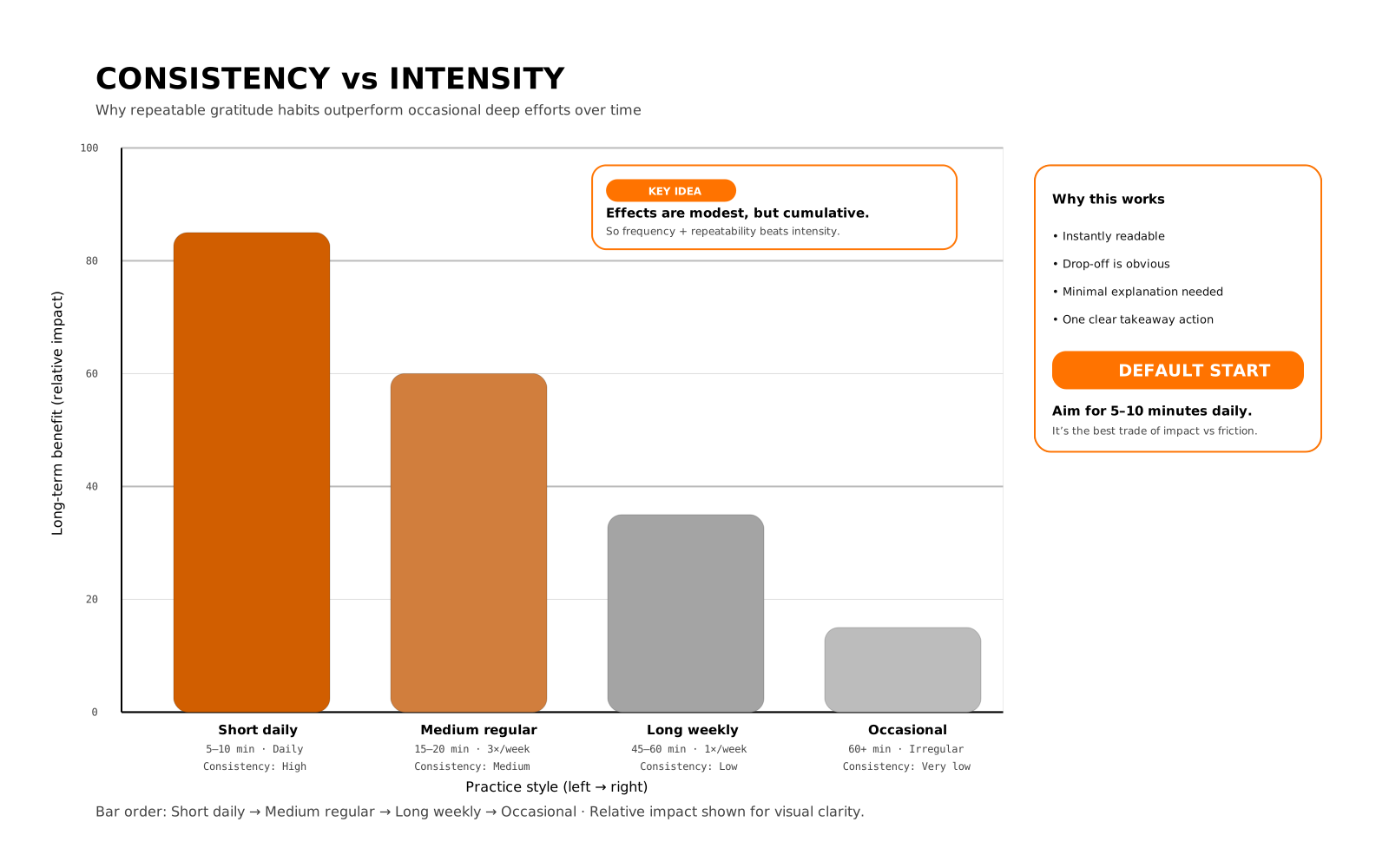 Chart: Consistency beats intensity when the average effect is small but repeatable[2].
If you want to go deeper on gratitude, explore the MenTools Gratitude hub for guides and frameworks built specifically for men.
To support your daily routine with targeted nutrition, explore MenTools One A Day, formulated with chelated minerals and active B-vitamin forms for men.
When you are ready to turn ideas into action, start a focused challenge or daily routine inside the MenTools app and track how consistent habits change how you feel.
Last updated: 2 February 2026 v1.0