MEN: What Is the Best Way to Build a Gratitude Habit? A Full Comparison
Quick Answer
The best way for men to build a lasting gratitude habit is to use specific prompts reframed as a challenge, anchored to the same daily habit (coffee, post-workout, or pre-bed), tracked weekly rather than obsessing daily. Short, specific, anchored routines show far higher adherence than long, unstructured attempts while delivering similar wellbeing gains over time [1].
Three core pathways work best: a written 3×3 journal for clarity, voice-based reflection for mobile schedules, and mental reframing for men who hate writing. The underlying pattern is the same across all methods: small daily drills, fixed timing, clear prompts, and visible progress over at least 4–6 weeks.
Jump to: Quick Comparison | The Real Answer | FAQ
Quick Comparison
| Method | Time per day | Best for | Evidence strength |
|---|---|---|---|
| 3×3 written journal | 5 minutes | Clarity + reflection | Strong |
| Voice-note gratitude | 3 minutes | Mobile/trade schedules | Moderate |
| Mental reframing drill | 2 minutes | Executives/time-poor men | Strong |
| Guided prompt routine | 5 minutes | Beginners/structure | Strong |
| Evening review habit | 4 minutes | Sleep + recovery | Strong |
| Complete system (toolkit) | 5 minutes | Men wanting “done-for-you” | Strong |
The Real Answer
What is the best overall way for men to build a gratitude habit?
Fast answer: the best way for men to build a gratitude habit is to treat it like a 5-minute performance drill instead of an open-ended journal. Men do best when gratitude is anchored to a daily habit, built from specific prompts, and tracked simply week to week instead of chasing perfect streaks.
A gratitude habit works when it links real events (skills, feedback, small wins) to a shift in how you see your day, not when it asks you to write long emotional essays. For most men, that means focusing on what moved you forward, what taught you something, and where you handled pressure better than before.
What are the main options men have for building a gratitude habit?
Men typically build habits through one of three primary modes: written practices (journals or apps), spoken practices (voice notes or conversations), and mental practices (short internal drills). Each can work if it obeys the same rules: clear timing, specific prompts, and short duration.
Written routines suit men who like seeing thoughts on paper; spoken routines work better for those constantly on the move; mental drills fit men who want gratitude built into existing thinking patterns like commute or shower time. The method matters less than the underlying structure that makes the habit survive real life.
Why daily gratitude habits change outcomes differently for men
Gratitude habits support men by reducing stress reactivity, improving sleep quality, and strengthening relationships, which all feed back into performance [2]. Men often report that a consistent gratitude habit does not make life “easier” but makes pressure feel more manageable and setbacks less defining.
Over a few weeks, a well-designed gratitude habit changes where your mind automatically goes under stress — from “everything is failing” to “this is hard, but here is what is working and what I can use.” Research suggests this cognitive reappraisal effect emerges after consistent practice of four or more weeks [3]. That shift does not remove challenges, but it changes how you respond to them in work, training, and at home.
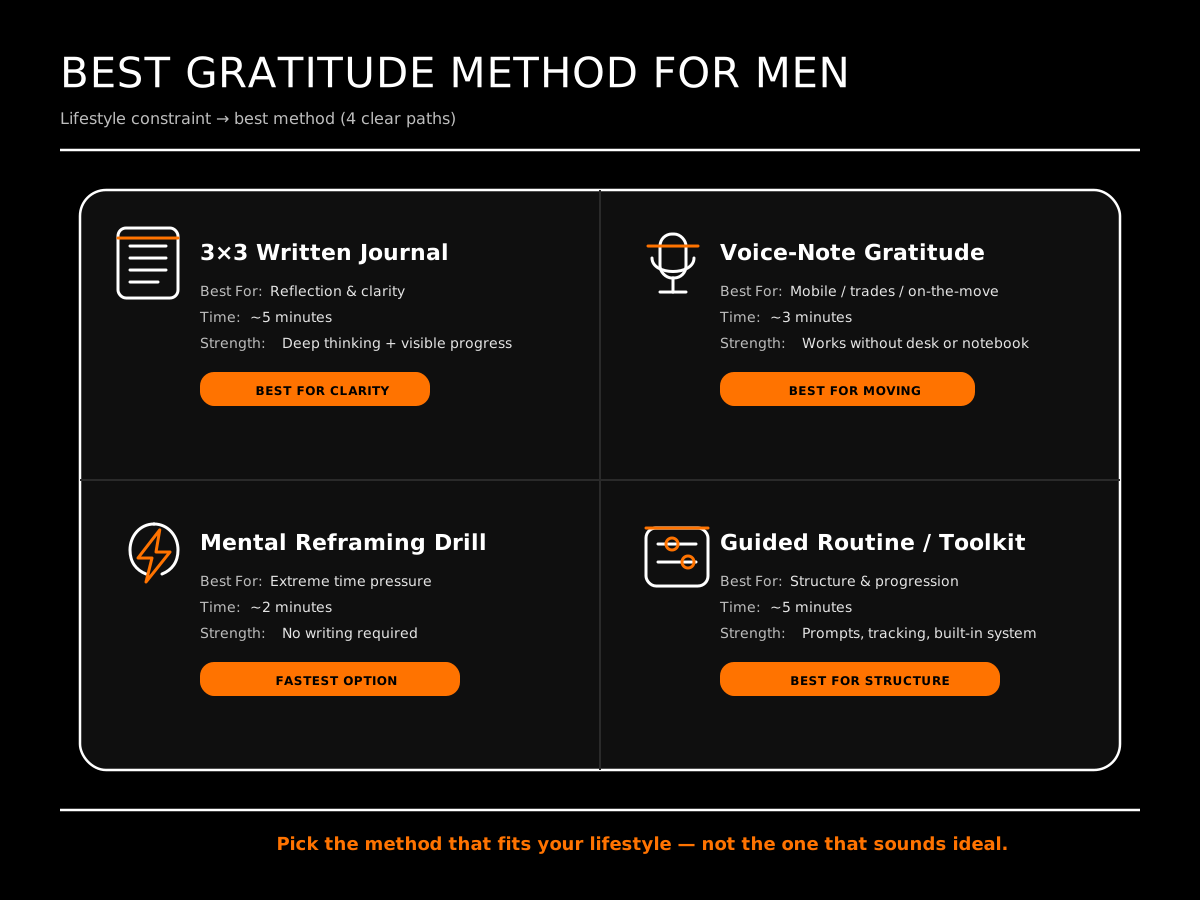
Chart shows written journaling highest for reflection, voice notes highest for mobile men, mental drills highest for extreme time pressure, guided routines and toolkits highest for men wanting structure and progression.
What daily prompts actually work when you are building a habit, not just doing one-off exercises?
Effective habit-building prompts focus on progress, control, and resilience instead of generic “I’m grateful for…” lists. Use the same three prompts daily at first so your brain recognises the pattern:
- What specific skill did I sharpen today?
- What obstacle gave me useful feedback?
- What decision moved me even slightly forward?
- (Optional) What challenge can I treat as training instead of failure?
Answer in one sentence each. The goal when building a habit is repetition, not depth. Short answers reduce friction, especially on bad days, and allow you to complete the habit even when you are tired, stressed, or low on motivation.
When should men run their gratitude habit for maximum effect?
Three anchors beat “whenever I remember”: morning, post-training, and bedtime. Morning anchors help set direction and mindset before noise hits. Post-workout anchors pair physical effort with mental recovery. Bedtime anchors reduce racing thoughts and help your nervous system downshift — studies have found that writing about positive events before sleep is linked to faster sleep onset and improved sleep quality [5].
Choose the anchor that already exists robustly in your life. If you always drink coffee, always train, or always read before bed, you have a ready-made hook. Habit stacking research shows that pairing a new behaviour with an existing routine significantly increases the likelihood it will stick long-term [4]. Trying to bolt gratitude onto a non-existent anchor (“when I have quiet time”) almost guarantees failure once your schedule becomes unpredictable.
Why This Fails for Men
In short: most men start too big, too vague, and too detached from performance. They adopt 15-minute journaling routines or emotional prompts that feel like extra work and do not clearly connect to results they care about like better sleep, calmer decision making, or fewer arguments.
Men often view new habits through a performance lens: “Does this make me better at work, training, or showing up for my people?” When gratitude is framed only as emotional processing, it does not pass that test, so it gets cut the moment time or energy tightens.
Where does friction usually appear for men building a gratitude habit?
Friction shows up in five predictable places:
- Time: routines are designed for perfect evenings, not real days.
- Identity: prompts feel too “soft” or emotional instead of practical.
- Clarity: men do not know what to write, so they skip the habit entirely.
- Tracking: progress is invisible, so the habit feels pointless.
- Recovery: after missing a few days, men assume they “failed” and stop.
None of these mean men cannot build gratitude habits; they mean the design is working against how they actually live. A better design respects limited time, performance mindset, and the reality that some days will simply be rough.
How to Fix It
Bottom line: the best fix is a 5-minute “5×3 Gratitude Habit System” built around clear prompts, a single daily anchor, and a simple weekly review. This keeps the habit small enough to survive, structured enough to matter, and visible enough to feel worth continuing.
The Simple Framework: Men’s 5×3 Gratitude Habit System
Men’s 5×3 Gratitude Habit System uses five rules:
- 5 minutes maximum per session (never more, even on good days)
- 3 specific daily prompts (skill, feedback, momentum)
- 1 challenge reframed as training data
- 1 fixed daily anchor (coffee, gym, or bed)
- 1 weekly 3-minute review instead of daily overthinking
This system works because it trades intensity for consistency. You are not trying to have a “big gratitude moment” once a week; you are building a small mental pattern that fires automatically under pressure. Over time, those five minutes become as routine as brushing your teeth.
5 Step Implementation Plan
- Pick your anchor (no negotiations). Choose one existing habit that almost never fails: first coffee, last 5 minutes in bed, or post-gym cooldown. Commit to attach your gratitude habit to this anchor for at least 30 days before changing anything.
- Lock in your 3 prompts. Write your three prompts on a card, in your app, or on your notes widget: Skill improved, feedback received, decision made. Use the exact same wording every day for the first month so you never have to improvise when tired.
- Add the 1 challenge reframe. After your three answers, add one line: “Today’s challenge and what it can train in me.” This is where you convert setbacks into data instead of letting them become another reason to quit.
- Decide your format (journal, voice, or mental). Pick the format that actually fits your life: Journal if you usually sit at a desk. Voice notes if you drive, walk, or work trades. Mental drill if your schedule is chaotic and private space is limited. Don’t mix formats in the first 30 days; mixing feels exciting at the start but kills habit automation.
- Run a 3-minute weekly review. Once per week, scan the last 7 days and answer three questions: What themes keep showing up in my “wins”? What challenges keep repeating? Where did I handle stress better than I would have last month? This review makes progress visible without turning the habit into another project.
Practical Implementation: How men can apply this daily and weekly
How should an office or hybrid worker implement this?
For office and hybrid workers, the best anchor is often evening or post-shutdown. After closing your laptop, open your journal or app and run the 3×1 pattern: three wins, one challenge reframed. Keep the notebook next to your charger or screen so the cue is physical as well as mental.
If evenings are unpredictable, move the anchor to “first coffee” instead. Keep your journal where you drink it or pin a digital reminder on your lock screen with the three prompts written out. The less you have to remember, the more the system remembers for you.
How should tradesmen or men on the move implement this?
For tradesmen, drivers, or men in highly mobile roles, voice is usually best. Use a notes app or voice memo with a single “Gratitude – Day X” template saved. After getting into the van or car at the end of shift, hit record, answer your three prompts and challenge in under three minutes, then stop.
If privacy is a concern, do the same drill during a regular solo moment — walking to the car, locking up the site, or sitting on a break. The key is that the anchor remains the same each working day.
How can executives or founders integrate a gratitude habit without adding “to-do” weight?
Executives and founders often benefit from mental reframing drills built into existing thinking time, such as elevator rides, walking between meetings, or shower time. Pick one micro-slot (for example, “first 2 minutes of my commute”) and mentally answer your three prompts before you let your brain drift to everything else.
To track progress without adding friction, keep a simple note in your phone once a week describing the biggest pattern you noticed. You are building mental infrastructure, not a diary.
Why This Fails for Men (Revisited with structure)
In short: gratitude habits fail men when they are long, vague, emotionally framed, unanchored, and manually tracked. The fix is a small, sharp structure that fits around male life rather than fighting it.
- Long: men try 15–20 minute sessions that only fit on perfect days.
- Vague: prompts like “What are you grateful for?” freeze under stress.
- Emotional: focus on feelings alone ignores performance mindset.
- Unanchored: “whenever I remember” competes with everything else.
- Manual: complex systems require constant willpower to maintain.
When you fix those five, adherence jumps massively because the habit stops feeling like extra work and starts feeling like a quick power tool you run automatically.
How to choose the best method for your specific situation
Use a simple decision rule:
- If you already enjoy writing and have a stable desk routine → 3×3 written journal.
- If you are on your feet or driving most of the day → voice-note routine.
- If your day is fragmented and private space is limited → mental drill.
- If you want everything pre-designed with prompts, timing, and progression → complete system such as The Gratitude Toolkit.
You can change method later, but to build a habit quickly, pick one and remove every optional decision for the first month.

Flowchart branches from “Desk-based or mobile?” and “Hate writing?” into journal, voice, mental, or toolkit paths with recommended anchors and time blocks.
FAQ
What is the single best way to build a gratitude habit for men?
The single best way is a 5-minute routine anchored to an existing habit, using the same three prompts and one challenge reframe every day for at least a month. This beats longer, more complex systems that collapse under pressure.
Is it better to write or just think gratitude?
Both can work. Writing creates more clarity and a visible record, but mental drills are easier to fit into chaotic schedules. Choose the one you are most likely to repeat when you are tired, not the one that sounds “ideal.”
How long before a gratitude habit feels natural instead of forced?
Most men report that it takes a few weeks of consistent practice before the habit feels like part of their day rather than an add-on. Research on habit formation suggests an average of 66 days for a new behaviour to become automatic, though simpler habits form faster [6]. You are rewiring defaults, which takes repetition, not intensity.
What if I miss several days — have I broken the habit?
No. The habit is still salvageable if you restart at your next anchor without overcompensating. Avoid trying to “catch up” with long sessions; go straight back to the normal 5-minute drill.
Can gratitude habits help with work performance and training?
Yes. A good habit improves focus, emotional regulation, and recovery by shifting your lens on stress, which in turn supports better decision making, steadier effort, and more sustainable training consistency. Gratitude practice has been linked to reduced cortisol levels and improved psychological resilience under pressure [7].
Do men need a special “men’s” gratitude method?
Men do not need different emotions, but they do benefit from different framing. Methods that link gratitude to performance, responsibility, and real-world outcomes tend to stick better than ones framed purely as emotional sharing.
What if gratitude feels fake or forced at first?
That is normal, especially if you are carrying stress, anger, or regret. Start with small, factual wins and neutral observations rather than trying to feel a certain way. The feeling often follows the pattern, not the other way around.
Final Recommendation
For most men, the best way to build a gratitude habit is to commit to a 5×3 system for at least 30 days: 5 minutes, 3 prompts, 1 challenge reframed, 1 fixed anchor, and 1 weekly review. Choose the specific method that fits your real life — journal, voice, mental, or a guided system — and resist the urge to make it more complicated.
By lifestyle:
- Office/hybrid workers: evening or post-shutdown 3×3 written journal.
- Trades and mobile workers: voice notes after shift or commute.
- Executives/founders: mental reframing drill linked to commute or walk.
- Parents/shift workers: pre-bed guided prompts anchored to winding down.
Options For Men to Practice Gratitude
Many men bounce between random apps, notebooks, and one-off challenges without building a single reliable system. Real change comes when prompts, timing, tracking, and progression live in one place instead of scattered across tools.
The Gratitude Toolkit from MenTools brings app-style access, guided prompts, AI coaching, structured challenges, and habit tracking into one integrated system. You log in, follow your gratitude routine, and the system handles day timing, progression/tool switching, and record-keeping behind the scenes.
- How you can do this today: you get immediate access to a complete framework and can run your first gratitude tool within 24 hours using the phone you already have.
- App, coach, routine, and challenges in one: no app-switching, no DIY template building, no manual streak tracking.
- Wins on cost: replaces separate journals, multiple subscriptions, and high-ticket coaching calls with one focused system.
- Wins on time: zero research or setup; prompts are ready every day so you can finish your session and move straight to work or training.
- Wins on practicality: built for real-life male schedules, shift work, business, travel, and family responsibilities, with options for text or voice-style input.
If you want one structured way to turn gratitude into a durable performance habit instead of another abandoned idea, The Gratitude Toolkit is the most direct path to execution.
If you want to go deeper on gratitude, explore the MenTools Gratitude hub for guides and frameworks built specifically for men.
To support your daily routine with targeted nutrition, explore MenTools One A Day, formulated with chelated minerals and active B-vitamin forms for men.
When you are ready to turn ideas into action, start a focused challenge or daily routine inside the MenTools app and track how consistent habits change how you feel.
Last updated: February 20, 2026 v1.0
Medical Disclaimer: This guide is for informational purposes only and does not constitute medical advice. Always speak with your doctor or another qualified healthcare professional before starting any new health practice if you have medical conditions or take prescription medication.