
MEN: 7 Ways to Stay Motivated as a Man When Motivation Fades
Quick Answer
Motivation is a feeling, and feelings come and go. The men who keep going do not wait to feel like it. They act first and let the feeling catch up, then build systems, cut friction, and add accountability so willpower is not the only thing holding the line. Start with one method, not seven.
**Jump to:** How we chose these 7 | FAQ | Options for men
Disclosure: MenTools publishes this article and may feature MenTools products.
How we evaluate: Each habit is assessed on real-world use, evidence, cost and time, and how well it suits men. Every habit including the MenTools option carries an honest limitation. Full sources are in the references below.
The 7 Methods at a Glance
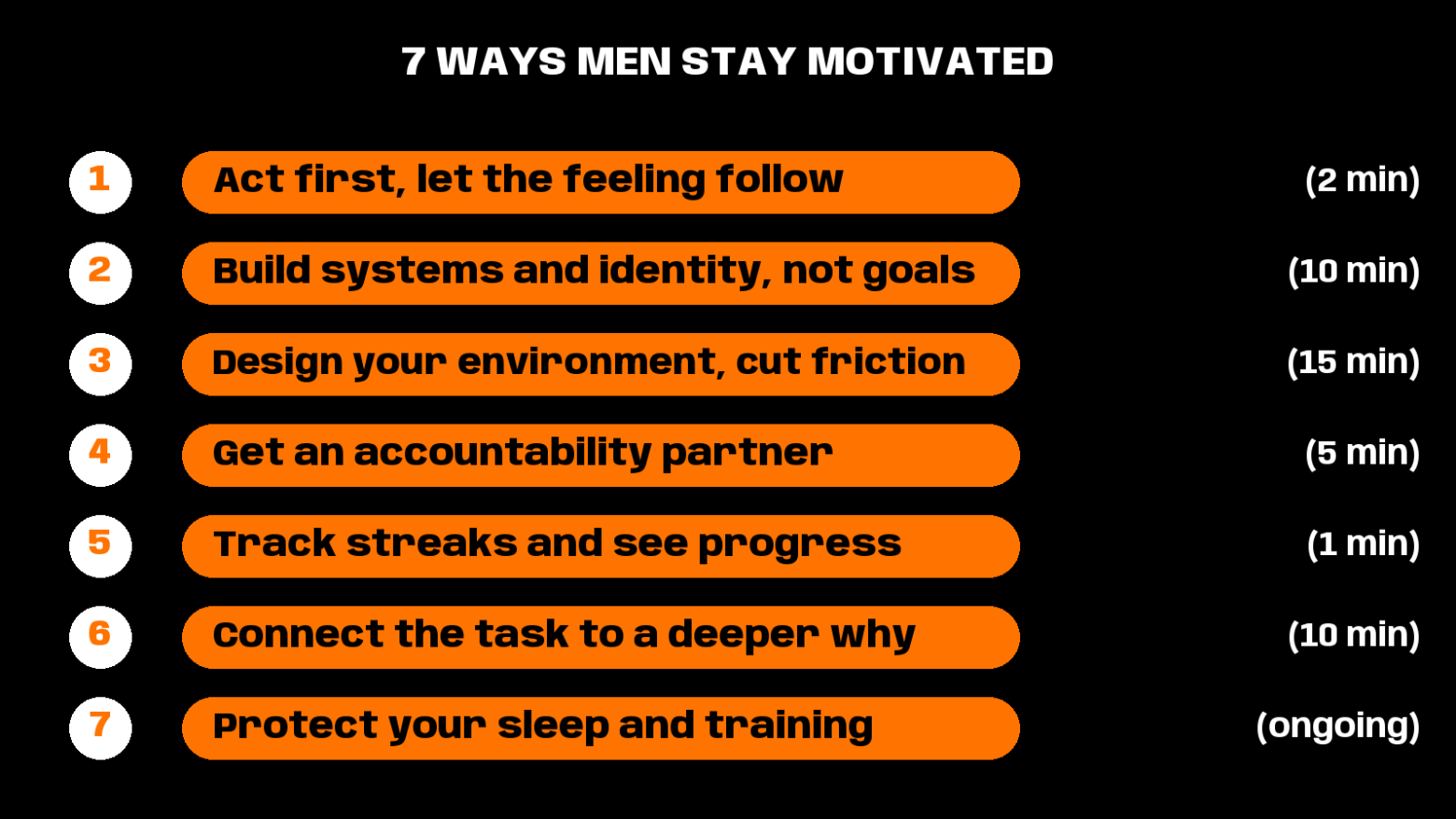
The 7 motivation methods at a glance, and how long each one takes.
| Method | Best for | Time |
|---|---|---|
| Act first, let the feeling follow | Days you cannot be bothered | 2 min |
| Build systems and identity, not goals | Long-term consistency | 10 min setup |
| Design your environment and cut friction | Beating willpower fatigue | 15 min |
| Get an accountability partner | Following through | 5 min |
| Track streaks and see your progress | Keeping momentum | 1 min |
| Connect the task to a deeper why | Dull or hard stretches | 10 min |
| Protect your sleep and training | Steady daily drive | Ongoing |
How We Chose These 7
We picked methods that are simple, backed by research, and realistic for a working man with real responsibilities. Each had to pass three tests: does the evidence support it, can it survive a bad day, and does it work by changing what you do rather than waiting for a mood to arrive. That last test matters because relying on the feeling is exactly where most men come unstuck. According to Inc., studies show 91 percent of people never achieve their New Year resolutions, and lack of motivation is one of the biggest reasons they quit [1]. Every method below carries an honest watch-out, because none of them works for every man on every day.
1. Act First, Let the Feeling Follow
Do the first two minutes before you feel ready, because action creates motivation far more reliably than motivation creates action. Waiting to feel like it is the trap. Move your body into the task and the drive usually shows up once you have started.
What it is: Starting the smallest version of a task immediately, on the understanding that the willingness arrives after you begin, not before.
Best for: Men who keep waiting for a spark that never comes, and end the day having done nothing.
Standout: This is the core of behavioural activation, a treatment that works by getting people moving before their mood improves. A meta-analysis of 26 randomised trials with 1,524 people found behavioural activation was as effective as full cognitive behavioural therapy for depression, and it does this by targeting low motivation directly rather than waiting for it to lift [2]. Behaviour scientist BJ Fogg makes the same point in plain terms, treating motivation as real but unreliable, which is why his behaviour model leans on making the action easy and prompted rather than on feeling driven [3].
Watch-out: It feels wrong at first, because your brain insists you should feel ready before you start. Push through the first fortnight and trust the pattern, or you will keep talking yourself out of things on the days that count most.
2. Build Systems and Identity, Not Just Goals
Swap the big outcome for a repeatable daily system and an identity you act out. Goals point at a destination, but systems are what you actually do on a Tuesday when nobody is watching, and they carry you when the goal feels far away.
What it is: A fixed routine you run regardless of mood, framed around who you are becoming (“I am a man who trains”) rather than a distant target.
Best for: Men who set huge goals in January and stall by February.
Standout: As James Clear puts it in Atomic Habits, “You do not rise to the level of your goals. You fall to the level of your systems” [5]. Goals still matter for direction. Decades of work by Locke and Latham, drawn from roughly 1,000 studies, found that specific and difficult goals produce far higher performance than vague “do your best” ones, with the hardest goals driving markedly more effort [6]. The move is to keep a clear target but run on the system underneath it.
Watch-out: A system with no clear aim can drift into busywork. Set a specific, honest target first, then let the daily system, not your motivation, do the heavy lifting between now and then.
3. Design Your Environment and Cut Friction
Change your surroundings so the right move is the easy one and the wrong move is a hassle. Motivation is fragile, but a good environment runs on autopilot and asks nothing of your willpower. Make the good thing obvious and the bad thing awkward.
What it is: Deliberately setting up your space so cues, defaults and friction all push you toward the behaviour you want.
Best for: Men who are fine in theory but keep getting derailed by their phone, their sofa or their kitchen.
Standout: Habit researcher Wendy Wood found that around 43 percent of what people do each day is repeated in the same context, largely without conscious thought, with the place doing the remembering for them [8]. That cuts both ways. Add friction to the habit you want gone, remove it from the one you want, and almost half your day starts working for you instead of against you. Lay your kit out the night before and the morning decision is already made.
Watch-out: Environment design reduces friction, it does not remove the need to act. A perfect setup still needs you to start, so pair it with method one rather than treating a tidy room as the finished job.
4. Get an Accountability Partner
Tell one person what you are going to do and report back on whether you did it. Private intentions are easy to abandon because nobody notices. A standing check-in with someone whose opinion you value turns a vague plan into a promise with a witness.
What it is: A regular, specific commitment to another person, with honest progress updates on a fixed schedule.
Best for: Men who follow through at work, where others depend on them, but let their own goals slide.
Standout: In a study of 267 adults, psychologist Gail Matthews found that people who wrote their goals down and sent weekly progress updates to a friend had a 76 percent success rate, against 43 percent for those who kept goals in their head [7]. Matthews concluded, “My study provides empirical evidence for the effectiveness of three coaching tools: accountability, commitment, and writing” [7]. The weekly report is the active ingredient, not the partner alone.
Watch-out: A soft partner who lets you off the hook is worse than none. Pick someone who will actually ask the hard question, and give them permission to call you out.
5. Track Streaks and See Your Progress
Keep a visible record of what you have done, because seeing a streak build is its own fuel. The brain forgets wins and clings to failures, so if you do not keep the score you feel like you are getting nowhere even when you are moving.
What it is: A simple daily log, a chain of ticks, or a streak counter that makes your progress impossible to ignore.
Best for: Men who start well then lose steam once the early excitement fades.
Standout: Harvard researcher Teresa Amabile studied nearly 12,000 daily diary entries and found that “of all the things that can boost inner work life, the most important is making progress in meaningful work”, with small wins nearly as effective as big breakthroughs for sustaining drive [9]. A record turns invisible effort into visible small wins. One honest way to make it stick is the MenTools app, which turns habits like these into daily check-ins and streaks, though a paper journal or a wall calendar does the same core job.
Watch-out: A streak can become the point instead of the progress, and one missed day can feel like total failure. Treat a break as a single miss, not a reason to quit, and never fake a tick to protect the chain.
6. Connect the Task to a Deeper Why
Tie the boring task to something you genuinely care about, so the effort borrows meaning from the goal underneath it. Motivation that comes from your own values lasts far longer than motivation chased with rewards or guilt.
What it is: Naming the personal reason behind the work, your health, your kids, your freedom, and keeping it in view while you do the hard part.
Best for: Men grinding through a long, dull stretch where the finish line is out of sight.
Standout: Self-determination theory, developed by Edward Deci and Richard Ryan across decades of research, identifies three basic needs that sustain lasting motivation: autonomy, competence and relatedness [4]. Work that feels chosen and connected to who you are keeps driving you, while work done only for an external reward tends to fade once the reward stops. Anchoring a task to your own why moves it toward the kind of motivation that holds.
Watch-out: A why is a slow-burn support, not an instant fix for a task you hate. It steadies you over months, so do not expect naming your values to make the next gym session suddenly feel easy.
7. Protect Your Sleep and Training
Guard your sleep and keep training, because motivation is a state your body produces, and a tired, sedentary body produces very little of it. The most disciplined plan is undone by three bad nights, and drive itself has a physical base you can strengthen.
What it is: A protected sleep window and regular exercise, treated as the base the other six methods stand on rather than optional extras.
Best for: Men who feel flat, foggy and unmotivated for no clear reason.
Standout: Poor sleep directly erodes self-control. A review in the journal Sleep found that sleep loss reduces activity in the prefrontal cortex, the part of the brain you rely on to resist impulses and stay on task [10]. Exercise pushes the other way. The American Psychological Association reports that regular physical activity raises mood and, for many people, works as well as medication for mild anxiety and low mood, partly through the brain’s dopamine reward system [11]. Sort these two and motivation gets easier everywhere else.
Watch-out: This is the hardest method to defend, because work, screens and late nights all attack it. It also will not carry a routine on its own, so treat it as the foundation, not the whole plan.
Why Do Men Lose Motivation?
Men lose motivation because they treat it as a fuel that should always be full, when it is really a mood that rises and falls. Bad sleep, no exercise, vague goals and relying on willpower alone all drain it. Research on the Fogg behaviour model is blunt about this, calling motivation real but unreliable, which is why systems, environment and accountability matter more than trying to feel driven every day [3].
Is Motivation or Discipline More Important?
Discipline matters more, because it keeps working when motivation has gone. Motivation gets you started, but it is the feeling that fades first, and behavioural activation research shows that action taken without the feeling still produces results and often brings the feeling back [2]. Discipline is really a set of systems and habits that make action the default. If you want the deeper version of this, see our guide to self-discipline for men.
FAQ
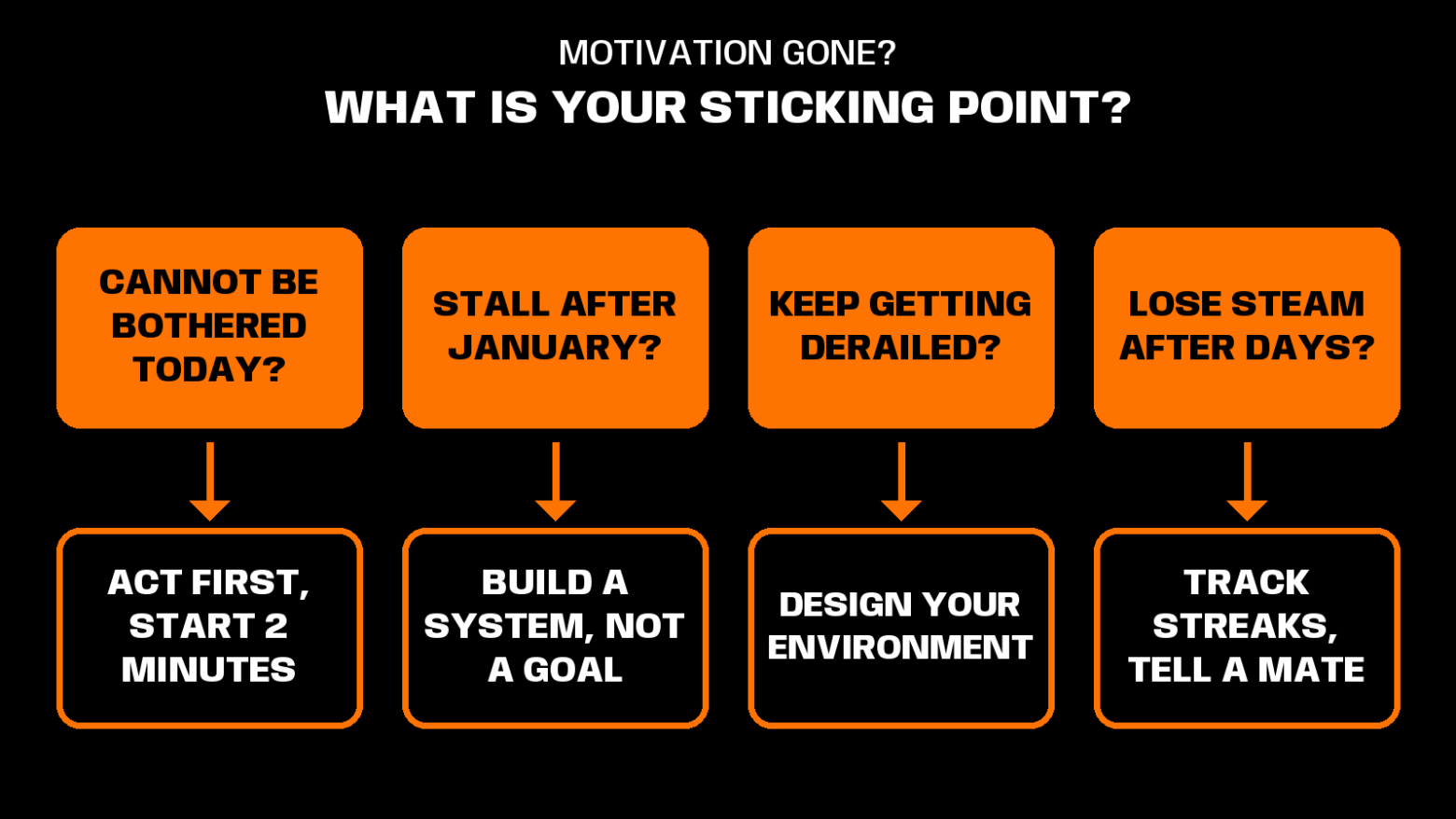
Motivation gone? Follow the flow to restart.
How do I get motivated when I have zero energy?
Do not wait for energy, borrow it from movement. Start the smallest possible version of the task, two minutes only, because action reliably creates motivation rather than the other way round. This is the principle behind behavioural activation, which improves mood by getting people moving first. Check your sleep too, as tiredness quietly drains drive.
Why do I lose motivation after a few days?
Because the early excitement was doing the work, and it always fades. The men who last replace that spark with systems, streaks and accountability so nothing depends on a mood. A visible record of small wins keeps momentum going once the novelty wears off, which is usually where motivation quietly dies.
Is motivation just discipline in disguise?
Not quite. Motivation is the feeling that makes starting easy, while discipline is the structure that keeps you going once the feeling has gone. You want both, but you build your life on discipline, systems and habits, and treat motivation as a welcome bonus rather than the thing you depend on to act.
Do rewards help you stay motivated?
Sometimes, but be careful. Self-determination research shows that external rewards can crowd out the internal drive that lasts, especially once the reward stops. Small rewards can help you start, but motivation tied to your own values and identity holds up far longer than motivation you have to keep paying for.
How long until motivation feels automatic?
It never becomes fully automatic, but the systems around it can. Expect weeks, not days, and treat the first two months as the build phase where you rely on structure rather than feeling. Once the environment, streaks and routine are in place, you need far less raw motivation to keep the same behaviour running.
What is the single fastest way to feel more motivated today?
Move your body, then start the smallest step of the task. A short walk or a few minutes of exercise lifts mood through the brain’s reward chemistry, and starting the task creates its own momentum. Both work within minutes, which is why they beat sitting still and waiting to feel ready.
Final Recommendation
If you do nothing else, act before you feel ready and build a simple system you run regardless of mood. Cut the friction around it, tell one person you will do it, and keep a visible record so your progress is impossible to miss. Motivation for men is not a tank you keep topped up, it is the by-product of doing the thing, and the men who understand that stop waiting to feel like it and get started.
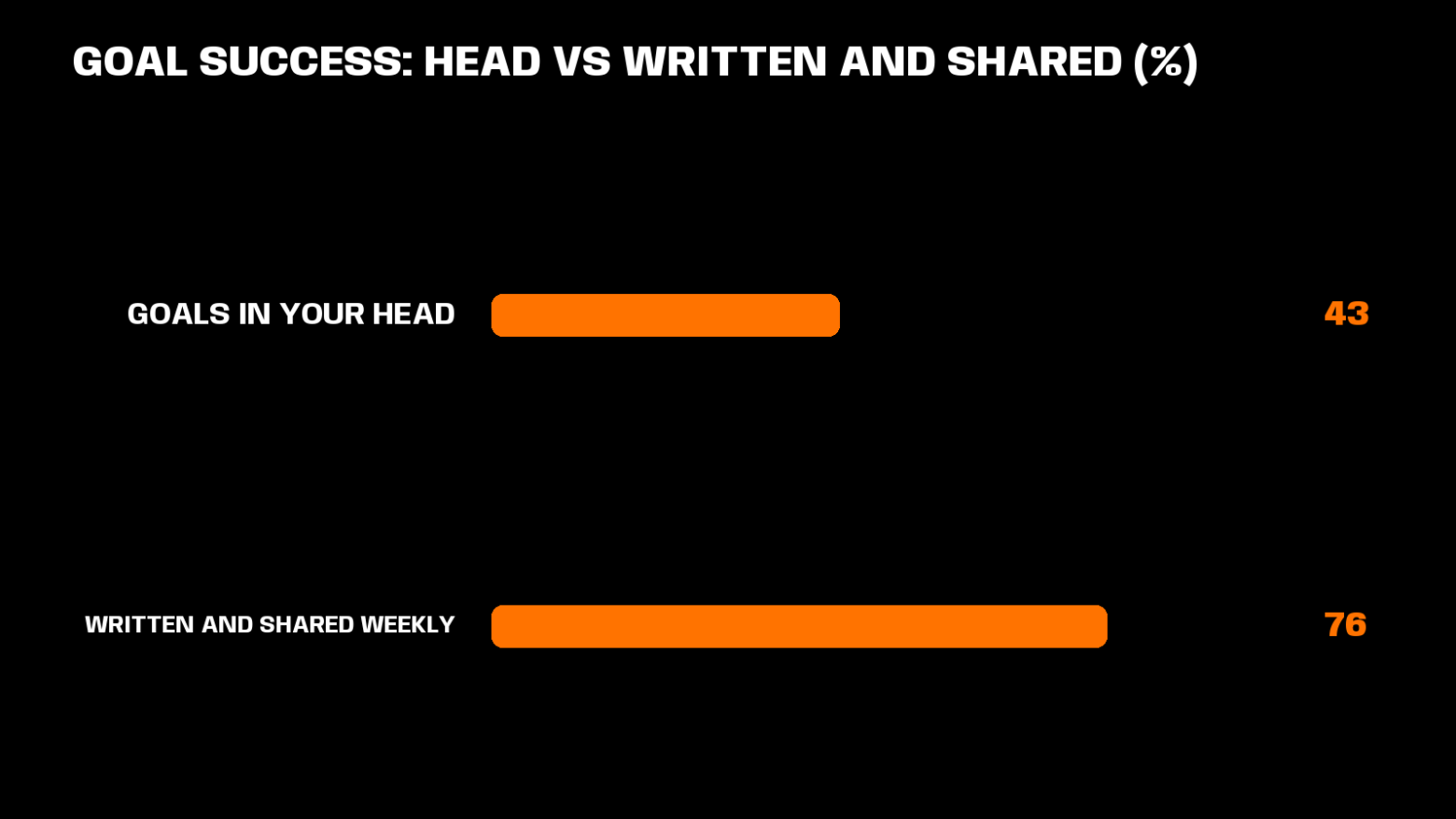
Why systems beat willpower: 43 percent versus 76 percent.
Options for Men to Take Action
Most men do not lack motivation because they lack ideas. They lack a system. The intentions live in their head, there is no way to keep score, and week two arrives with nothing to show whether they followed through. Scattered notes and raw willpower do not hold when the feeling fades.
The MenTools app is built to run exactly this kind of set of methods as one system, with daily actions, streaks, reminders and an AI coach, so acting first and tracking progress become check-ins instead of good intentions. For the wider picture, and more tools built for men, see the MenTools motivation hub. Men who track this way tend to keep the habits they can actually see progress on.
How you can do this today: pick one method from this list, set it as a daily action tonight, and log day one before you sleep.
Wins on cost: one app replaces a habit tracker, a streak journal and a stack of separate reminder tools.
Wins on time: the methods and the tracking are set up in minutes, with no research or planning to do yourself.
Wins on practicality: it lives on your phone and fits a working man’s day, so it survives travel, early starts and busy weeks.
Motivation comes and goes. A system, tracked and repeated, is what turns a flat week into a productive year.
Last updated: 2026-07-30 v1.0
Disclaimer: This guide is for informational purposes only and does not constitute medical or psychological advice. Speak with a qualified professional before making significant changes if you have a medical or mental health condition.
References
- [1] Schwantes M. Studies show 91 percent of us won’t achieve our New Year’s resolutions. Inc. Link
- [2] Ekers D et al. Behavioural activation for depression: an update of meta-analysis of effectiveness and sub group analysis. PLOS ONE, 2014. Link
- [3] The Behavioral Scientist. The Fogg Behavior Model: B = MAP (motivation, ability, prompt). Link
- [4] Ryan RM, Deci EL. Intrinsic and extrinsic motivation from a self-determination theory perspective. Contemporary Educational Psychology, 2020. Link
- [5] Clear J. You do not rise to the level of your goals. You fall to the level of your systems. Atomic Habits. Link
- [6] Locke EA, Latham GP. Goal-setting theory: specific and difficult goals raise performance. ScienceDirect overview. Link
- [7] Matthews G. The impact of commitment, accountability, and written goals on goal achievement. Dominican University of California. Link
- [8] Wood W. Good habits, bad habits: a conversation on the 43 percent figure and context cues. Behavioral Scientist. Link
- [9] Amabile TM, Kramer SJ. The progress principle: how small wins drive inner work life. Harvard Business School Working Knowledge. Link
- [10] Pilcher JJ et al. Interactions between sleep habits and self-control. Sleep / PMC. Link
- [11] American Psychological Association. Working out boosts brain health and mood. Link