MEN: What Is Porn Addiction? Signs, Causes, and Recovery Options for Men (2026 Guide)
Quick Answer
Porn addiction in men is a pattern of compulsive pornography use that interferes with daily life, relationships, and mental health. If use feels out of control, causes distress, or replaces real intimacy, structured help is available and it works.
Disclosure: MenTools publishes this article and may feature MenTools products.
How we evaluate: Products are assessed on nutrient form quality, dose vs NRV, authorised health claims, male-specific design, and independent research. Full sources are listed in the references below.
Quick Comparison
| Recovery Option | Cost (approx.) | Format | Evidence Level | Time Commitment | Best For |
|---|---|---|---|---|---|
| Cognitive Behavioural Therapy (CBT) | £60–£150/session | 1:1 in-person or online | High [1] | 8–20 sessions | Men with co-occurring anxiety or depression |
| Sex Addiction Therapy (CSAT) | £80–£180/session | 1:1 specialist | Moderate | 12–24 sessions | Men with relationship damage |
| 12-Step Groups (SA, SAA) | Free | Group, in-person or online | Moderate [2] | Ongoing | Men who need peer accountability |
| Mindfulness-Based Therapy | £50–£120/session | 1:1 or group | Moderate [3] | 8–12 weeks | Men wanting urge management tools |
| MenTools Quit Porn Toolkit | Low cost | App-based, self-directed | Structured system | Daily, 3–30 min | Men who want a daily system without therapy |
| Self-Directed (books only) | £0–£30 | Solo | Low–Moderate | Flexible | Men with mild patterns and high motivation |
| Couples Therapy | £80–£160/session | 1:1 with partner | Moderate | 6–20 sessions | Men whose use has damaged their relationship |
| Medication (adjunct only) | Varies | GP/psychiatrist | Low for addiction alone [4] | Ongoing review | Men with severe compulsivity or co-morbid OCD |
The Real Answer
What exactly is porn addiction?
Porn addiction in men is not yet a formally recognised diagnosis in the DSM-5, though compulsive sexual behaviour disorder appears in the ICD-11 [5]. Clinicians use it to describe a pattern where a man feels unable to control pornography use despite negative consequences. The core issue is loss of control, not volume of use.
Is porn addiction real or just a moral panic?
The debate is genuine among researchers. Some studies show neurological changes in heavy users consistent with other behavioural addictions [6]. Others argue that distress is driven more by moral conflict than clinical disorder [7]. What matters practically is whether use is causing real harm, regardless of what label is applied.
What does compulsive porn use do to the brain?
Repeated exposure to high-stimulation pornography may alter dopamine pathways in ways that reduce sensitivity to everyday reward [6]. This can make real-world intimacy feel less satisfying and increase tolerance over time. These changes are not permanent and can reverse with sustained abstinence and structured behavioural work.
How common is problematic porn use in men?
Studies estimate that between 3% and 6% of the general population show signs of compulsive sexual behaviour, with men significantly over-represented [8]. Among men seeking help, relationship problems and erectile dysfunction in the absence of organic cause are the most commonly reported consequences.
When does regular use become a problem?
Use becomes problematic when a man spends significant time seeking, using, or recovering from pornography. It is also a problem when it replaces sex with a partner, causes shame or secrecy, disrupts mood, or when attempts to stop repeatedly fail. Frequency alone is not the deciding factor.
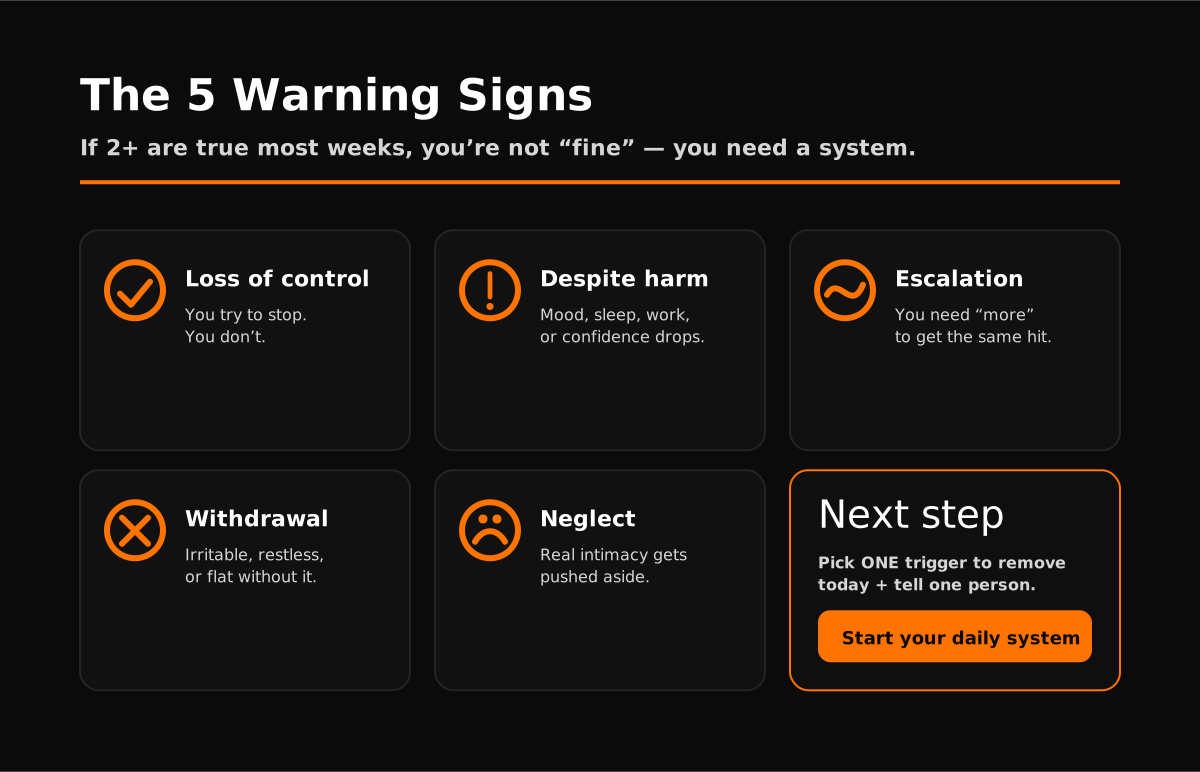
Visual 1 — Infographic: The 5 Warning Signs of Porn Addiction in Men. Shows five illustrated icons representing loss of control over use, continued use despite negative consequences, escalation to more extreme content, withdrawal or irritability when not using, and neglect of real relationships.
Why This Fails
Most men who try to stop compulsive porn use on willpower alone relapse within days. Here is why standard self-help approaches underperform.
No root cause work. Porn often functions as a coping mechanism for stress, loneliness, anxiety, or low self-worth [9]. Removing it without addressing the underlying driver leaves a gap that produces intense cravings.
Shame loops make it worse. Excessive shame after relapse is one of the strongest predictors of continued use [10]. Men who feel disgusted with themselves are statistically more likely to binge after a slip, not less.
Environment stays the same. Most men attempt to quit without changing the devices, contexts, or triggers that initiate the behaviour. Without friction and environmental restructuring, the cue-routine-reward loop stays fully intact.
No urge interruption tool. When a craving hits, most men have no practised response ready. Without a fast, reliable interruption method, the urge wins by default.
Partners are excluded. When relationship damage is involved, solo recovery rarely restores trust or changes relational patterns. Excluding a partner from the process can entrench secrecy and delay real healing.
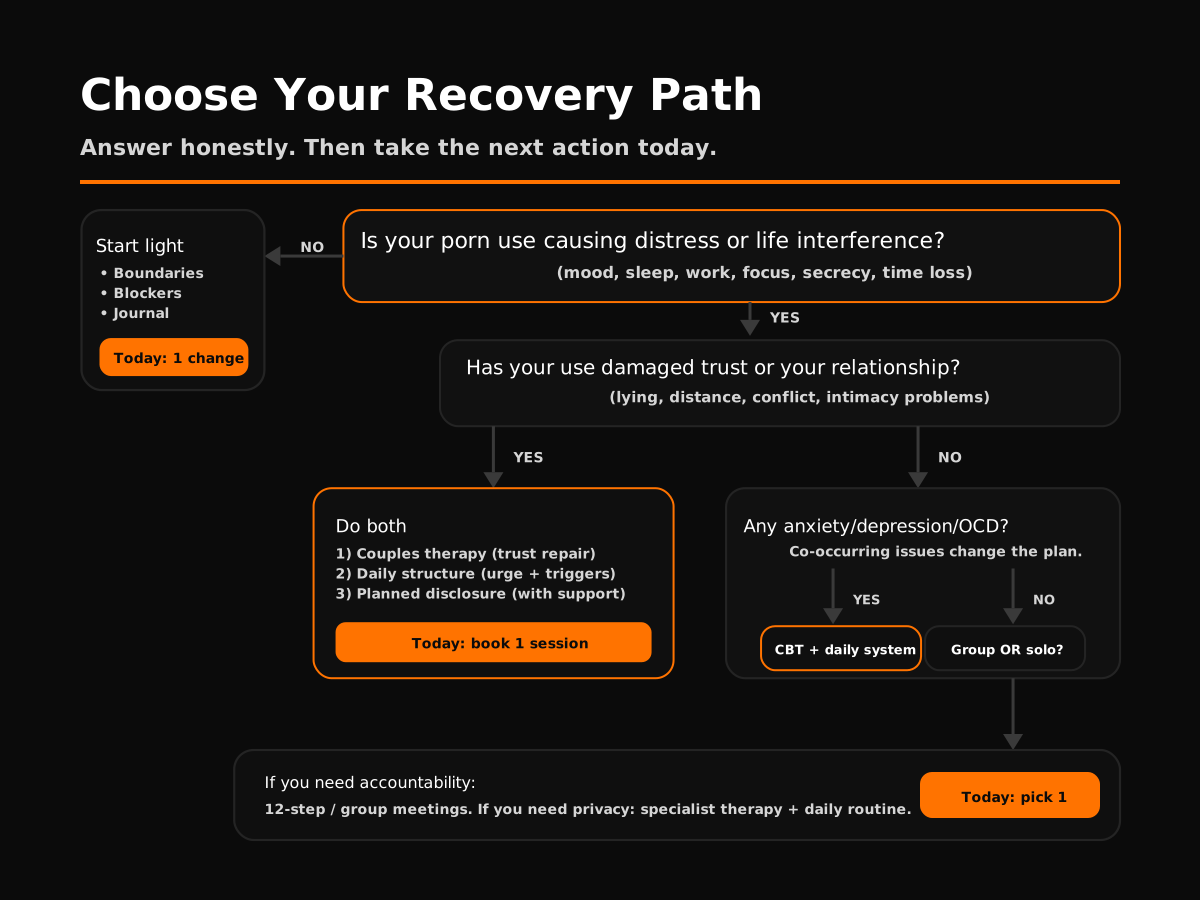
Visual 2 — Decision Flowchart: Which Recovery Option Is Right for You? A branching flowchart starting with “Is your use causing distress or life interference?” and guiding users through questions about relationship impact, co-occurring mental health issues, and preference for group vs individual vs app-based support.
How to Fix It
Recovery is achievable. Men who complete structured therapy report significant reductions in compulsive behaviour and improvements in relationship satisfaction [1]. A daily system that is simple enough to follow and strong enough to actually work is more effective than sporadic bursts of effort.
The Simple Framework
The most reliable recovery approach combines four elements: honest self-assessment, a daily structured routine, environmental restructuring, and a fast urge interruption tool for the exact moment cravings hit.
- Assess honestly. Use a validated tool such as the Hypersexual Behavior Inventory or the PATHOS questionnaire to establish severity and share the result with a professional or a trusted person.
- Build a daily routine. One morning reset (3–5 min meditation or breathwork), one afternoon exposure action (trigger removal, blocker setup, accountability check-in), and one night journal prompt. Simple and consistent beats complex and sporadic.
- Restructure your environment. Install filtering software, remove or restrict devices used for access, set a screen curfew, and keep your phone out of the bedroom. Adding friction at the point of access is one of the most reliable relapse-prevention tools available.
- Have an urge interruption tool ready. When a craving hits, a practised physical or breathing response breaks the loop before a decision is made. Options include a physiological sigh reset (two sharp inhales through the nose, one long exhale), a 30-second physical redirection burst, or a 2-minute delay paired with a replacement action.
- Plan for relapse as part of recovery. A single slip does not erase progress. Prepare a written response plan in advance: who you will contact, what you will do next, and what the slip tells you about your specific triggers. Turn slips into data, not shame.
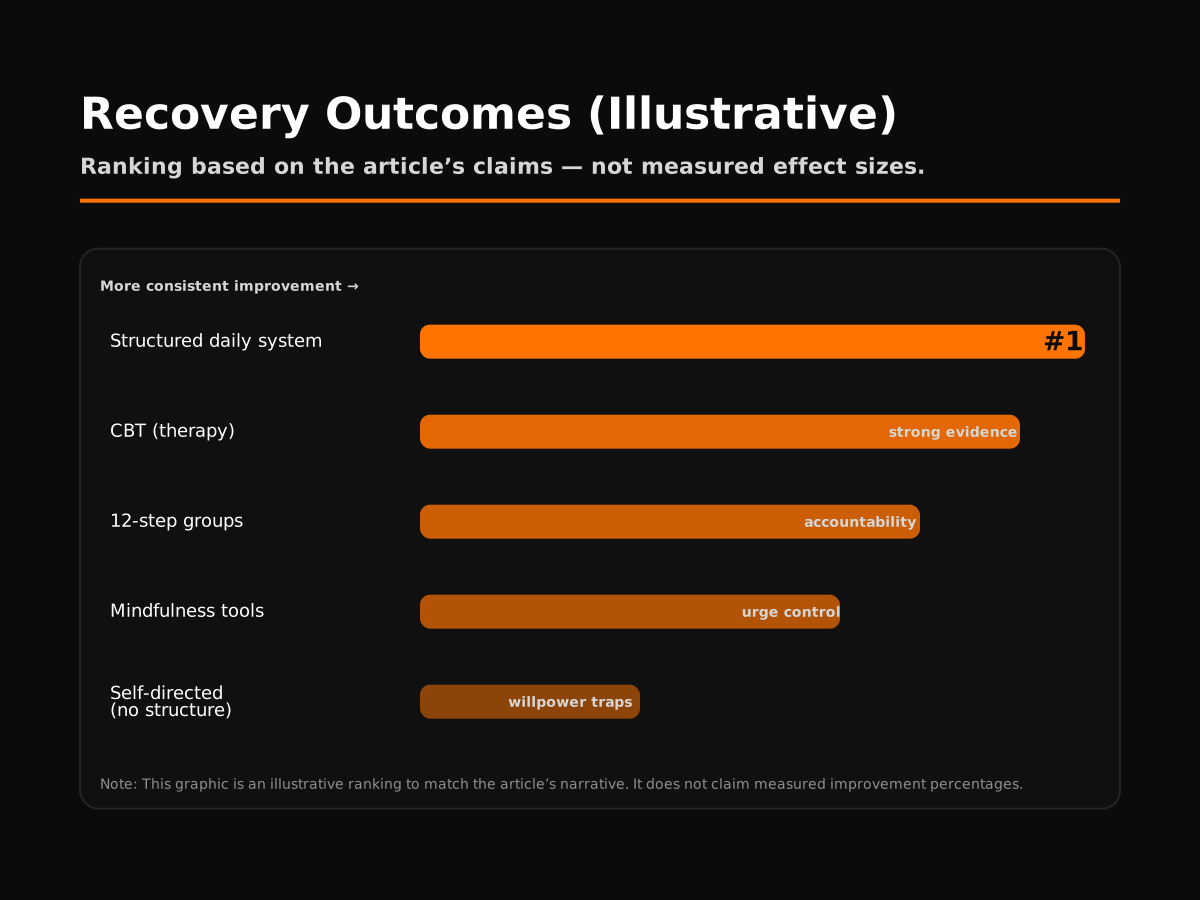
Visual 3 — Chart: Recovery Outcomes by Approach. A horizontal bar chart comparing self-reported improvement rates across five recovery categories: CBT, 12-step programmes, mindfulness-based therapy, self-directed (no structure), and structured daily system. The structured combined approach bar is longest.
FAQ
Is porn addiction a real medical condition?
Compulsive sexual behaviour disorder is recognised by the World Health Organisation in ICD-11 [5]. Porn addiction as a standalone diagnosis does not appear in DSM-5. Most clinicians treat the behaviour and its consequences rather than debating the label.
Can porn use cause erectile dysfunction?
Some clinicians report cases of porn-induced erectile dysfunction, where men experience difficulty with partners but not with pornography. The evidence base is still emerging, and organic causes should be ruled out by a GP first [11].
How long does recovery take?
There is no fixed timeline. Many men report meaningful improvement in urge frequency within 30 to 90 days of structured daily effort. Deeper relational and psychological work typically takes 6 to 18 months [1].
Should I tell my partner?
This is a personal decision, but couples therapy research consistently shows that disclosure, handled carefully with professional support, produces better long-term relationship outcomes than continued secrecy [12].
Do I need to stop watching pornography completely?
Not necessarily in every case. Some therapists work toward moderated, intentional use rather than total abstinence. For men with severe compulsivity or porn-induced erectile dysfunction, abstinence is generally recommended during the recovery phase.
Are there medications that help?
Medication is not a first-line treatment. In cases involving co-occurring OCD or severe compulsivity, SSRIs have been used adjunctively under psychiatric supervision [4]. Speak with a qualified clinician before starting any medication.
Is this an issue of willpower or character?
No. Compulsive behaviour patterns involve neurological and psychological factors that willpower alone cannot resolve [6]. Framing it as a character failure increases shame and reduces the likelihood of seeking effective help.
What if I have tried to quit before and it did not work?
Most men fail because they rely on motivation rather than structure. A daily system with a specific morning action, an afternoon trigger-removal task, a night journal, and a ready-made urge interruption tool produces more consistent results than determination alone.
Final Recommendation
For most men, the most effective starting point is a structured daily routine combined with at least one accountable external relationship, whether a therapist, a group, or a partner who is informed and engaged.
Willpower and motivation are not enough on their own. What works is a system simple enough to follow every day, with a fast urge interruption tool built in for the moments when cravings hit hardest. This is education, not medical advice. Speak with a qualified clinician for personalised guidance.
Options For Men to Take Action
If your use is mild and you want to start today: The MenTools Quit Porn Toolkit gives you a complete daily system built around the exact methods that work: a morning stabiliser meditation, a daily afternoon exposure action (trigger removal, blocker setup, accountability check-in), a night journal, and an Emergency Anchors menu for the exact moment urges hit. It is structured, practical, and built specifically for men.
If your use is moderate and causing real distress: Use the MenTools Quit Porn Toolkit as your daily structure and pair it with a therapist qualified in sexual behaviour issues. The toolkit covers the daily habit layer, the environmental restructuring, and the urge interruption tools. A therapist covers the deeper psychological work. The BACP and COSRT directories list registered UK practitioners.
If your use is severe or has damaged your relationship: Seek a CSAT-trained therapist and consider couples therapy in parallel. Be honest with your GP, who can refer you to relevant NHS or private services. Use the MenTools Quit Porn Toolkit to maintain daily structure and track urge patterns between sessions.
If cost is a barrier: Sexual Addicts Anonymous (SAA) and Sexaholics Anonymous (SA) run free meetings online and in-person across the UK. The MenTools Quit Porn Toolkit is an affordable structured daily option that works alongside free peer support.
If you want to go deeper on porn recovery and habit change, explore the MenTools Habits hub for guides and frameworks built specifically for men.
To support your daily routine with targeted nutrition, explore MenTools One A Day, formulated with chelated minerals and active B-vitamin forms for men.
When you are ready to turn ideas into action, start a focused challenge or daily routine inside the MenTools app and track how consistent habits change how you feel.
Last updated: 2026-02-26 v1.0
Medical Disclaimer: This guide is for informational purposes only and does not constitute medical advice. Always speak with your doctor or another qualified healthcare professional before starting any new supplement or programme if you have medical conditions or take prescription medication.
References
- Kraus, S.W. et al. (2016). Cognitive-behavioral therapy for problematic use of pornography. Current Psychiatry Reports. https://link.springer.com/article/10.1007/s11920-016-0686-7
- Fong, T.W. (2006). Understanding and managing compulsive sexual behaviours. Psychiatry. https://www.ncbi.nlm.nih.gov/pmc/articles/PMC2945841/
- Reid, R.C. et al. (2014). Mindfulness-based therapy for hypersexual behavior. Sexual Addiction & Compulsivity. https://www.tandfonline.com/doi/abs/10.1080/10720162.2014.953595
- Kafka, M.P. (2010). Hypersexual disorder: A proposed diagnosis. Archives of Sexual Behavior. https://link.springer.com/article/10.1007/s10508-009-9574-7
- World Health Organisation. (2018). ICD-11: Compulsive sexual behaviour disorder. https://icd.who.int/browse/2025-01/mms/en#1630268048
- Voon, V. et al. (2014). Neural correlates of sexual cue reactivity in individuals with and without compulsive sexual behaviours. PLOS ONE. https://journals.plos.org/plosone/article?id=10.1371/journal.pone.0102419
- Grubbs, J.B. et al. (2019). Pornography use and perceived addiction among religious and non-religious samples. Archives of Sexual Behavior. https://link.springer.com/article/10.1007/s10508-018-1282-8
- Gola, M. et al. (2016). Can pornography be addictive? Neuropharmacology. https://www.sciencedirect.com/science/article/pii/S0028390816303495
- Reid, R.C. (2010). Differentiating emotions in a sample of men in treatment for hypersexual behaviour. Journal of Social Work Practice in the Addictions. https://www.tandfonline.com/doi/abs/10.1080/1533256X.2010.497013
- Gilliland, R. et al. (2011). Shame and hypersexual behavior. Sexual Addiction & Compulsivity. https://www.tandfonline.com/doi/abs/10.1080/10720162.2011.580753
- Park, B.Y. et al. (2016). Is Internet pornography causing sexual dysfunctions? Behavioral Sciences. https://www.mdpi.com/2076-328X/6/3/17
- Fife, S.T. et al. (2008). A therapeutic model for helping couples recover from sexual addiction. Sexual Addiction & Compulsivity. https://www.tandfonline.com/doi/abs/10.1080/10720160802288601