
MEN: 8 Relationship Habits Every Man Should Build
Quick Answer
Strong relationships for men come down to small daily habits, not grand gestures: turn toward the little bids for attention, keep positive moments well ahead of negative ones, drop contempt, listen to understand, say thanks out loud, protect real time together, stay affectionate, and keep your own friendships alive. Start with one, not eight.
**Jump to:** How we chose these 8 | FAQ | Options for men
Disclosure: MenTools publishes this article and may feature MenTools products.
How we evaluate: Each habit is assessed on real-world use, evidence, cost and time, and how well it suits men. Every habit including the MenTools option carries an honest limitation. Full sources are in the references below.
The 8 Habits at a Glance
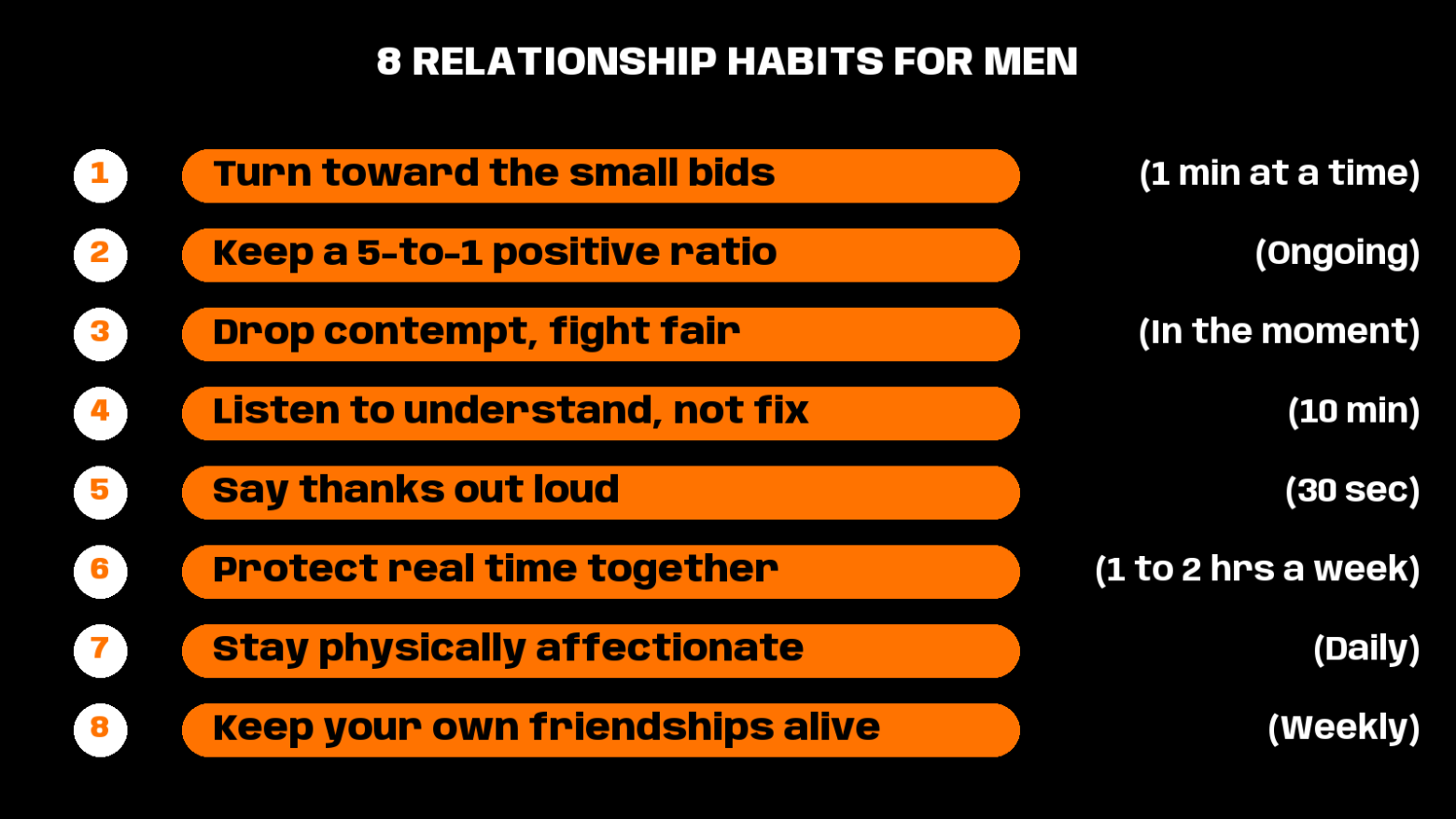
The 8 relationship habits at a glance, and the daily effort each one takes.
| Habit | Best for | Effort |
|---|---|---|
| Turn toward the small bids | Feeling distant day to day | 1 min at a time |
| Keep the 5 to 1 positive ratio | A tense or snappy home | Ongoing |
| Drop contempt, fight fair | Rows that spiral | In the moment |
| Listen to understand, not fix | Feeling unheard on both sides | 10 min |
| Say thanks out loud | Taking each other for granted | 30 sec |
| Protect real time together | Busy, drifting couples | 1 to 2 hrs a week |
| Stay physically affectionate | Low warmth or connection | Daily |
| Keep your own friendships alive | Men who lean only on a partner | Weekly |
How We Chose These 8
We picked habits that are simple, backed by real relationship science, and realistic for a working man. Each had to pass three tests: does the research support it, can you do it on a normal day, and does it actually change how a relationship functions rather than just sound nice. This matters for men in particular, because many of us lean heavily on a partner for emotional support and carry few other close ties. One survey found that 66 percent of men rely on their wife as their main source of social support, while only 21 percent rely on other people and 10 percent have none [7]. Every habit below carries an honest watch-out, because none of them fixes a relationship on its own.
1. Turn Toward the Small Bids
The health of a relationship is decided in tiny moments, not big talks. Every time your partner comments on something, shows you a photo, or sighs after work, that is a bid for connection, and how you respond adds up faster than any date night.
What it is: Noticing the small attempts your partner makes for your attention and responding with interest, a look, a question, a hand on the shoulder, instead of grunting or staying on your phone.
Best for: Couples who feel like flatmates, or men who go quiet and distracted at home.
Standout: In a landmark study, psychologist John Gottman followed newlyweds for six years and found that couples who were still together had turned toward each other’s bids 86 percent of the time, while those who had divorced turned toward them only 33 percent of the time [1]. The small stuff is the big stuff.
Watch-out: You cannot catch every bid, and trying to be perfectly attentive is exhausting and fake. Aim to turn toward more often than you turn away, especially when you are tired, which is exactly when it is hardest.
2. Keep the 5 to 1 Positive Ratio
A strong relationship is not one without conflict, it is one with far more good moments than bad. Get the balance right and the odd argument does no lasting damage.
What it is: Deliberately outweighing every negative exchange with several positive ones, humour, affection, interest, appreciation, so the overall tone of the relationship stays warm.
Best for: Homes that have turned tense, critical or snappy.
Standout: Gottman’s research found that stable, happy couples maintain about five positive interactions for every negative one during conflict, while couples heading for divorce average around 0.8 to 1 [2]. Away from conflict, in ordinary daily life, thriving couples run closer to twenty positive moments for every negative one [2].
Watch-out: This is a rough guide, not a scoreboard to count on your phone. You cannot paper over a serious problem with forced compliments either, the positives have to be genuine, and real issues still need addressing directly.
3. Drop Contempt and Fight Fair
You will disagree. What decides whether conflict strengthens or corrodes the relationship is how you fight, and one habit above all is poison: contempt.
What it is: Cutting sarcasm, eye-rolling, mockery and name-calling out of arguments, and starting difficult conversations softly, with a complaint about a specific thing rather than an attack on your partner’s character.
Best for: Men whose arguments quickly turn personal or spiral.
Standout: Gottman identified four patterns, criticism, contempt, defensiveness and stonewalling, that together predict divorce with around 94 percent accuracy, and found contempt to be the single strongest predictor of a relationship ending [3]. John Gottman calls contempt “sulphuric acid for love.” Treating your partner with basic respect even mid-argument is not weakness, it is what keeps the relationship survivable.
Watch-out: Fighting fair does not mean never getting angry or swallowing everything to keep the peace, which builds resentment. It means attacking the problem, not the person, and taking a real break if you are too flooded to do that.
4. Listen to Understand, Not to Fix
Men are wired to solve. But most of the time your partner is not handing you a problem to fix, she is looking to feel understood, and jumping to solutions can land as dismissive.
What it is: Letting your partner finish, reflecting back what you heard, and asking one more question before you offer any advice or fix.
Best for: Couples where one or both feel unheard, and men who default to problem-solving mode.
Standout: Decades of research at the Harvard Study of Adult Development, which has followed the same men since 1938, point to the same conclusion: the quality of our close relationships is the strongest predictor of long-term health and happiness, stronger than money, fame or cholesterol [4]. Its director, psychiatrist Robert Waldinger, sums it up simply: “Good relationships keep us happier and healthier” [4]. Feeling genuinely heard is a large part of what makes a relationship feel good.
Watch-out: Listening well does not mean you can never offer solutions or that your own needs do not count. Some problems do want practical help, so it is fine to ask, do you want me to just listen, or help think it through.
5. Say Thanks Out Loud
Long-term couples slide into taking each other for granted. Naming what your partner does, out loud and specifically, is one of the cheapest and most powerful ways to keep a relationship warm.
What it is: Regularly telling your partner what you appreciate about them and what they did, rather than just thinking it or assuming they know.
Best for: Established couples running on autopilot.
Standout: A 2024 study in Frontiers in Psychology found that gratitude between partners was linked to higher relationship satisfaction, acting as a bridge between how couples support each other and how happy they feel together [5]. Feeling appreciated makes people more responsive and more committed in return.
Watch-out: Thanks has to be specific and sincere, a vague “cheers for everything” or gratitude used to dodge a real conversation rings hollow. It also does not cancel out unfairness, if the load at home is genuinely lopsided, that needs fixing, not just acknowledging.
6. Protect Real Time Together
Connection needs time, and time is the first thing work, kids and phones steal. Couples who guard a regular window for each other drift far less.
What it is: A protected ritual of connection, a weekly date, a walk, a proper conversation with phones away, that happens whether or not you feel like it.
Best for: Busy couples, new parents, and men whose free time all goes to work or a screen.
Standout: Shared, focused time is how the small habits above actually get their chance to happen. It also directly counters isolation, which matters for men, given that socially isolated men have been found to carry an 82 percent higher risk of dying from heart disease than well-connected men [6]. Presence, not grand gestures, is what compounds.
Watch-out: Quantity without attention does nothing, sitting in the same room both scrolling is not connection. And time together will not resolve a deeper issue on its own, it just gives you the space to work on it.
7. Stay Physically Affectionate
Non-sexual touch, a hand on the back, a hug, sitting close, keeps a couple bonded in a way words do not. Men often let this fade to only sexual touch, and the relationship cools.
What it is: Regular, everyday affectionate contact with no agenda, holding hands, a hug that lasts, a hand on the shoulder in passing.
Best for: Couples who have gone cool, or men who only initiate touch when they want sex.
Standout: A national longitudinal study of couples found that the frequency of shared affectionate touch predicted increases in a person’s own relationship satisfaction, life satisfaction and mental health over five years [8]. Private, everyday touch matters more for the bond than public displays.
Watch-out: Touch has to be wanted, comfort and consent come first, and people differ a lot in how much they need. Read your partner, do not impose, and never use affection as a bargaining chip.
8. Keep Your Own Friendships Alive
The biggest mistake many men make is to fold their entire social life into their relationship, then quietly resent their partner for not being everything. A man with his own mates and interests is a better partner, not a more distant one.
What it is: Maintaining your own friendships, hobbies and support network rather than making your partner your only source of connection.
Best for: Men who have let their friendships lapse since coupling up, especially married men and new dads.
Standout: Around 66 percent of men rely on their partner as their main social support, while only 21 percent rely on other people [7]. That is a heavy load to put on one person and a fragile position for you. Building your own ties takes pressure off the relationship and, given how strongly connection predicts long-term health, protects you too. Tracking a simple weekly habit like messaging a mate or a monthly meet-up makes it far more likely to happen, and the MenTools app is built to turn intentions like that into daily and weekly check-ins.
Watch-out: This is about widening your support, not creating distance or an escape from the relationship. Balance matters, and time with mates should not become a way to avoid your partner or dodge your share at home.
Why Do Men Struggle in Relationships?
Many men were raised to provide and stay stoic, not to tune in emotionally, so the everyday work of connection, noticing bids, listening, showing warmth, can feel unfamiliar or even pointless. Add long hours, few close friends and a habit of bottling things up, and small disconnections build unaddressed. It is rarely a lack of love. More often it is a lack of the specific habits that turn love into a relationship that feels good to be in day to day.
Are These Habits Different for Men in Same-Sex Relationships?
The core habits here, turning toward bids, the positive ratio, dropping contempt, listening, appreciation, time, affection and outside friendships, come from research across many kinds of couples and apply to any relationship. Gottman’s work in particular has studied same-sex couples directly and found the same fundamentals hold. The examples in this guide are general on purpose, so use whichever framing fits your relationship.
FAQ
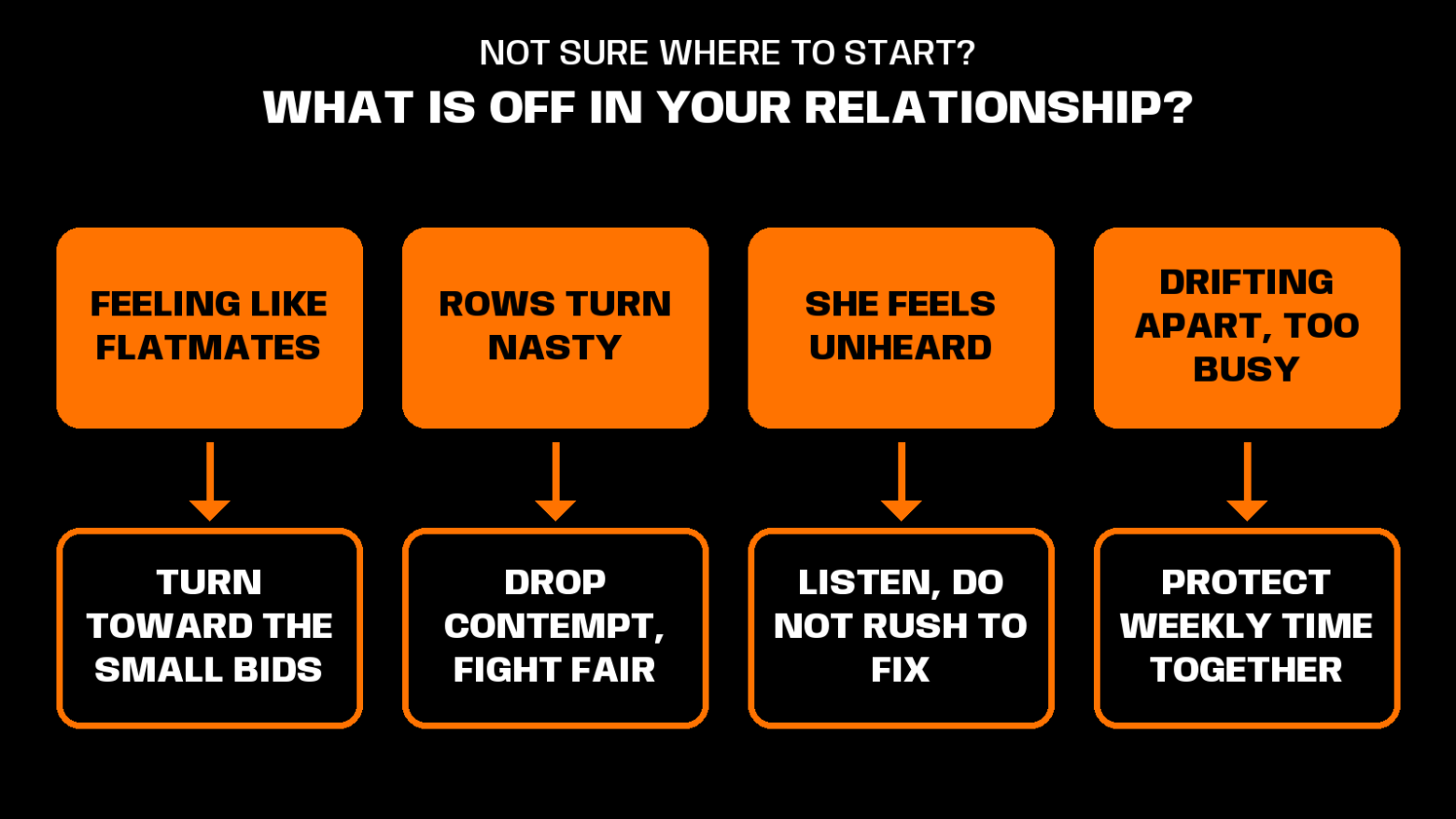
Not sure where to start? Pick the habit by what is off in your relationship.
What is the single most important relationship habit for men?
Turning toward the small bids for connection. Gottman’s research found stable couples turn toward each other 86 percent of the time against 33 percent for those who divorced. It is a tiny, daily habit, responding with interest when your partner reaches out, and it predicts long-term success better than any grand gesture.
How do I stop arguments turning nasty?
Cut out contempt, the sarcasm, eye-rolling and name-calling, because it is the strongest single predictor of a relationship ending. Start hard conversations softly, complain about a specific thing rather than attacking your partner’s character, and take a real break if you are too worked up to do that. Fighting fair is a skill you can practise.
Is it normal for the spark to fade in a long relationship?
Some cooling is normal, but a fading connection is usually the result of dropped habits, less affection, less appreciation, less protected time, rather than something inevitable. The good news is those habits are recoverable. Rebuilding small daily warmth, touch and attention tends to bring back far more than couples expect.
Should I try to fix my partner’s problems or just listen?
Usually listen first. Men often jump to solutions when a partner mainly wants to feel understood, which can land as dismissive. Let her finish, reflect back what you heard, then ask, do you want me to just listen, or help think it through. That one question removes most of the friction.
Can these habits save a relationship that is already struggling?
They can help a lot, but they are not a guarantee or a substitute for deeper work. If there is ongoing contempt, betrayal, or you feel stuck, a qualified couples therapist is the sensible step. Habits keep a decent relationship strong, professional help is for repairing a badly damaged one.
How long before these habits make a difference?
Some land immediately, more affection or genuine appreciation can shift the mood in a day. The deeper ones, the positive ratio, fighting fair, protected time, build over weeks and months. Expect a warmer feel quickly and a genuinely stronger relationship after a season of consistency.
Final Recommendation
If you do nothing else, turn toward the small bids and cut contempt out of your arguments, those two habits move the needle more than anything. Add genuine appreciation and protected time together, keep the affection alive, and do not let your own friendships die. Being a better partner as a man is not about one grand romantic gesture, it is a handful of proven habits repeated until they are just who you are. Pick one and start this week.
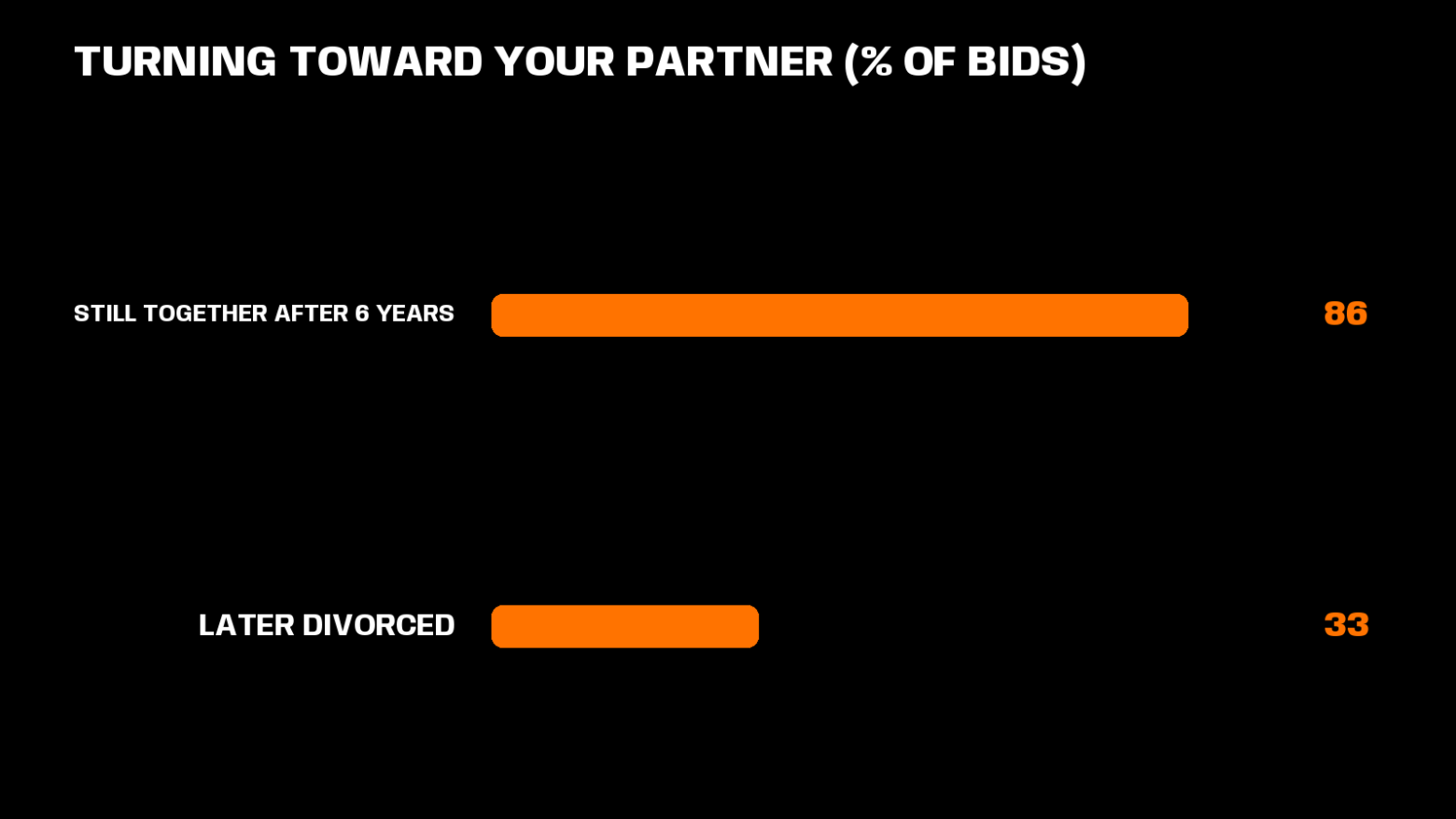
The habit that predicts it most: couples who lasted turned toward each other far more often.
Options for Men to Take Action
Most men do not lack good intentions about their relationship. They lack a system. The appreciation goes unsaid, the date night slips, the mates go unmessaged, and another busy month passes with connection quietly eroding. Scattered good intentions and willpower alone do not hold up against a full life.
The MenTools app is built to run exactly this kind of set of habits as one system, with daily actions, reminders, streaks and an AI coach, so turning toward your partner, a weekly ritual and staying in touch with your mates become check-ins instead of things you meant to do. Men tend to keep the habits they can actually see progress on.
How you can do this today: pick one habit from this list, set it as a daily or weekly action tonight, and log day one before you sleep.
Wins on cost: one app replaces a habit tracker, a reminders app and a stack of half-read relationship advice.
Wins on time: the habits and the tracking are set up in minutes, with no research or planning to do yourself.
Wins on practicality: it lives on your phone and fits a working man’s day, so it survives long hours, travel and busy weeks.
Relationships are only one part of a good life, so it is worth building your wider wellbeing too, from your own happiness to strong friendships. For more tools built for men, see the MenTools relationships hub. Small habits, repeated, are what turn a good relationship into a lasting one. If your relationship is in real trouble, a qualified couples therapist is a sensible step as well.
Last updated: 2026-07-29 v1.0
Disclaimer: This guide is for informational purposes only and does not constitute medical or psychological advice. Speak with a qualified professional before making significant changes if you have a medical or mental health condition.
References
- [1] The Gottman Institute. Turn toward instead of away (86 percent versus 33 percent bids finding). Link
- [2] The Gottman Institute. The magic relationship ratio, according to science (5 to 1). Link
- [3] The Gottman Institute. The Four Horsemen: criticism, contempt, defensiveness and stonewalling. Link
- [4] Harvard Gazette. Over nearly 80 years, Harvard study has been showing how to live a healthy and happy life (Robert Waldinger). 2017. Link
- [5] Frontiers in Psychology. Building happier bonds: gratitude as a mediator between dyadic coping and relationship satisfaction in romantic couples. 2024. Link
- [6] Harvard Health Publishing. Marriage and men’s health (socially isolated men and heart disease risk). Link
- [7] RAND Corporation. Health, marriage, and longer life for men (men’s reliance on a partner for social support). Link
- [8] Huang PH et al. Affectionate touch and relational, mental and physical well-being in older couples: a national longitudinal study. 2019. Link