No products in the cart.
Return To Shop7 Best Gratitude Apps for Men: No Fluff, Just Results
Quick Answer
Most gratitude apps fail men because they focus on emotion rather than action. The best apps for men in 2026 turn gratitude into a measurable metric or a resilience tool.
MenTools App is the top pick for men who want a complete system (AI Coach + Routine + Tools). For pure data tracking, Day One offers the best analytics, while Stoic is ideal for men who want mental toughness exercises.
Top 3 At A Glance:
- Best System: MenTools App (Action & AI Coaching)
- Best for Resilience: Stoic (Philosophy-driven)
- Best for Data: Day One (Encrypted & analytical)
Jump to: Comparison Table | How We Ranked | FAQs
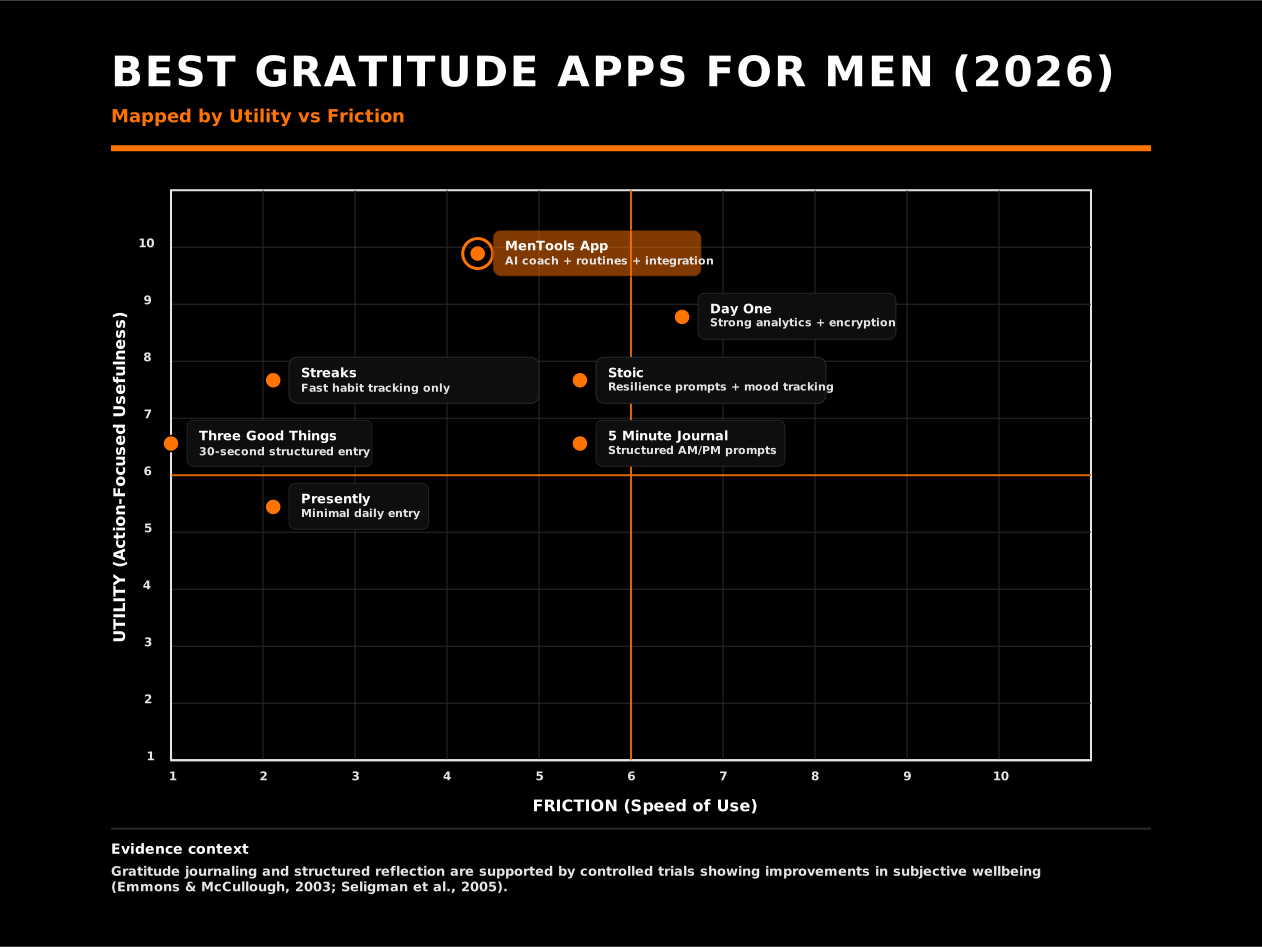
Infographic: We mapped the top 7 apps based on “Utility” (usefulness for action) and “Friction” (speed of use).
Comparison Table
| App | Best For | Key Feature | Cost |
|---|---|---|---|
| MenTools App | Complete System | AI Coach + Routines + Habits | Included in Stack |
| Stoic | Mental Toughness | Negative visualisation prompts | Freemium |
| Day One | Data & Security | End-to-end encryption & metrics | Free / Sub |
| 5 Minute Journal | Beginners | Rigid AM/PM structure | One-time / Sub |
| Streaks | Gamification | Visual habit chains | One-time (£4.99) |
| Presently | Minimalists | Zero distractions (Android only) | Free |
| Three Good Things | Speed | 30-second daily entry | Free |
How We Ranked These 7
We filtered out the “fluff.” Most gratitude apps are designed with soft aesthetics and emotional prompts that don’t resonate with men. We ranked these based on:
- Utility over Emotion: Does it help you do something, or just feel something?
- Speed & Friction: Can a busy man complete it in under 3 minutes? High friction kills consistency[1].
- Data & Metrics: Men improve what they measure. Apps with streaks, stats, or exportable data ranked higher.
- System Integration: Does it stand alone, or does it fit into a wider protocol for growth?
1. MenTools App (More Than Just Challenges)
Best for: Men who want a complete operating system for life, not just a diary.
Most apps treat gratitude as an isolated task. The MenTools App integrates it into a broader ecosystem of performance. You don’t just list what you’re thankful for; you build it into a custom routine that tracks alongside your workouts, deep work, and nutrition.

Visual: The MenTools App combines gratitude logs, daily routines, and AI coaching in one dashboard.
“Gratitude without action is just day-dreaming. We built this to turn perspective into fuel.”
Why it wins for men:
- AI Accountability Coach: Your AI coach reviews your logs and keeps you on track, spotting patterns you might miss.
- Total Life Integration: It connects your gratitude practice directly to your fitness, relationship, and mindset goals.
- Toolkit & PDFs: Access a library of frameworks and tools to support your mental growth instantly.
- Zero Fluff: No floral backgrounds or “manifestation” prompts. Just the work.
You can start a gratitude-focused challenge directly inside the MenTools Gratitude Challenge.
2. Stoic
Best for: Men seeking resilience and mental clarity.
Stoic removes the “new age” vibe found in most apps and replaces it with ancient philosophy. It uses prompts like “Negative Visualisation” (imagining losing what you have) to trigger genuine gratitude, which aligns with resilience research[2].
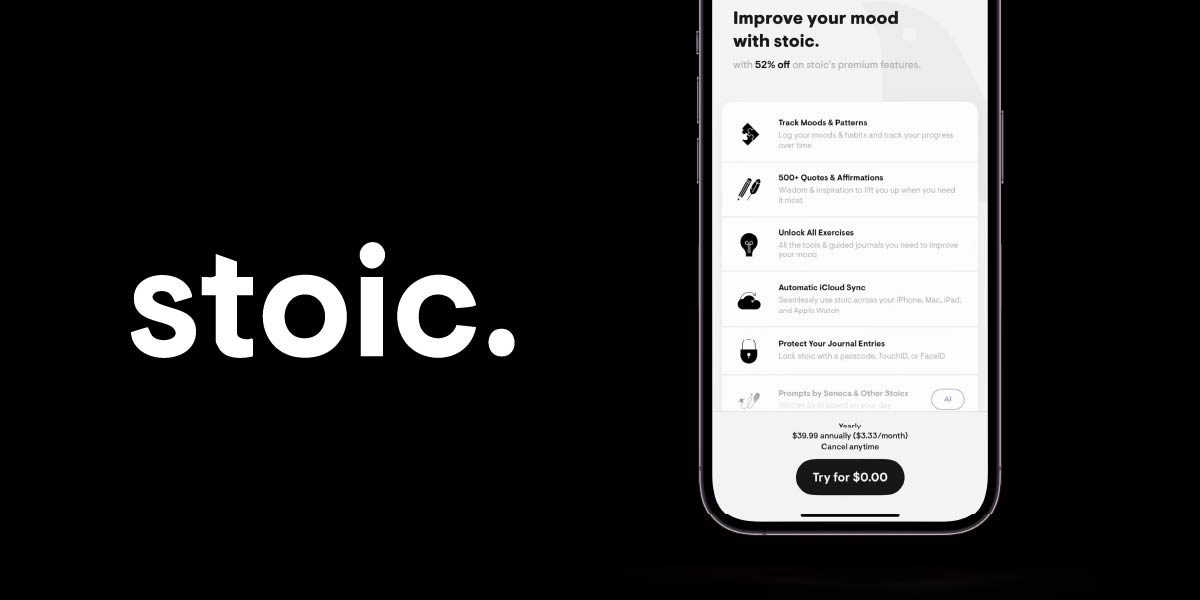
Visual: Stoic’s interface focuses on mental preparation and resilience exercises.
How to use it:
- Open the “Morning Prep” section.
- Answer the daily Stoic prompt (e.g., “What is in my control today?”).
- Review your mood trends at the end of the week.
You can learn more or download Stoic from the official Stoic website.
3. Day One
Best for: Men who love data, security, and tech.
If you want your thoughts to be encrypted and searchable for the next 20 years, this is the gold standard. It allows you to add photos, voice notes, and location data, creating a rich history of your life without feeling like a “dear diary” entry.
You can learn more or download Day One from the official Day One website.
4. The 5 Minute Journal
Best for: Beginners who need a rigid template.
This is the digital version of the famous book. It asks three specific questions in the morning and two at night. This constraint reduces “blank page paralysis,” making it easy to start[1].
You can download the 5 Minute Journal from the App Store or Google Play.
5. Streaks
Best for: Men who are motivated by gamification and not breaking the chain.
Streaks isn’t a journaling app; it’s a habit tracker. You simply set “Gratitude” as a daily task. The goal is to keep the circle filled. For many men, the visual urge to maintain a 100-day streak is more powerful than the writing itself.
You can learn more or download Streaks from the official Streaks website.
6. Presently
Best for: Minimalists on Android.
Presently is stripped back to the bone. No social features, no upsells, no notifications unless you ask for them. It is just a clean, dark-mode interface to capture one daily win. Perfect for men who hate clutter.
You can download Presently for free from Google Play.
7. Three Good Things
Best for: Speed and “lazy” journaling.
The premise is scientifically validated: simply listing three good things that happened each day can improve subjective wellbeing[3]. It forces you to scan your day for wins, retraining your brain’s “opportunity filter.”
You can learn more or download the app from the official Three Good Things website.
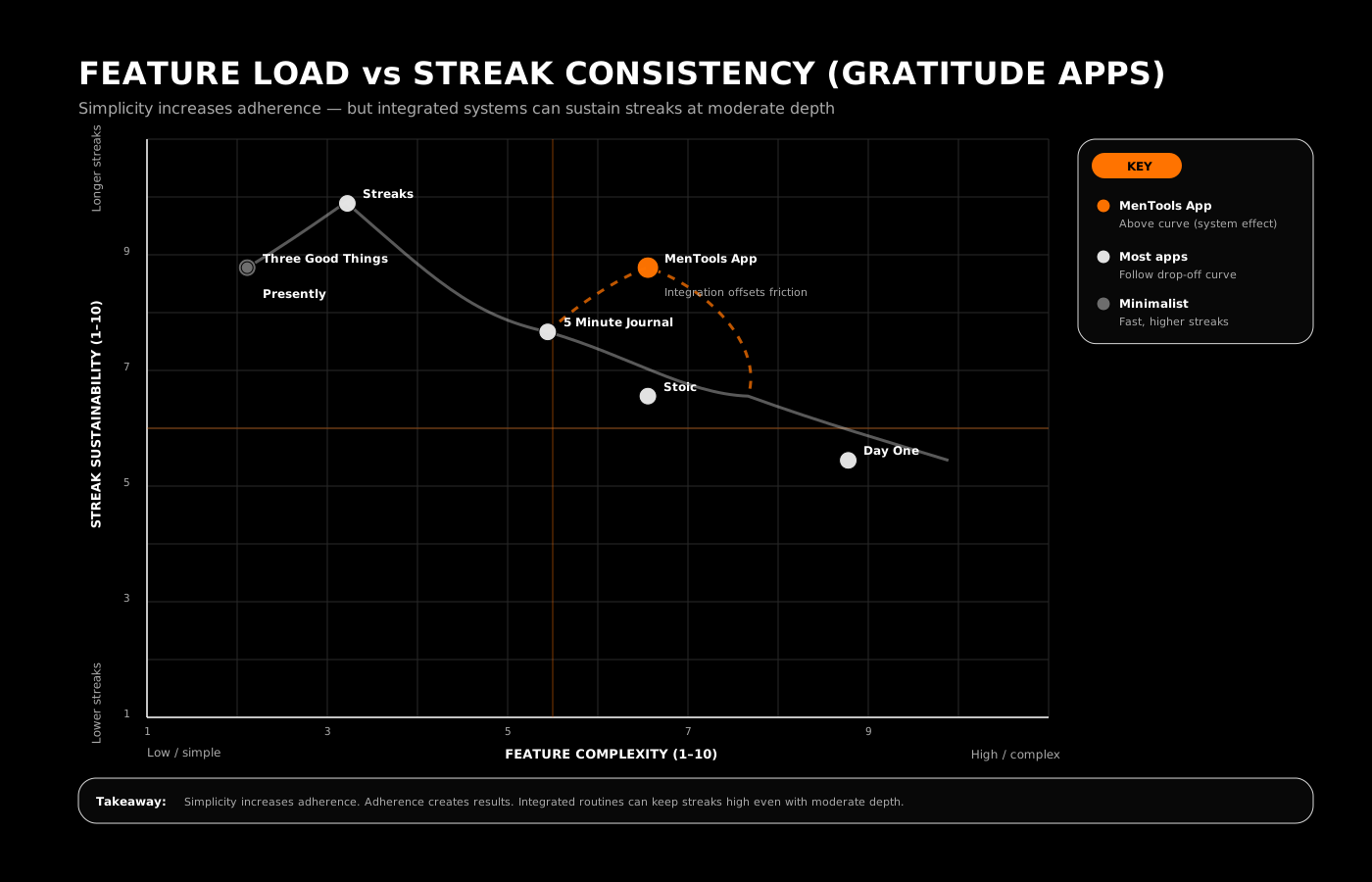
Chart: Simplicity wins. Apps with fewer features often lead to longer streaks for men.
FAQ
Do I really need an app for gratitude?
No, pen and paper works. But apps track data, provide reminders, and secure your entries. For men who value metrics, an app often drives better consistency.
Which app is best for privacy?
Day One offers end-to-end encryption. The MenTools App keeps your data within a secure ecosystem designed for coaching and accountability.
Can gratitude actually improve performance?
Yes. Research links gratitude practice to better sleep quality and lower cortisol levels, both of which are critical for recovery and physical performance[4].
What if I miss a day?
Don’t panic. The “Streaks” app handles this well, but the key is to never miss twice. Resume immediately to prevent the habit from decaying.
Is there a free option?
Presently (Android) and Three Good Things (iOS) are excellent free options. You don’t need to pay to start, but paid apps often offer better analytics.
Options For Men to Practice Gratitude
You have three main paths to integrating this habit:
- The Analog Route: A physical notebook. Good for focus, bad for data tracking.
- The App Route: One of the 7 apps above. Good for tracking, but can become “just another notification” to swipe away.
- The System Route (MenTools): Integrating gratitude into a wider protocol of fitness, mindset, and business goals so it supports your mission rather than distracting from it.
The MenTools App is built for the third path. It doesn’t just ask “what are you grateful for?”—it provides an AI accountability coach, a full suite of growth tools, and structured routines to ensure your gratitude fuels your ambition.
If you want to learn more about how gratitude works and why it matters for men, explore the MenTools Gratitude hub for frameworks, research, and practical guides.
If you want to stop just “tracking” and start “stacking” your habits for results, join the MenTools Gratitude Protocol today.
Last updated: 2026-02-16 v1.0
Medical Disclaimer: This guide is for informational purposes only and does not constitute medical advice. Always speak with your doctor or another qualified healthcare professional before starting any new supplement or programme if you have medical conditions or take prescription medication.
References
- [1] Emmons RA, McCullough ME. Counting blessings versus burdens: An experimental investigation of gratitude and subjective well-being in daily life. Journal of Personality and Social Psychology. 2003. DOI: 10.1002/ejsp.674.
- [2] American Psychological Association. Building your resilience. APA Resilience Topic Page. apa.org.
- [3] Seligman MEP et al. Positive psychology progress: Empirical validation of interventions. Journal of Personality and Social Psychology. 2005;84(2):377–389. DOI: 10.1037/0022-3514.84.2.377.
- [4] Wood AM et al. Gratitude and well-being: A review and theoretical integration. Journal of Psychosomatic Research. 2008. DOI: 10.1016/j.jpsychores.2008.09.002.