Chelated minerals vs oxide: learn why absorption matters in men’s multivitamins
Quick Answer
Answer: For men’s one-a-day multivitamins, mineral form can matter as much as (or more than) the milligrams on the label. Systematic and experimental data suggest that organic and chelated magnesium forms are generally more bioavailable than inorganic oxides in many contexts, and that poor solubility is a key reason oxide-based products may underperform in practice[1][2].
Key evidence:
- A 2021 systematic review concluded that inorganic magnesium formulations appear less bioavailable than organic forms and that absorption percentage is dose dependent[1].
- An in vitro digestion and intestinal model found that magnesium bisglycinate and glycerophosphate had higher bioaccessibility and estimated bioavailability than magnesium oxide, with solubility identified as a major driver[2].
- A detailed review of human zinc absorption shows that fractional zinc absorption typically ranges from about 16–50% and is influenced by solubility, intake level and diet composition[3].
What to do: If you are choosing a men’s one-a-day, look for chelated or organic mineral forms for key nutrients (especially magnesium and zinc), minimal oxides, iron-free design where appropriate, and once-daily dosing with food. MenTools One-a-Day is one example of a product that uses this chelated-first approach, but it is not the only option.
Supplements are foods, not medicines — they are designed to support normal health and nutrient status alongside a balanced lifestyle, not to diagnose, treat, prevent, or cure any medical condition.
Jump to: Comparison Table | What an Ideal One-a-Day Looks Like | Why Men’s Multis Fail | Step-by-Step Framework | FAQs | MenTools One-a-Day Options
Disclosure: MenTools publishes this article and sells MenTools One-A-Day.
How we evaluate: We assess mineral form quality, dose versus NRV, authorised health claims, and male-specific design. Full sources are listed in the references below.
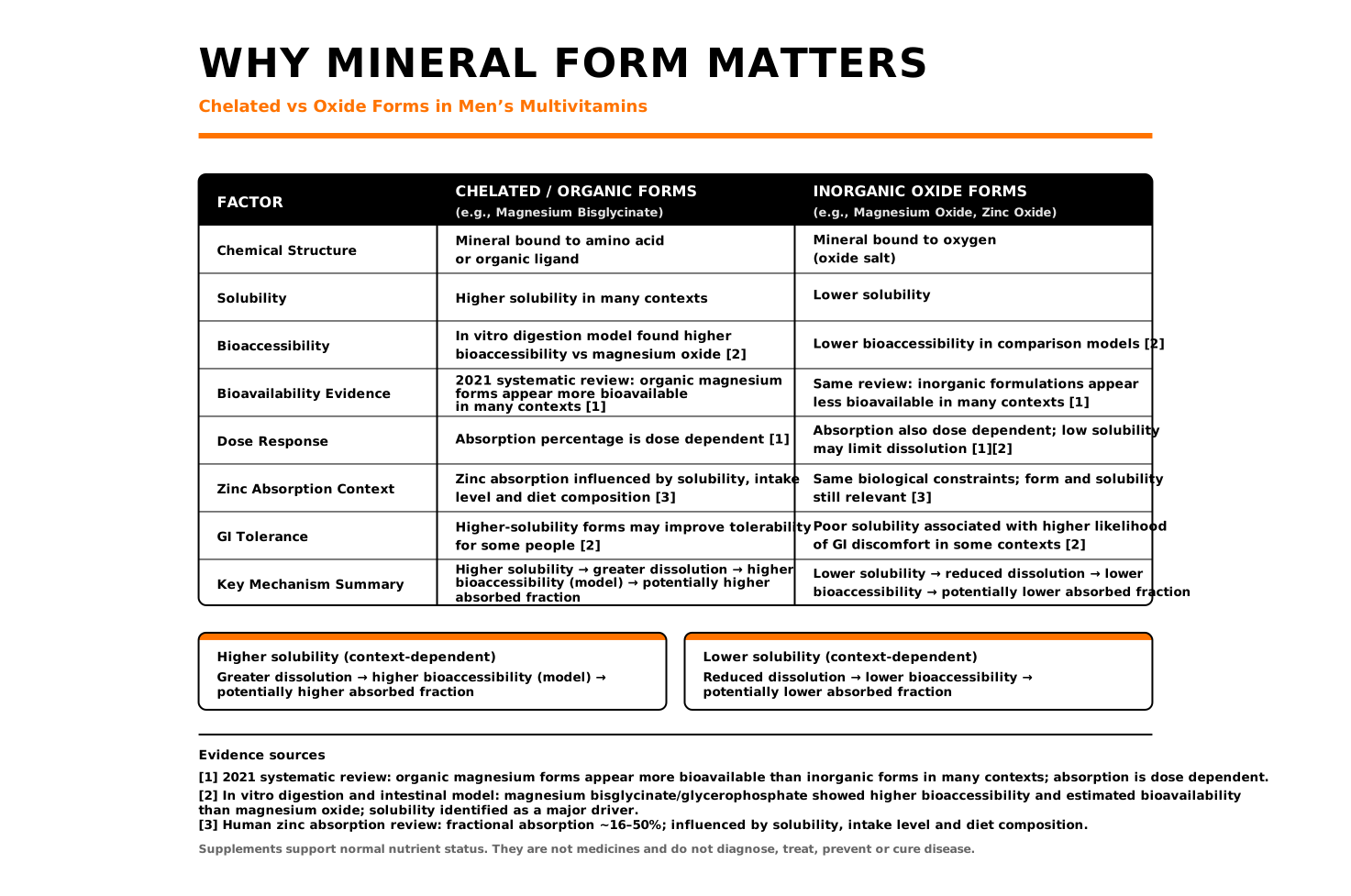
Infographic: Why mineral form (chelated vs oxide) can change solubility, bioaccessibility and tolerance.
Which Men’s One-a-Day Types Are Often Better Designed for Absorption?
| Option | What It Is | Absorption Reality | Best For |
|---|---|---|---|
| Chelated-first one-a-day (ideal) | Men’s one-a-day built around amino-acid chelates or organic salts (e.g. magnesium bisglycinate) with minimal oxides. | Organic and chelated magnesium forms appear more bioavailable than inorganic oxides in many contexts; higher solubility can support better bioaccessibility and may improve tolerance for some people[1][2]. | Men who want a simple once-daily routine and prefer higher-solubility mineral forms. |
| Organic-salt multi (mid-range) | Uses citrate, gluconate or similar salts; more soluble than oxides but not always fully chelated. | Better solubility than oxides can help, but outcomes still depend on dose, formulation and diet context[4]. | Men upgrading from supermarket multis when chelated-first options are not yet accessible. |
| Oxide-heavy multi (budget) | Relies on magnesium oxide and zinc oxide; high elemental numbers, low solubility. | Inorganic formulations appear less bioavailable in many contexts; poor solubility can limit dissolution and may increase the chance of GI side effects in some people[1][4]. | Men focused on cost over formulation choices; may represent a cost–absorption trade-off worth considering. |
| MenTools One-a-Day (example) | Chelated-first men’s one-a-day using bisglycinate for magnesium and a non-oxide zinc form, iron-free and designed for once-daily use with food. | Designed to align with the general evidence that higher-solubility mineral forms are often associated with higher bioaccessibility than oxides in supplement formulations; individual response can vary and the studies cited are not trials of this specific product[1][2]. | Men who want a concrete example of a chelated-first, once-daily spec. |
What Does a High-Absorption Men’s One-a-Day Actually Look Like?
An effective men’s one-a-day is shaped by how well it dissolves, is absorbed and is tolerated, not just by how big the nutrient numbers look on the label.
- Magnesium: A chelated or organic form such as magnesium bisglycinate, rather than magnesium oxide, to leverage better solubility and (in many contexts) higher bioavailability[2].
- Zinc: A soluble, non-oxide form informed by principles of zinc absorption (solubility, transport saturation and diet factors)[3].
- Chelated-first design: Key minerals delivered as chelates or organic salts with minimal reliance on inorganic oxides where formulation is likely to matter most[1].
- Men-specific dosing: Iron-free for most men, with realistic once-daily doses rather than extreme megadoses.
- With food: Intended to be taken with a meal to support absorption and reduce the chance of GI issues[4].
MenTools One-a-Day is formulated to follow this pattern: chelated-first minerals, iron-free design and a once-daily dose that fits into a normal meal routine. Under UK regulations, magnesium contributes to normal psychological function and to the reduction of tiredness and fatigue, and zinc and iodine contribute to normal cognitive function.
Why Do So Many Men’s Multivitamins Under-Deliver?
Many disappointing experiences with multivitamins come from three problems: label-focused dosing, poor tolerance, and ignored mineral bottlenecks.
Seeing these clearly helps explain why changing mineral forms and formulation can feel different for some people, even at similar printed doses.
How Do Big “Elemental” Numbers Create False Confidence?
Oxide-heavy formulas can show impressive elemental magnesium or zinc numbers while delivering less bioaccessible mineral in some contexts, because low solubility can restrict dissolution in the gut[1][2].
This can lead some men to conclude “multivitamins don’t work” when the real issue may be that absorption did not match expectations set by the label.
How Does Gut Tolerance Quietly Kill Consistency?
Poorly tolerated mineral forms can trigger diarrhoea or discomfort in some people, which is a well-recognised side effect with certain magnesium forms and doses[2].
Even a well-formulated product can fall short if it is uncomfortable enough that people only take it sporadically.
How Do Transport Bottlenecks and Diet Factors Get Ignored?
Zinc absorption, for example, is constrained by transporter capacity and impacted by diet factors such as phytate and protein, with fractional absorption adjusting to both dose and status[3].
Formulations that ignore these realities can look fine on paper but still deliver less absorbed zinc than expected in some real-world diets.
What’s the Simple Framework for Choosing a Men’s One-a-Day You’ll Actually Use?
A simple, question-based framework makes it easy to evaluate any men’s multivitamin without getting lost in marketing language.
1. Are the Mineral Forms Optimised for Absorption?
Systematic review data suggest organic magnesium forms are generally more bioavailable than inorganic forms in many contexts, and that fractional absorption can fall as single doses get very large[1].
Checking for chelated or organic forms on the label is a quick way to see whether a product prioritises formulation choices rather than just label appearance.
2. Does the Formula Match Men’s Needs?
Many men choose iron-free formulas and look for meaningful amounts of magnesium and zinc, rather than iron-heavy blends designed for menstruating women.
A men’s one-a-day should be designed with typical male dietary patterns and preferences in mind, not simply a unisex template with a different label.
3. Do Magnesium and Zinc Pass the “Signal Mineral” Test?
Magnesium participates in many enzymatic processes and is often under-consumed, while zinc absorption is tightly regulated and sensitive to diet and form[1][3].
If a product uses thoughtful forms and sensible doses for these two minerals, it can be a helpful signal that the formulation choices elsewhere have also been considered.
4. Is the Product Designed as a System, Not Just a Bottle?
Real-world consistency depends on whether men can take the product regularly. Once-daily dosing with food and fewer GI issues can make adherence easier for many people.
MenTools One-a-Day is designed to be taken with a regular meal and supported by app-based routines so it functions as a system, not just a capsule.
5. Can You Commit to Around 60 Days Before Reassessing?
Changes in how you feel can take time and vary person to person. If you are addressing a low baseline intake, improvements in nutrient status may take weeks rather than days.
Giving a one-a-day a consistent run (for example, around 60 days) is a practical way to assess whether it fits your routine before you change course.
Applied Example: How Does MenTools One-a-Day Fit This Framework?
- Forms: Uses chelated or organic mineral forms where formulation is likely to matter most, avoiding oxide-heavy shortcuts.
- Men-specific: Iron-free, with a focus on magnesium and zinc. Magnesium contributes to normal psychological function and to the reduction of tiredness and fatigue. Zinc and iodine contribute to normal cognitive function.
- Signals: Treats magnesium and zinc as key formulation considerations rather than afterthought minerals.
- System: Designed as a once-daily capsule paired with routines and prompts, not a stand-alone pill.
- Time horizon: Intended to be used consistently (for example, around 60 days) before reassessing your wider stack.
How Should Men Use a Chelated-First One-a-Day Week to Week?
Once you have chosen a chelated-first men’s one-a-day, the aim is to make use so simple that it becomes part of the background of your life.
What Daily Routine Keeps This Effortless?
Take your one-a-day with the same anchor meal every day — often breakfast or your first substantial meal. Taking mineral supplements with food can support absorption and reduce the chance of stomach upset[4].
MenTools pairs the capsule with simple prompts and check-ins so the behaviour becomes easier to maintain over time.
How Can a Weekly Check-In Keep You Honest?
At the end of each week, ask: “Did I miss more than two days?” If yes, the system needs adjusting — not your motivation.
Often the fix is as simple as moving the capsule to sit next to your coffee mug or adding a reminder in the MenTools app.
What Does a Monthly Review Look Like?
Once a month, confirm that the product you are using still matches the absorption-first rules: chelated or organic magnesium, thoughtful zinc form, iron-free design where appropriate and daily use with food.
If you are using MenTools One-a-Day, this review is mainly about tracking adherence and deciding whether to add other MenTools tools such as sleep or focus routines on top of your baseline.
Which Men’s One-a-Day Path Makes the Most Sense for You?
Different starting points call for different decisions, but the direction is often the same: from oxide-heavy labels toward chelated-first, evidence-aware designs.
- On a budget supermarket multi: At minimum, consider avoiding oxide-heavy formulas and, where suitable, exploring a separate magnesium product in a better-tolerated form. When feasible, consider moving to a chelated-first one-a-day.
- On a decent organic-salt multi: You may have improved solubility, but could still prefer a chelated-first design for key minerals and male-appropriate dosing.
- Ready to optimise: A chelated-first men’s one-a-day (MenTools is one example) can provide a simple foundation aligned with the general absorption evidence.
FAQ
Are chelated minerals actually better absorbed than oxides in men’s multivitamins?
A 2021 systematic review found inorganic magnesium formulations appear less bioavailable than organic forms and that absorption is dose dependent, while an in vitro model showed magnesium bisglycinate and glycerophosphate having higher bioaccessibility and estimated bioavailability than magnesium oxide in that model.
Is magnesium bisglycinate really better absorbed than magnesium oxide?
In a validated in vitro digestion and intestinal model, magnesium bisglycinate and glycerophosphate showed higher bioaccessibility and estimated bioavailability than magnesium oxide in both fasted and fed states, mainly because oxide’s poor solubility limits dissolution and bioaccessibility. Real-world absorption can vary by product, dose and diet.
Does zinc form matter as much as magnesium form?
Yes. Human zinc absorption depends on solubility, dietary components and transporter saturation, with fractional absorption typically around 16–50% and adapting to status. This is one reason more soluble, well-formulated zinc forms are often considered over poorly soluble oxides.
How do I quickly spot a premium men’s one-a-day multivitamin?
Look for chelated or organic forms for key minerals like magnesium and zinc, minimal oxides, realistic once-daily doses designed to be taken with food, and an iron-free formula for most men.
Do I need a multivitamin if my diet is good?
Even on a good diet, some adults may fall short on micronutrients such as magnesium and sometimes zinc. A well-designed men’s one-a-day can be one option alongside a solid diet.
What is the simplest no-overthinking supplement setup for men?
For most men, one iron-free (where appropriate), chelated-first one-a-day taken with the same meal every day for around 60 days before reassessing is a simple setup many people can stick to.
What Does MenTools One-a-Day Add on Top of the Science?
The science explains why a chelated-first, iron-free men’s one-a-day can make sense. MenTools layers a practical toolkit on top to help men stay consistent.
- One-a-Day Challenge: A 7 day challenge that helps you build more consistent routines around sleep, training and focus habits.
- App and AI Coach: Reminders, streak tracking and an AI accountability coach that nudges you when adherence starts to slip.
- Routine Templates: Plug-and-play daily routines for workdays, training days and recovery days so the capsule always has a natural home in your day.
- Mini Courses: Optional short courses inside the MenTools ecosystem that build on your one-a-day baseline without over-complicating your stack.
Options for Men
If you are ready to act on the absorption science, you can explore MenTools One-a-Day and the full supplements range at the MenTools Action page.
For a deeper look at the research behind men’s nutrition and supplement choices, the MenTools Knowledge Hub covers the evidence in plain language.
To build the daily habits that make supplementation stick long-term, the MenTools Challenges platform offers structured programmes designed around consistency and accountability.
Last updated: 2026-02-10 v3.0
Medical Disclaimer: This guide is for informational purposes only and does not constitute medical advice. Always speak with your doctor or another qualified healthcare professional before starting any new supplement if you have medical conditions or take prescription medication.
Supplement Notice: Food supplements should not be used as a substitute for a varied and balanced diet and a healthy lifestyle. Do not exceed the stated recommended daily dose. Keep out of reach of children.
References
- Pardo MR, et al. Bioavailability of magnesium food supplements: A systematic review. Clinical Nutrition. 2021. DOI: 10.1016/j.clnu.2021.08.021.
- Blancquaert N, et al. Type of magnesium salt and formulation solubility determines bioavailability of magnesium food supplements. Journal of Food Science and Nutrition Research. 2020. Available at: Longdom PDF.
- Maares M, Haase H. A guide to human zinc absorption: General overview and recent advances. Nutrients. 2020;12(3):858. DOI: 10.3390/nu12030852.
- de Baaij JHF, et al. Bioavailability of magnesium food supplements. Context summary via ScienceDirect record: S0899900721001568.