
MEN: Morning Routine for Men: 9 Habits to Win the Day (2026)
Quick Answer
The best morning routine for men is a short, fixed sequence you can repeat every day: wake at the same time, get sunlight, move, wash cold, then set your first task before you touch your phone. Consistency beats length. Five honest habits done daily beat a two hour routine you quit in a week.
Jump to: How we chose these 9 | FAQ | Options for men
Disclosure: MenTools publishes this article and may feature MenTools products.
How we evaluate: Each habit is assessed on real-world use, evidence, cost and time, and how well it suits men specifically. Every habit including the MenTools option carries an honest limitation. Full sources are listed in the references below.
The 9 Habits at a Glance
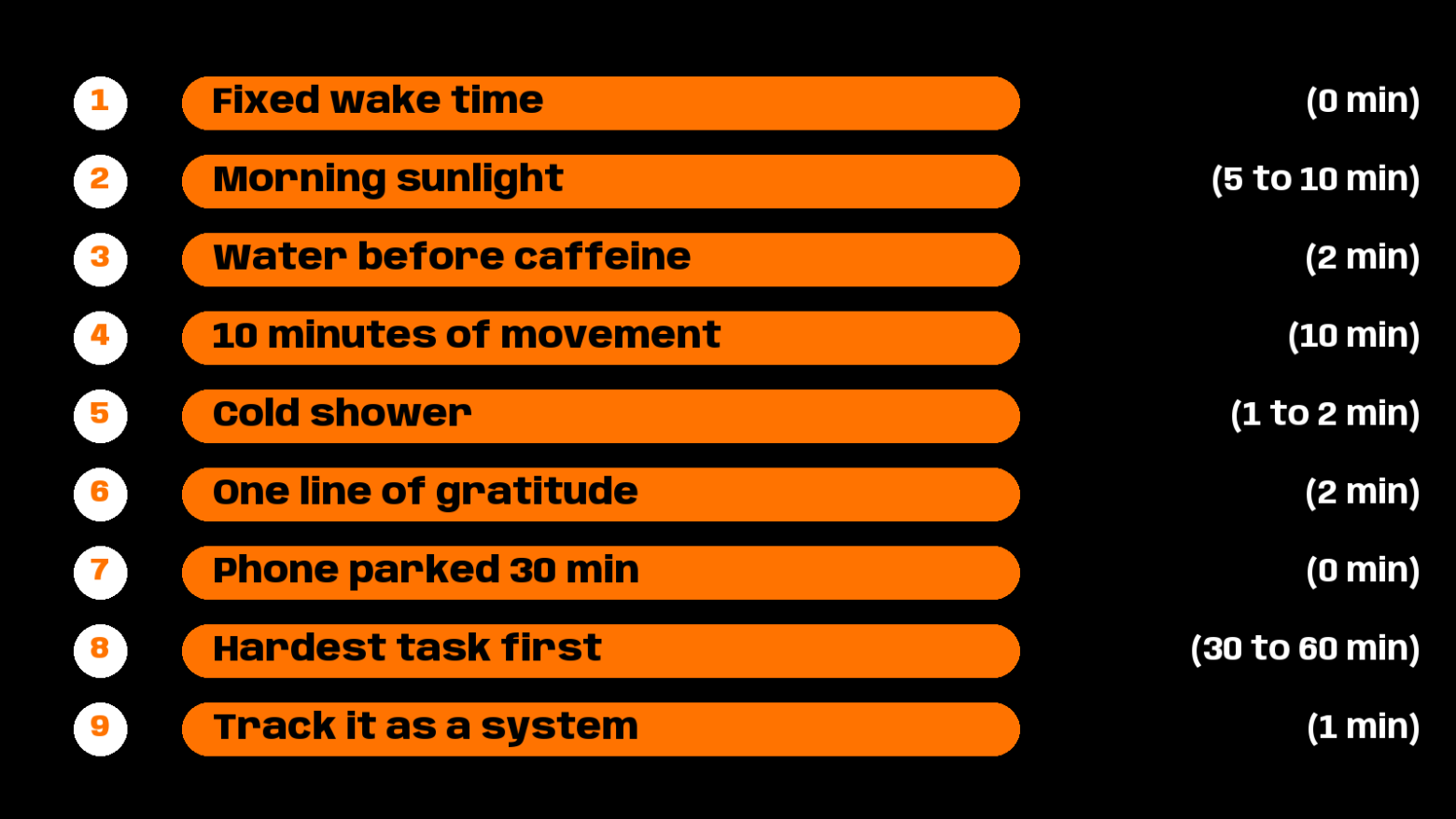
The 9-habit morning routine, in the order that works.
| Habit | Best for | Time | Watch-out |
|---|---|---|---|
| Fixed wake time | Everyone, the foundation | 0 min | Hardest at weekends |
| Morning sunlight | Energy and sleep | 5 to 10 min | Overcast needs longer |
| Water before caffeine | Steady energy | 2 min | The 90-minute rule is debated |
| 10 minutes of movement | Mood and focus | 10 min | Not a full workout |
| Cold shower | Alertness and resilience | 1 to 2 min | Uncomfortable at first |
| One line of gratitude | Mindset | 2 min | Feels forced early on |
| Phone parked 30 min | Calm and control | 0 min | Needs a real alarm clock |
| Hardest task first | Output | 30 to 60 min | Requires planning the night before |
| Track it as a system | Making it stick | 1 min | Easy to abandon after week one |
How We Chose These 9
We picked habits that are simple, backed by research, and realistic for a man with a job, a commute and responsibilities. Each one had to earn its place on three tests: does the evidence support it, can it be done in a normal morning, and does it still work when you are tired or busy. Every habit below carries an honest watch-out, because no habit is right for everyone.
1. Wake at the Same Time Every Day
Set one wake time and hold it, including weekends. A steady wake time is the anchor the rest of the routine hangs on, and it matters more than the exact hour.
What it is: A fixed alarm, seven days a week, within about 30 minutes each day.
Best for: Every man, especially anyone who feels groggy despite enough hours in bed.
Standout: In a study of 60,977 adults, the men and women with the most regular sleep and wake times had a 20 to 48 percent lower risk of early death than those with the most erratic schedules, and regularity predicted the risk better than total hours slept [1].
Watch-out: Weekends are the weak point. A Saturday lie-in of two hours resets your body clock like a short bout of jet lag, so keep the drift small.
2. Get 10 Minutes of Morning Sunlight
Get outside within an hour of waking and let daylight hit your eyes. This is the single strongest signal your body clock reads each day.
What it is: Five to ten minutes outdoors on a clear morning, or 20 to 30 minutes when it is overcast. No sunglasses, and never stare at the sun.
Best for: Men who struggle to wake up or to fall asleep at night.
Standout: Morning light raises your natural cortisol peak by around 50 percent, which sharpens alertness early and sets a timer to feel sleepy roughly 14 to 16 hours later [2]. As neuroscientist Andrew Huberman puts it, "Viewing morning sunlight increases morning cortisol levels by 50%, it increases immune function, alertness, and sets a timer to fall asleep 14 to 16 hours later" [2].
Watch-out: Light through a window is far weaker than being outside, so a view from your desk does not count.
3. Drink Water Before Caffeine
Have a glass of water first, and consider giving coffee a short delay. You wake up mildly dehydrated, and water costs nothing.
What it is: One glass of water on rising. Some men also delay their first coffee by 60 to 90 minutes.
Best for: Men who feel wired then crash by mid-morning.
Standout: Caffeine does not create energy, it blocks the adenosine receptors that make you feel tired, so timing changes how it lands [3].
Watch-out: Be honest that the 90-minute delay is debated. The evidence is mixed, so treat it as an experiment, not a law. Water first is the part that always holds.
4. Move Your Body for 10 Minutes
Do 10 minutes of easy movement, not a punishing session. A short walk, some press-ups or a mobility flow is enough to change how you feel.
What it is: Light movement that raises your heart rate a little and loosens you up.
Best for: Men who sit most of the day or feel foggy in the morning.
Standout: In a Baker Heart and Diabetes Institute study, a single morning bout of moderate exercise improved decision-making, attention and working memory across the rest of the day compared with prolonged sitting [7].
Watch-out: This is a primer, not your training. Do not let it become an excuse to skip a real workout later.
5. Take a Cold Shower
Finish your shower with 30 to 90 seconds of cold. It is uncomfortable, brief and effective.
What it is: A warm shower followed by a short cold blast, most mornings.
Best for: Men who want a hit of alertness and a small daily win in discipline.
Standout: In a randomised trial of 3,018 people, a 30-day cold shower habit cut sickness absence from work by 29 percent, even though it did not reduce the number of illness days, which suggests people simply coped better [4].
Watch-out: Skip it or check with a doctor first if you have a heart condition. The first week feels genuinely unpleasant, which is why most quitting happens early.
6. Write Down One Thing You Are Grateful For
Note one specific thing you are grateful for. One line is enough, and specific beats generic.
What it is: A single written line, on paper or in an app, before the day pulls you in.
Best for: Men who wake up already stressed or behind.
Standout: In the landmark research by Emmons and McCullough, people who kept a weekly gratitude journal felt better about their lives, reported fewer physical symptoms and were more optimistic about the week ahead than those who recorded hassles or neutral events [8].
Watch-out: It feels forced for the first week or two. Push through that phase before you judge it.
7. Keep Your Phone Parked for the First 30 Minutes
Do not touch your phone for the first half hour. Let your own thoughts run the start of the day, not a feed.
What it is: Phone out of reach or on aeroplane mode until the routine is done.
Best for: Men who feel anxious or scattered before they have even got up.
Standout: A 2025 study in PNAS Nexus found that blocking mobile internet meaningfully improved sustained attention, mental health and wellbeing, with gains comparable to established treatments [5].
Watch-out: You will need a real alarm clock so the phone can stay away, which is a small cost most men underrate.
8. Do Your Hardest Task First
Attack the one task you are most likely to avoid before anything easier. Willpower and focus are highest early, so spend them where they matter.
What it is: One clearly defined hard task, chosen the night before, done before email and admin.
Best for: Men who reach the evening busy but with the important thing still undone.
Standout: Deciding the task the night before removes the morning negotiation with yourself, which is where most days quietly get lost.
Watch-out: It only works if you plan it in advance. Trying to choose the task in the moment usually ends in checking messages instead.
9. Track It as a System
Turn the routine into something you tick off, not something you hope to remember. What gets tracked gets repeated.
What it is: A simple daily checklist, whether that is a notebook, a habit tracker or an app.
Best for: Men who start strong then fade after a week.
Standout: Habits take an average of 66 days to become automatic, with a real range of 18 to 254 days, so a routine needs a tracking system to survive the long middle stretch where motivation drops [6]. This is the point where most morning routines quietly die, and where one honest option is the MenTools app, which turns habits like these into daily check-ins and streaks.
Watch-out: A tracker only helps if you actually look at it. Set it somewhere you cannot avoid, or it becomes another ignored app.
How Long Should a Morning Routine for Men Take?
A good morning routine for men can run in 20 to 30 minutes, and it should. The nine habits above stack into a short sequence, and only the hard-task block takes real time. If your routine needs 90 minutes, it will not survive a bad week, so build the shortest version that still includes sunlight, movement and a protected first task.
What Is the Best Habit to Start With?
Start with a fixed wake time, then add sunlight. These two are the foundation because they set your body clock, and everything else gets easier once your sleep and energy are steady. Add one new habit each week rather than all nine at once.
FAQ
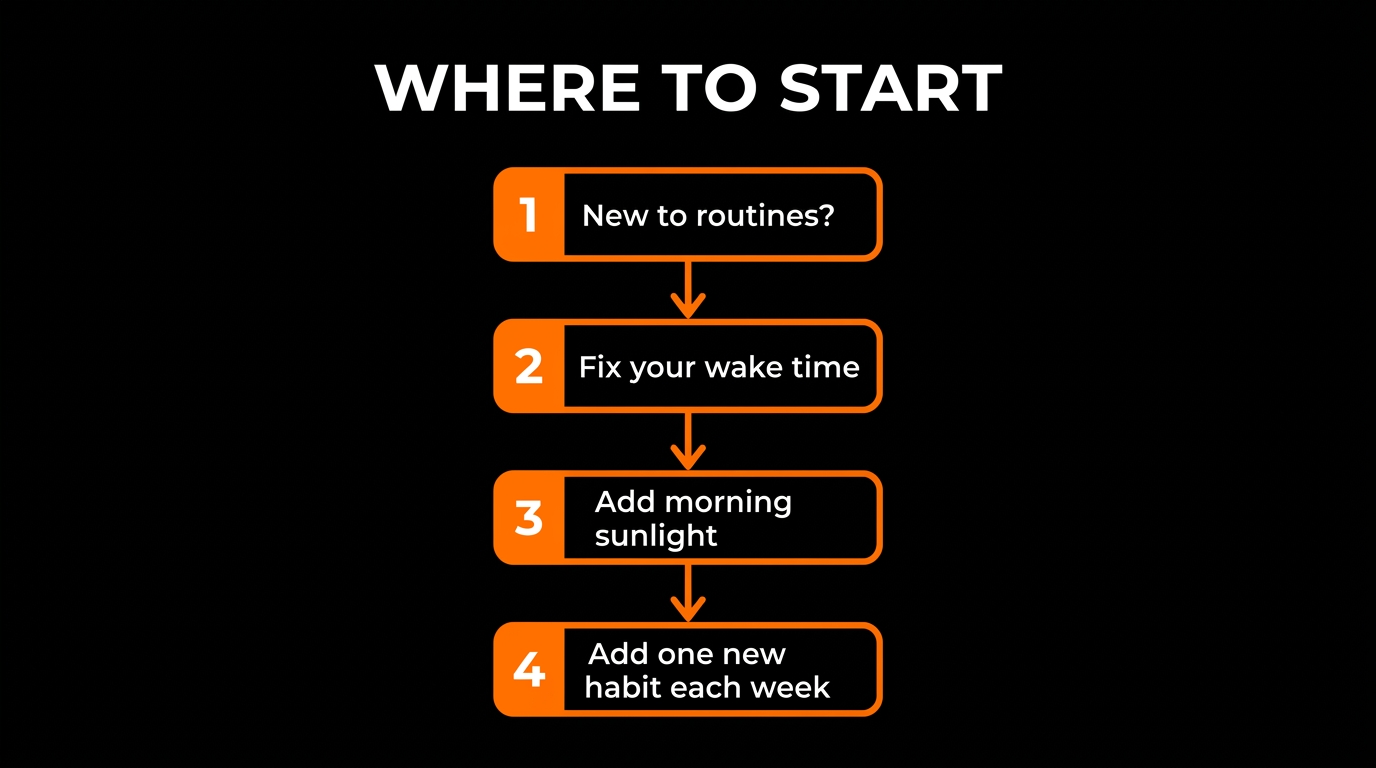
Not sure where to start? Follow the flow.
Do I need to wake up at 5am to have a good morning routine?
No. The hour does not matter, the consistency does. A steady 7am beats a shaky 5am. Pick a wake time you can hold seven days a week, including weekends, and build the routine around that.
How long does it take for a morning routine to become a habit?
On average about 66 days, with a range of roughly 18 to 254 days depending on the person and the habit. That is why a tracking system matters, because it carries you through the long stretch before the routine feels automatic.
What should a man do first thing in the morning?
Get up at your set time and get light into your eyes, ideally outside. Those two habits anchor your body clock and make the rest of the routine easier. Save your phone until later.
Are cold showers actually worth it for men?
For most healthy men, yes, as a short daily discipline and alertness boost. A large trial linked a 30-day cold shower habit to 29 percent less sickness absence from work. Skip it if you have a heart condition without medical advice.
What is the best morning routine for men who work shifts or start very early?
Anchor to your own wake time, whatever it is, and get bright light as soon as you are up, using a lamp if it is dark outside. Keep the sequence identical so your body reads the pattern even when the clock changes.
Can I do a morning routine in 10 minutes?
Yes. A fixed wake time, a few minutes of light, a splash of cold water and one protected task is a real routine. Start there and add habits only once the short version is automatic.
Final Recommendation
If you do nothing else, fix your wake time and get morning light. Add movement and a protected first task, then layer in the rest one week at a time. Track it from day one so it survives the dip. A morning routine for men works when it is short, repeatable and measured, not when it is long and perfect.
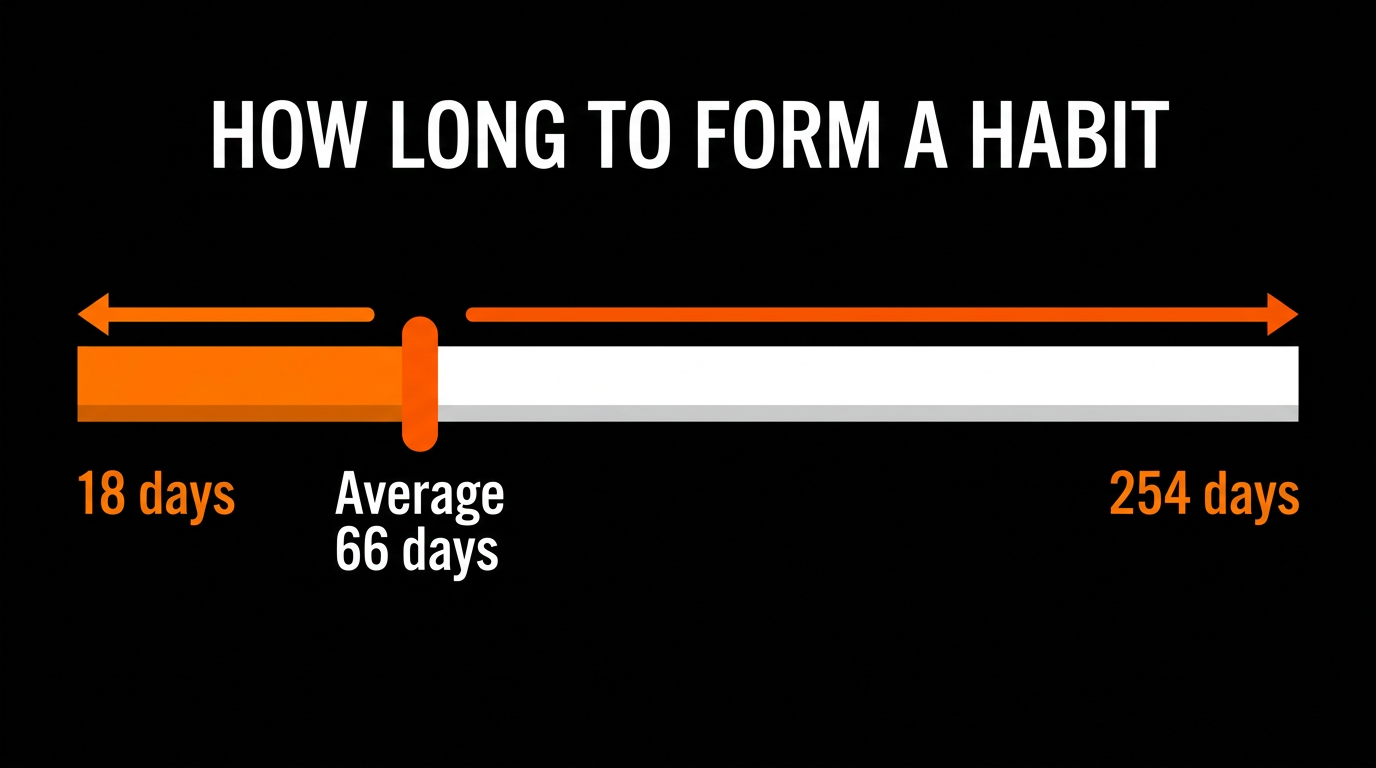
Why tracking matters: habit formation ranges from 18 to 254 days.
Options for Men to Take Action
Most men do not fail at mornings because they lack ideas. They fail because the routine lives in their head, there is no system, and week two arrives with no way to keep score. Scattered notes, three half-used apps and pure willpower do not hold.
The MenTools app is built to run exactly this kind of routine as one system, with daily actions, streaks, reminders and an AI coach, so the habits above become check-ins instead of good intentions.
How you can do this today: pick three habits from this list, set your wake time, and track day one tonight.
Wins on cost: one app replaces a habit tracker, a journal and a stack of separate reminder tools.
Wins on time: the routine and the tracking are set up in minutes, with no research or planning to do yourself.
Wins on practicality: it lives on your phone and fits a working man’s morning, so it survives travel, early starts and busy weeks.
For more on building routines that hold, see the MenTools habits hub. Small daily reps, tracked and repeated, are what turn a good morning into a good year.
Last updated: 2026-07-09 v1.0
Disclaimer: This guide is for informational purposes only and does not constitute medical or psychological advice. Speak with a qualified professional before making significant changes if you have a medical or mental health condition.
References
- [1] Windred DP et al. Sleep regularity is a stronger predictor of mortality risk than sleep duration. SLEEP, 2024. Link
- [2] Huberman Lab. Light exposure and circadian rhythm. Link
- [3] Ultrahuman. Caffeine, adenosine and the case for delaying your first coffee. Link
- [4] Buijze GA et al. The effect of cold showering on health and work: a randomized controlled trial. PLOS One, 2016. Link
- [5] Castelo N et al. Blocking mobile internet on smartphones improves attention, mental health and wellbeing. PNAS Nexus, 2025. Link
- [6] Lally P et al. How are habits formed: modelling habit formation in the real world. European Journal of Social Psychology, 2010. Link
- [7] Baker Heart and Diabetes Institute. Morning exercise improves cognitive performance across the day. 2019. Link
- [8] Emmons RA, McCullough ME. Counting blessings versus burdens. Journal of Personality and Social Psychology, 2003. Link