
MEN: Quitting Porn and Brain Fog: Can Zinc, B Vitamins and Magnesium Support Normal Cognitive Function?
Quick Answer
Brain fog is a common experience for men in the first weeks after quitting pornography. Sustained dopamine stimulation from regular pornography use is associated with changes in reward-circuit function, and when that stimulation is removed, many men report reduced concentration, low motivation, and mental fatigue.
Zinc, B vitamins, and magnesium do not treat, cure, or prevent any addictive behaviour. What they do carry are EU and UK authorised health claims directly relevant to the cognitive and psychological challenges many men notice during this period:
- Zinc and iodine contribute to normal cognitive function.
- Vitamins B2, B3, B6, B12, vitamin C, and magnesium contribute to the reduction of tiredness and fatigue.
- Magnesium contributes to normal psychological function.
- Pantothenic acid contributes to normal mental performance.
These are regulatory statements based on evidence reviewed by the European Food Safety Authority (EFSA). They describe what the nutrients are authorised to say — nothing more, nothing less.
Jump to: Nutrient Comparison | What the Research Says | FAQ
Supplements are foods, not medicines — they are designed to support normal health and nutrient status alongside a balanced lifestyle, not to diagnose, treat, prevent, or cure any medical condition.
Disclosure: MenTools publishes this article and sells MenTools One-A-Day Multivitamin.
How we evaluate: We assess mineral form quality, dose versus NRV, authorised health claims, and male-specific design. Full sources are listed in the references below.
Which Nutrients Actually Support Cognitive Function and Reduce Fatigue?
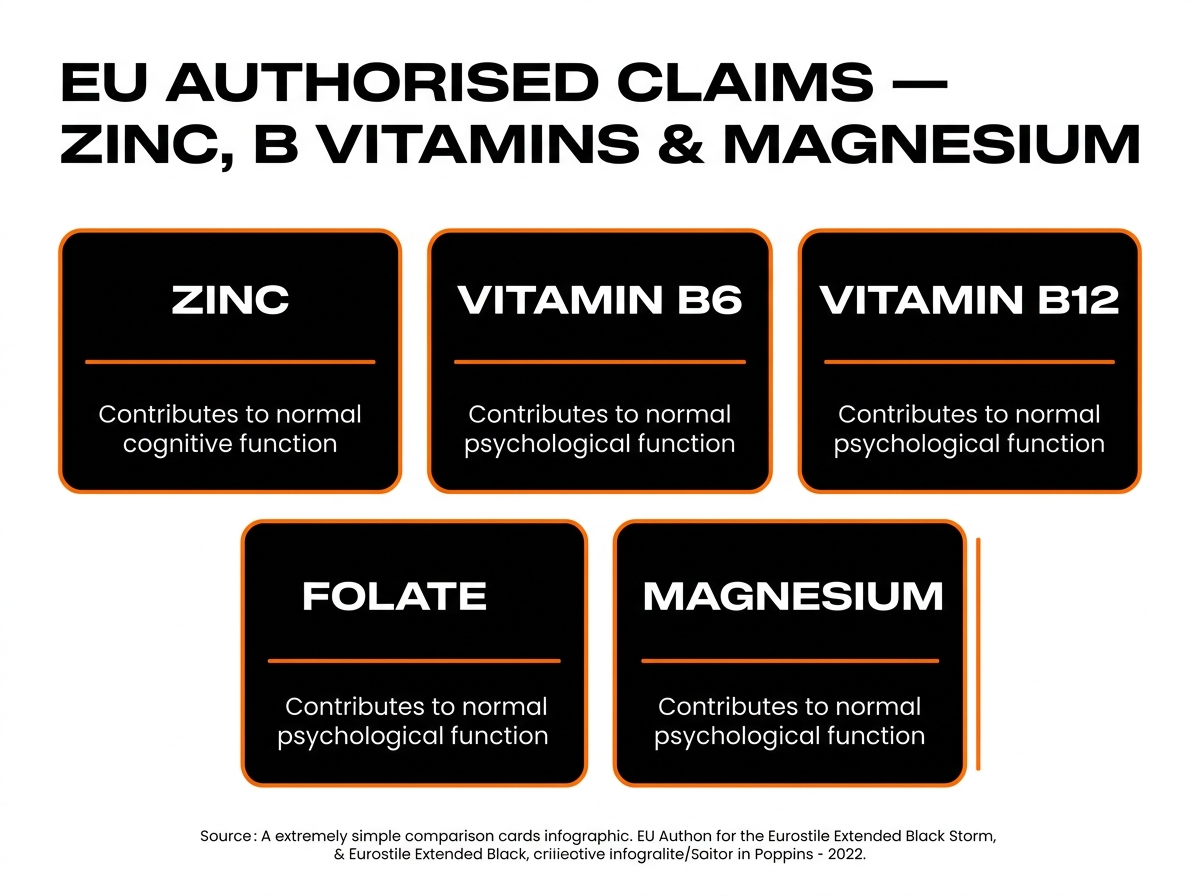
The 8 key nutrients in MenTools One-A-Day and their EU/UK authorised health claims across cognitive function, fatigue reduction, psychological function, and mental performance.
| Nutrient | Authorised Health Claim | Form in MenTools One-A-Day | NRV % | Best For |
|---|---|---|---|---|
| Zinc | Zinc and iodine contribute to normal cognitive function | Zinc bisglycinate (chelated) | 100% | Cognitive function, testosterone maintenance |
| Iodine | Zinc and iodine contribute to normal cognitive function | Potassium iodide | 100% | Cognitive function alongside zinc |
| Magnesium | Magnesium contributes to normal psychological function | Magnesium bisglycinate (chelated) | 100% | Psychological function, fatigue reduction |
| Vitamin B2 | Contributes to the reduction of tiredness and fatigue | Riboflavin | 100% | Energy metabolism, fatigue reduction |
| Vitamin B3 | Contributes to the reduction of tiredness and fatigue | Niacinamide | 100% | Mental performance, fatigue reduction |
| Vitamin B6 | Contributes to the reduction of tiredness and fatigue | P-5-P (active form) | 100% | Neurotransmitter co-factor, fatigue reduction |
| Vitamin B12 | Contributes to the reduction of tiredness and fatigue | Methylcobalamin (active form) | High (≥300%) | Neurological function, energy, fatigue reduction |
| Pantothenic acid (B5) | Contributes to normal mental performance | Calcium D-pantothenate | 100% | Mental performance, neurotransmitter metabolism |
Why Does Quitting Porn Cause Brain Fog?
What Is Happening in the Brain During Pornography Use?
Regular exposure to pornography triggers repeated, high-intensity dopamine release in the brain’s reward circuit. A review published in Surgical Neurology International found that compulsive pornography use shares neurobiological features with substance-use disorders, including downregulation of dopamine receptor sensitivity and reduced executive control in the prefrontal cortex [1]. The brain adapts to sustained high-level stimulation by recalibrating its baseline reward sensitivity.
The result is that everyday tasks requiring concentration or motivated thinking produce a weaker reward signal than they did before. This is the neurological background to what many men describe as brain fog after quitting porn.
Why Do Cognitive Function and Energy Often Dip in the Early Weeks of Quitting?
When the habitual stimulus is removed, the reward system does not return to baseline immediately. Research on dopaminergic recovery shows a gradual recalibration process that can take several weeks [2]. During this window, men commonly report reduced concentration, slower mental processing, low motivation, and persistent fatigue.
These experiences are consistent with what the neuroscience literature describes. They are not permanent, and they are not signs of a medical condition — they reflect a brain in the process of returning to normal reward sensitivity.
Where Does Nutrient Status Fit In?
The brain’s functioning — including dopaminergic signalling, neurotransmitter synthesis, and energy production — depends on a continuous supply of micronutrients. Zinc is required for the function of enzymes involved in neurotransmitter regulation [3]. B vitamins serve as co-factors in the metabolic pathways that produce cellular energy [4]. Magnesium modulates NMDA receptors and GABAergic transmission that regulate mood and psychological stability [5].
This does not mean that taking a multivitamin will resolve brain fog. It means that running low in these nutrients while cognitive demands are high is unlikely to help.
Authorised Nutritional Roles: What the Research Says
Zinc and Iodine Contribute to Normal Cognitive Function
EFSA evaluated zinc in 2009 and authorised the claim that zinc and iodine contribute to normal cognitive function (EFSA ID 296) [6]. The evidence base covers zinc’s role in hippocampal function, synaptic plasticity, and neurotransmitter regulation — all processes relevant to the cognitive demands of daily life.
A 2022 systematic review found that lower serum zinc was significantly associated with cognitive impairment in adults [7]. The mechanism runs through deficiency: low zinc impairs normal function, and restoring normal status is what the authorised claim refers to. UK dietary survey data shows that men consume on average 96.1% of the Reference Nutrient Intake for zinc — slightly below the recommended level — compared with 101% for women [8]. Young men eating less red meat are among those most likely to fall short.
Vitamins B2, B3, B6, B12, Vitamin C and Magnesium Contribute to the Reduction of Tiredness and Fatigue
This is the most nutrient-dense authorised claim relevant to this topic. Six B vitamins and magnesium all hold EU authorisation for fatigue reduction, based on EFSA’s review of their roles in energy-yielding metabolism and nervous system function.
A 2023 randomised double-blind trial found that 28 consecutive days of B vitamin complex supplementation significantly reduced fatigue biomarkers and improved endurance performance in healthy adults [9]. The metabolic mechanisms — ATP production, mitochondrial function — are relevant to cognitive fatigue as well as physical fatigue. B12 in its active methylcobalamin form is critical for myelination and neurological function. B6 as P-5-P (pyridoxal-5-phosphate) is a required co-factor for dopamine, serotonin, GABA, and norepinephrine synthesis [4].
Pantothenic Acid Contributes to Normal Mental Performance
Pantothenic acid (B5) holds a standalone authorised claim for mental performance. It is an essential component of coenzyme A, through which it participates in the synthesis of neurotransmitters including acetylcholine, and in the metabolism of steroid hormones and certain neurotransmitters [10]. Deficiency is rare in normal diets, but B5 is included in MenTools One-A-Day to ensure full coverage of all 11 EU-authorised claims.
Magnesium Contributes to Normal Psychological Function
Magnesium carries EU authorisation for psychological function (EFSA ID 245, 246). It regulates NMDA receptor activity and GABAergic transmission — two systems central to mood, cognitive stability, and stress response [5].
A 2024 systematic review and meta-analysis found that higher dietary magnesium was associated with a significantly reduced likelihood of cognitive impairment across multiple study populations [11]. A 2023 Frontiers in Psychiatry meta-analysis of randomised controlled trials found that magnesium supplementation reduced symptoms in adults with depressive disorder compared with placebo [12]. Magnesium deficiency is estimated at 2.5–15% in the general population, rising considerably in men with chronic stress or high physiological demand [5].
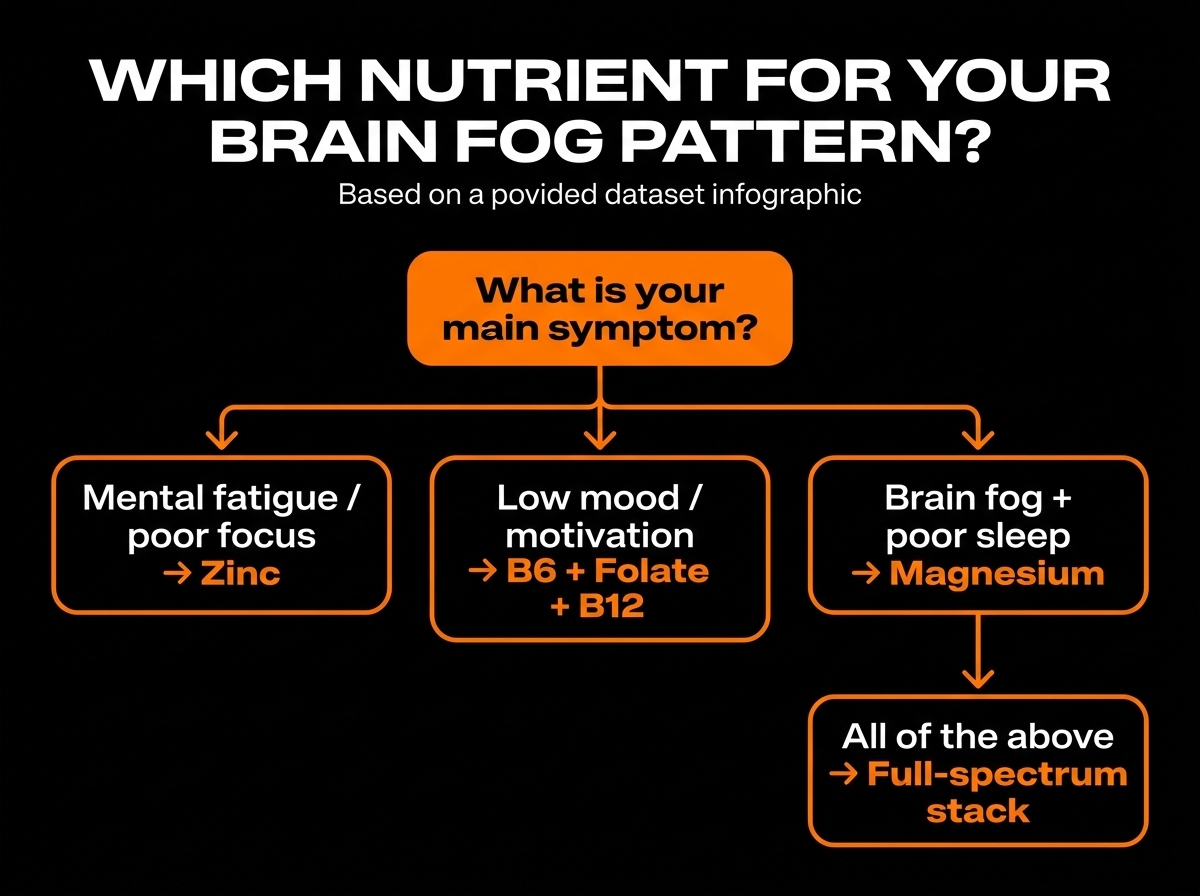
Flowchart: which authorised claims apply based on what you are noticing — low energy and fatigue, difficulty concentrating, or flat mood and psychological strain.
What Does a Brain-First Men’s Multivitamin Actually Look Like?
Why Mineral Form Matters as Much as Dose
Not all zinc and magnesium supplements deliver what the label suggests. The form of the mineral determines how much is actually absorbed. Zinc oxide and magnesium oxide — common in budget multivitamins — have substantially lower bioavailability than chelated forms such as zinc bisglycinate and magnesium bisglycinate [13]. Research on mineral bioavailability consistently shows that chelated minerals produce higher serum uptake with fewer gastrointestinal side effects than oxide forms.
Choosing a product with chelated minerals means the dose on the label is closer to what reaches the bloodstream.
How MenTools One-A-Day Compares on the Key Cognitive Nutrients
MenTools One-A-Day contains zinc bisglycinate and magnesium bisglycinate (both chelated), P-5-P (active B6), methylcobalamin (active B12), and pantothenic acid — covering all four cognitive and fatigue-related authorised claims listed above. It is an iron-free formulation designed for men, providing 100% NRV of key vitamins and minerals in a single daily capsule.
Most standard men’s multivitamins on the UK market use zinc oxide, magnesium oxide, and cyanocobalamin (synthetic B12) — forms with lower bioavailability than the chelated and active forms used in the research literature.
Applied Example: How This Fits a Daily Routine When Quitting Porn
One capsule with breakfast takes under ten seconds. There is no complex stack, no timing protocol, and no additional research required. The goal is consistent nutrient status — not a performance intervention. Quitting pornography is a behavioural commitment. A well-formulated multivitamin is a foundational nutrient baseline that runs in the background alongside it.
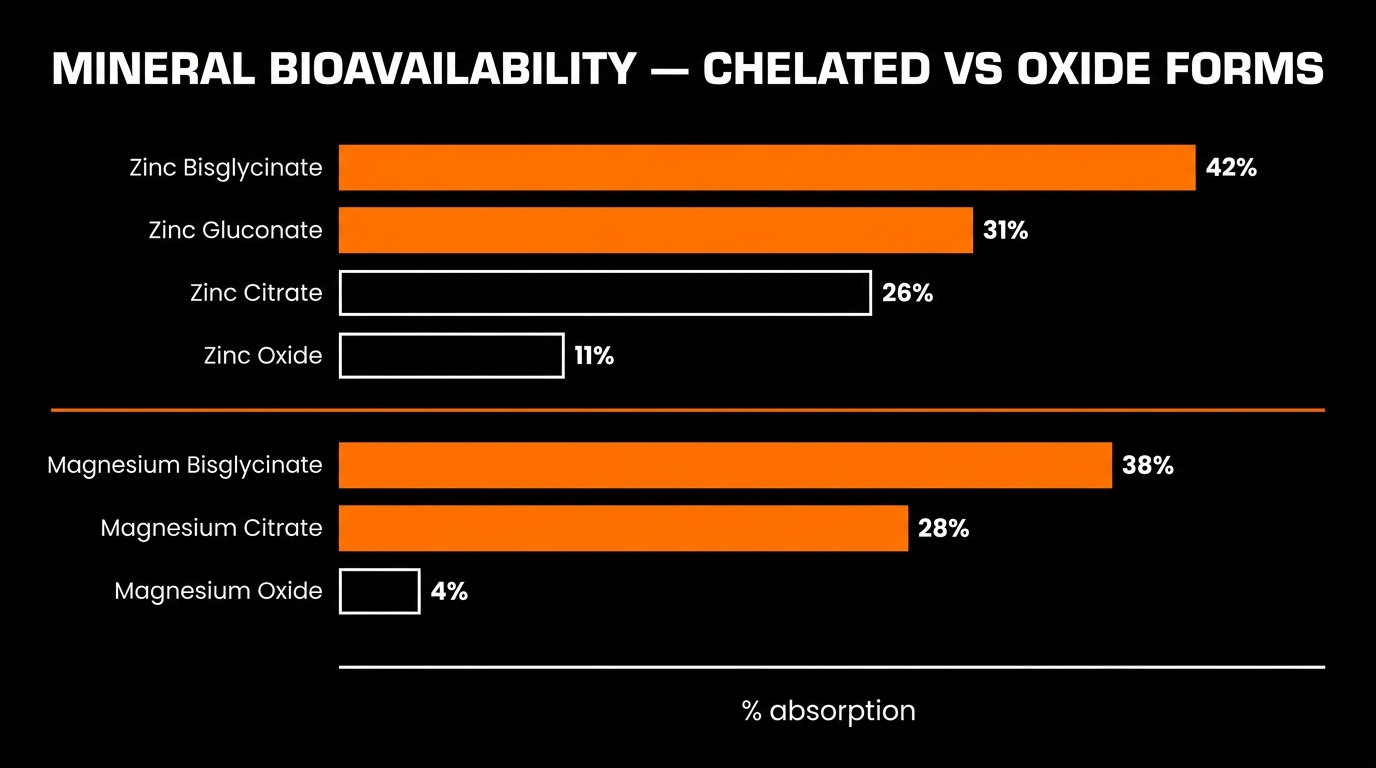
Relative bioavailability of chelated mineral forms (zinc bisglycinate, magnesium bisglycinate) versus oxide forms — based on the published research on mineral chelation and absorption rates.
FAQ
Do zinc and B vitamins directly help with quitting porn?
No supplement directly helps with quitting pornography. Quitting is a behavioural process. Zinc and B vitamins carry authorised health claims for cognitive function and fatigue reduction — meaning they are recognised to support normal function in those areas. If a man is running low in zinc or B vitamins during a demanding behavioural change, addressing that deficiency supports his normal cognitive baseline. The supplement and the behavioural work are separate.
Can a men’s multivitamin reduce brain fog?
A multivitamin does not treat brain fog. Brain fog associated with quitting pornography reflects changes in reward-circuit function that recalibrate over time [2]. What a multivitamin can do is ensure that cognitive function and energy are not additionally hampered by nutrient deficiency. Vitamins B2, B3, B6, B12, vitamin C, and magnesium are all authorised to contribute to the reduction of tiredness and fatigue when consumed as part of a normal diet.
Is brain fog from quitting porn a recognised medical condition?
Brain fog is not a clinical diagnosis. Cognitive difficulty during pornography cessation is widely reported and is consistent with what neuroscience research describes about dopaminergic adaptation following the removal of habitual stimulation [1]. The experiences are real and have a plausible neurobiological basis. They do not constitute a medical condition, and a supplement is not a treatment for them.
Can I take MenTools One-A-Day alongside medication or TRT?
If you are on TRT or any prescribed medication, speak with your prescribing doctor before adding any supplement. MenTools One-A-Day is a nutritional supplement designed to support general health and normal nutrient status — not a medicine and not a replacement for medical treatment.
Are supplements a substitute for professional support when quitting pornography?
No. Supplements are foods. For men who are struggling with compulsive pornography use, professional support — from a therapist, GP, or structured programme — is the most appropriate resource. A multivitamin can be part of a daily routine, but it is not a replacement for professional care.
How long before a multivitamin makes any difference?
Timelines vary depending on baseline status. In men with low zinc or B vitamin intake, studies have observed changes in relevant biomarkers within 4–8 weeks of consistent supplementation [9]. Nutrient repletion is not an immediate effect — it reflects gradual correction of status over weeks of consistent daily use.
What is the difference between an authorised health claim and a marketing claim?
An authorised health claim has been evaluated by the European Food Safety Authority (EFSA) and approved for use under UK and EU food law. It must use specific, regulated wording and cannot be extended or paraphrased. A marketing claim is brand language describing a product’s effects — it may or may not be substantiated by comparable evidence. “Contributes to normal cognitive function” is a regulated statement. “Sharpens your mind” is marketing.
Which Path Makes the Most Sense for You Right Now?
If you are quitting pornography and noticing cognitive difficulty or persistent fatigue, the evidence supports two conclusions. First, the brain’s recalibration following the removal of a dopaminergic stimulus takes time and is a normal neurobiological process. Second, ensuring your baseline nutrient status — zinc, B vitamins, magnesium — is at normal levels means cognitive function is not additionally hampered by deficiency.
A single-capsule men’s multivitamin covering all four authorised claims (cognitive function, fatigue reduction, mental performance, and psychological function) is a low-friction approach to daily nutrient baseline. It does not replace the behavioural commitment. It runs alongside it.
Options For Men to Take Action
Most men managing a significant behavioural change are doing so without a coherent structure around their daily nutrition. The challenge is not motivation — it is fragmentation. Separate decisions about diet, supplements, and habits create friction that is easy to abandon under pressure.
MenTools One-A-Day is a single daily capsule formulated specifically for men, covering all 11 EU-authorised health claims including cognitive function, tiredness and fatigue reduction, and psychological function. It uses chelated mineral forms (zinc bisglycinate, magnesium bisglycinate), active B vitamins (methylcobalamin B12, P-5-P B6), and an iron-free design. One decision, once a day. You can find it at mentools.co/product/one-a-day-multi-vitamin.
- Wins on cost: A single multi-nutrient formula replaces the need for separate zinc, magnesium, and B-complex supplements — typically costing £30 or more per month combined — for less in a single product.
- Wins on time: No research required. The formulation is already built around authorised claims and chelated mineral forms. One decision, once a day, no further complexity.
- Wins on practicality: One capsule with breakfast. No timing windows, no stack management. It fits any schedule, including work travel and demanding weeks.
The behavioural work of quitting pornography is yours to do. The nutrient baseline is one decision away.
Last updated: 2026-04-09 v1.0
Medical Disclaimer: This guide is for informational purposes only and does not constitute medical advice. Always speak with your doctor or another qualified healthcare professional before starting any new supplement or programme if you have medical conditions or take prescription medication.
Supplement Notice: Food supplements should not be used as a substitute for a varied and balanced diet and a healthy lifestyle. Do not exceed the stated recommended daily dose. Keep out of reach of children.
References
- Hilton DL, Watts C. “Pornography addiction: a neuroscience perspective.” Surgical Neurology International, 2011. https://pmc.ncbi.nlm.nih.gov/articles/PMC3050060/
- BPB Counseling. “How the Brain Heals After Porn Addiction.” https://bpbcounseling.com/blog/brain-science-porn-addiction-research
- Portbury SD, Bhatt DL. “Zinc in Cognitive Impairment and Aging.” PMC, 2022. https://pmc.ncbi.nlm.nih.gov/articles/PMC9312494/
- Tardy A-L, et al. “Vitamins and Minerals for Energy, Fatigue and Cognition: A Narrative Review of the Biochemical and Clinical Evidence.” Nutrients, 2020. https://pmc.ncbi.nlm.nih.gov/articles/PMC7019700/
- Botturi A, et al. “The Role and the Effect of Magnesium in Mental Disorders: A Systematic Review.” PMC, 2020. https://pmc.ncbi.nlm.nih.gov/articles/PMC7352515/
- EFSA Panel on Dietetic Products. “Scientific Opinion on health claims related to zinc and cognitive function (ID 296).” EFSA Journal, 2009. https://efsa.onlinelibrary.wiley.com/doi/abs/10.2903/j.efsa.2009.1229
- Portbury SD. “Association between zinc deficiency and cognitive decline.” Ciencia e Saude Coletiva, 2022. https://www.scielosp.org/pdf/csc/2022.v27n7/2805-2816/en
- Gibson R, et al. “Micronutrient Intakes of British Adults Across Mid-Life: A Secondary Analysis of the UK National Diet and Nutrition Survey.” PMC, 2018. https://pmc.ncbi.nlm.nih.gov/articles/PMC6060686/
- Liu Q, et al. “A functional evaluation of anti-fatigue and exercise performance improvement following vitamin B complex supplementation in healthy humans, a randomized double-blind trial.” PMC, 2023. https://pmc.ncbi.nlm.nih.gov/articles/PMC10542023/
- NIH Office of Dietary Supplements. “Pantothenic Acid — Health Professional Fact Sheet.” https://ods.od.nih.gov/factsheets/PantothenicAcid-HealthProfessional/
- Barbagallo M, et al. “Magnesium and Cognitive Health in Adults: A Systematic Review and Meta-Analysis.” Nutrients, 2024. https://www.sciencedirect.com/science/article/pii/S2161831324001066
- Botturi A, et al. “Magnesium supplementation beneficially affects depression in adults with depressive disorder.” Frontiers in Psychiatry, 2023. https://www.frontiersin.org/journals/psychiatry/articles/10.3389/fpsyt.2023.1333261/full
- Frontiers in Biophysics. “Unlocking the brain’s zinc code: implications for cognitive function and disease.” 2024. https://www.frontiersin.org/journals/biophysics/articles/10.3389/frbis.2024.1406868/full