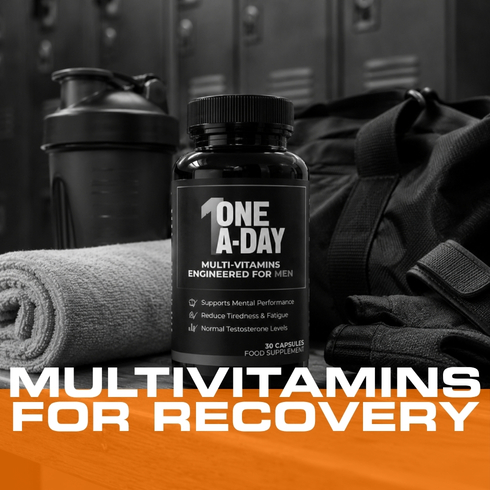
Can Men’s Multivitamins Support Push-Up Recovery? The Science Behind Magnesium, Zinc and B Vitamins
Quick Answer
Push-ups demand more from your body than a single contraction. Your muscles need magnesium to function normally, zinc to maintain testosterone, and B vitamins to fuel repeated sets. A multivitamin supports these three pathways — but only if the doses align with authorised health claims, not inflated promises.
The science breaks down into five separate nutritional demands:
- Magnesium contributes to normal muscle function and the reduction of tiredness and fatigue [1]
- Zinc contributes to the maintenance of normal testosterone levels [2]
- Vitamins B2, B3, B6, and B12 contribute to the reduction of tiredness and fatigue [3]
- Vitamin D contributes to normal muscle function [4]
- Vitamin C contributes to normal collagen formation for tendon adaptation [5]
Supplements are foods, not medicines — they are designed to support normal health and nutrient status alongside a balanced lifestyle, not to diagnose, treat, prevent, or cure any medical condition.
Jump to: The Real Answer | Comparison Table | FAQ
Disclosure: MenTools publishes this article and sells MenTools One-A-Day Multivitamin.
How we evaluate: We assess mineral form quality, dose versus NRV, authorised health claims, and male-specific design. Full sources are listed in the references below.
Quick Comparison
| Nutrient | Form & Dose | Authorised Health Claim | Best for |
|---|---|---|---|
| Magnesium | Chelated bisglycinate, 80mg (21% NRV) | Contributes to normal muscle function | Muscle contraction and electrolyte balance |
| Zinc | Chelated bisglycinate, 11mg (110% NRV) | Contributes to maintenance of normal testosterone levels | Post-exercise hormone maintenance |
| Vitamin B2 (Riboflavin) | 1.4mg (100% NRV) | Contributes to reduction of tiredness and fatigue | Energy-yielding metabolism |
| Vitamin B3 (Niacin) | 16mg (100% NRV) | Contributes to reduction of tiredness and fatigue | Glycolysis and ATP production |
| Vitamin B6 (P-5-P) | 1.4mg (100% NRV) | Contributes to reduction of tiredness and fatigue | Protein metabolism and glycogenolysis |
| Vitamin B12 (Methylcobalamin) | 2.4mcg (96% NRV) | Contributes to reduction of tiredness and fatigue | Red blood cell formation and energy |
| Vitamin D3 | 25mcg (500 IU, 250% NRV) | Contributes to normal muscle function | Muscle fibre development and contraction |
| Vitamin C | 80mg (100% NRV) | Contributes to normal collagen formation | Tendon and ligament adaptation |
The Real Answer
How Do Push-Ups Demand Specific Micronutrients?
Push-ups impose four simultaneous demands on your body: muscle protein synthesis, energy metabolism, electrolyte balance, and connective tissue adaptation. Each demand activates a separate micronutrient pathway [6].
When you perform a single push-up, your body must recruit muscle fibres, produce ATP to fuel contraction, replace minerals lost through sweat, and initiate collagen cross-linking in tendons and ligaments. Miss any of these cofactors and recovery slows [7].
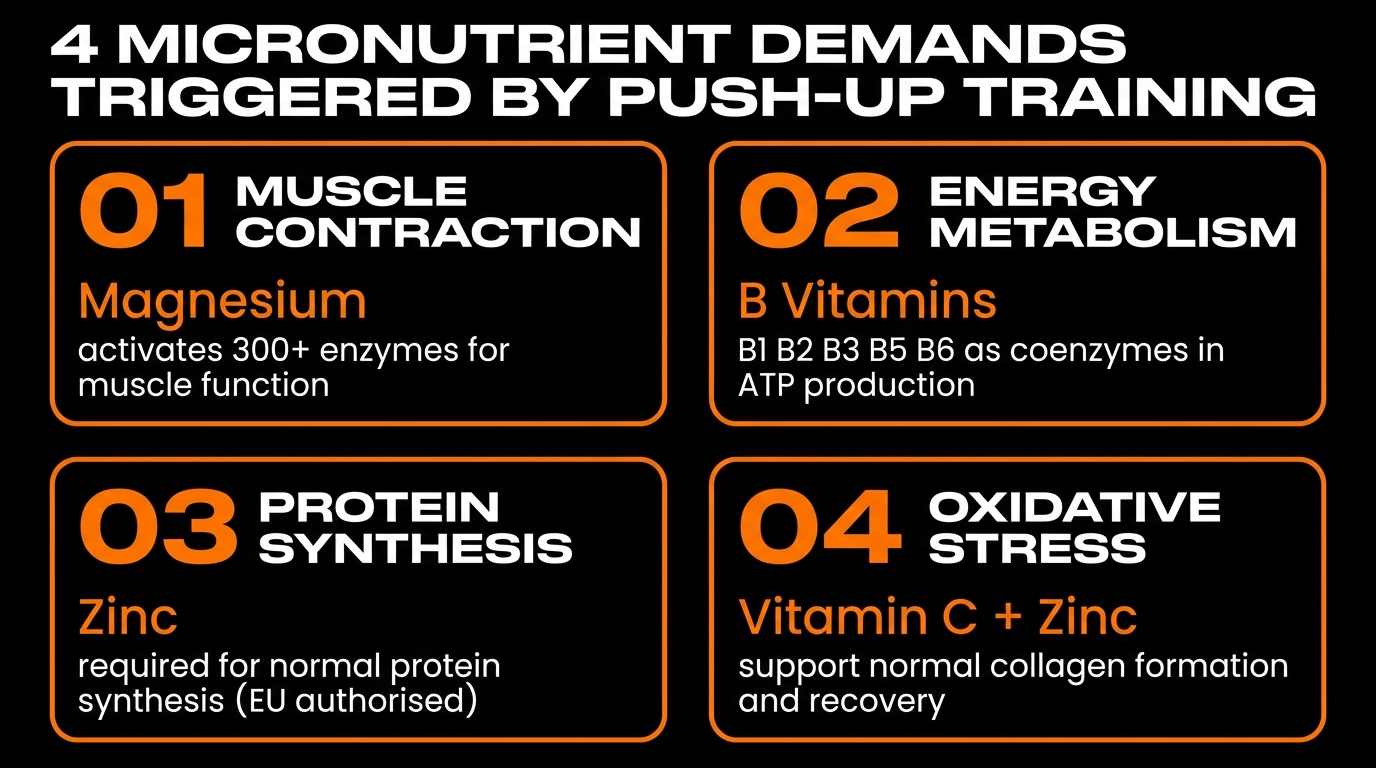
Figure 1: Four micronutrient demands activated during push-up training. Each pathway requires specific minerals and vitamins for normal function.
What Does Magnesium Actually Do During Muscle Contraction?
Magnesium is essential for the release and reuptake of calcium in the sarcoplasmic reticulum. When calcium triggers a muscle contraction, magnesium allows the muscle to relax afterward. Without adequate magnesium, contraction-relaxation cycles become inefficient and muscle soreness increases [8].
The research is consistent: magnesium supplementation (500 mg per day for 7 days) reduced muscle soreness, improved blood glucose recovery, and lowered inflammatory markers (IL-6) after strenuous training [1]. This supports the authorised claim that magnesium contributes to normal muscle function and the reduction of tiredness and fatigue.
Why Does Zinc Matter for Testosterone Maintenance Post-Exercise?
Plasma zinc declines significantly after resistance exercise due to redistribution to muscle tissue and acute inflammatory response. Zinc deficiency impairs the signalling of insulin-like growth factor 1 (IGF-1), which directly stimulates muscle protein synthesis and satellite cell activation [2].
The authorised health claim states: “Zinc contributes to the maintenance of normal testosterone levels.” Studies show that zinc-deficient men exhibit lower circulating testosterone, and supplementation can partially restore levels, supporting lean muscle outcomes [9]. For athletes under high physiological stress, 11–15 mg per day is the standard supplemental range.
How Do B Vitamins Fuel Repeated Sets?
Thiamine, riboflavin, and niacin are coenzymes in glycolysis, the citric acid cycle (Krebs cycle), and oxidative phosphorylation. During push-ups, your body converts carbohydrates into glucose and shuttles energy through these three metabolic pathways to produce ATP [3].
The higher your training frequency, the greater your B vitamin turnover. Physically active individuals require 10–20% more B vitamins than sedentary populations [10]. The authorised claim covers all of this: “Vitamins B2, B3, B6, B12, vitamin C and magnesium contribute to the reduction of tiredness and fatigue.”
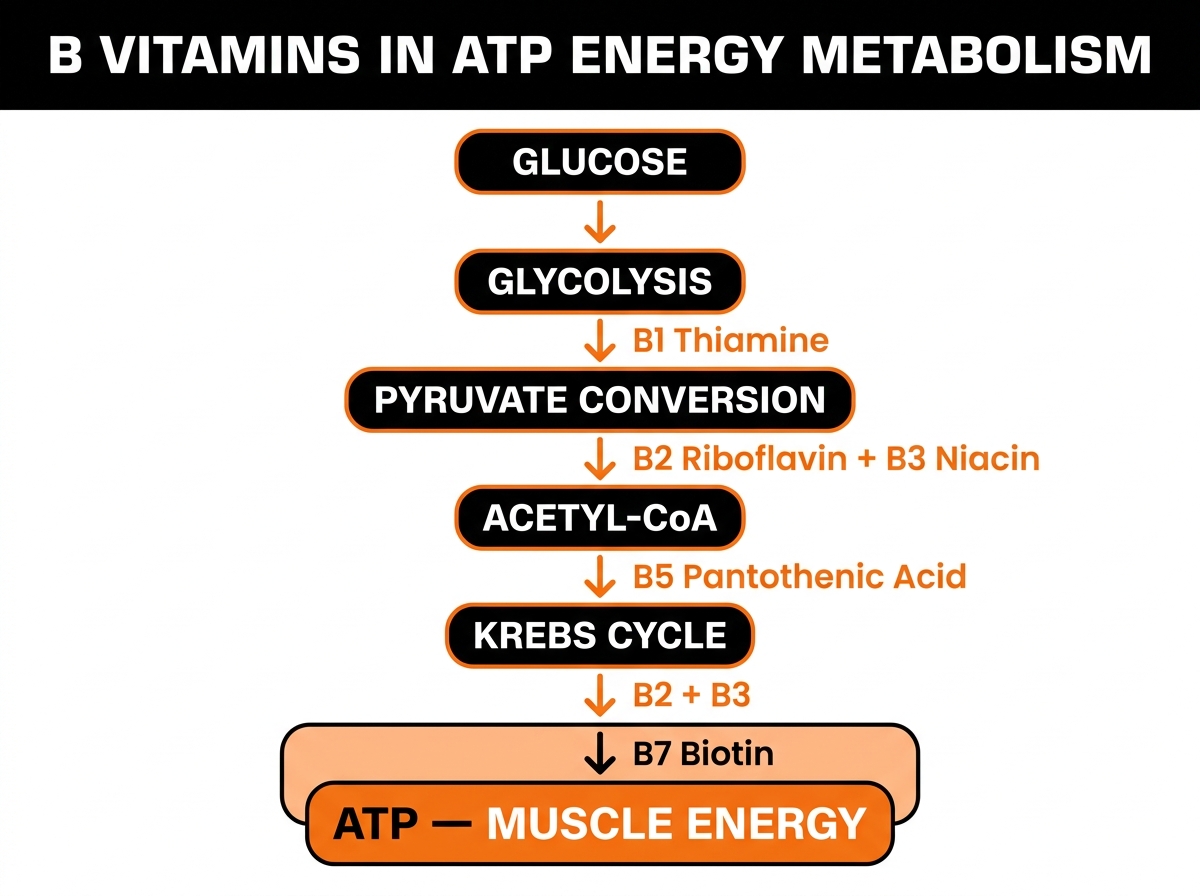
Figure 2: How B vitamins fuel energy production. Each enzyme complex in glycolysis and the Krebs cycle depends on specific B vitamin coenzymes.
What Role Does Vitamin C Play in Tendon Adaptation?
Vitamin C is a cofactor for prolyl and lysyl hydroxylase — enzymes that stabilise the collagen triple-helix structure in tendons and ligaments. Without adequate vitamin C, collagen synthesis is incomplete, and connective tissue fails to adapt to load [5].
Research on musculoskeletal injuries shows that vitamin C supplementation increased type I collagen formation and improved healing outcomes. For push-up training specifically, this means better tendon stiffness and reduced injury risk during repeated sets [11].
Authorised Nutritional Roles: What the Research Says
Multivitamins can only make health claims that have been reviewed and approved by food safety authorities. The MenTools One-A-Day Multivitamin contains 11 authorised claims — no more, no fewer.
Authorised claims you will see in this article:
- Magnesium contributes to normal muscle function.
- Vitamins B2, B3, B6, B12, vitamin C and magnesium contribute to the reduction of tiredness and fatigue.
- Zinc contributes to the maintenance of normal testosterone levels.
- Vitamin D contributes to normal muscle function.
- Vitamin C contributes to normal collagen formation.
Claims you will NOT see:
- Boosts muscle growth — too strong, implies outcome
- Improves push-up performance — implies therapeutic benefit
- Supports testosterone for gains — combines two claims into a new meaning
- Prevents muscle soreness — disease/treatment language
Supplements support normal nutrient status. They do not treat, cure, prevent, or enhance outcomes beyond their authorised claims.
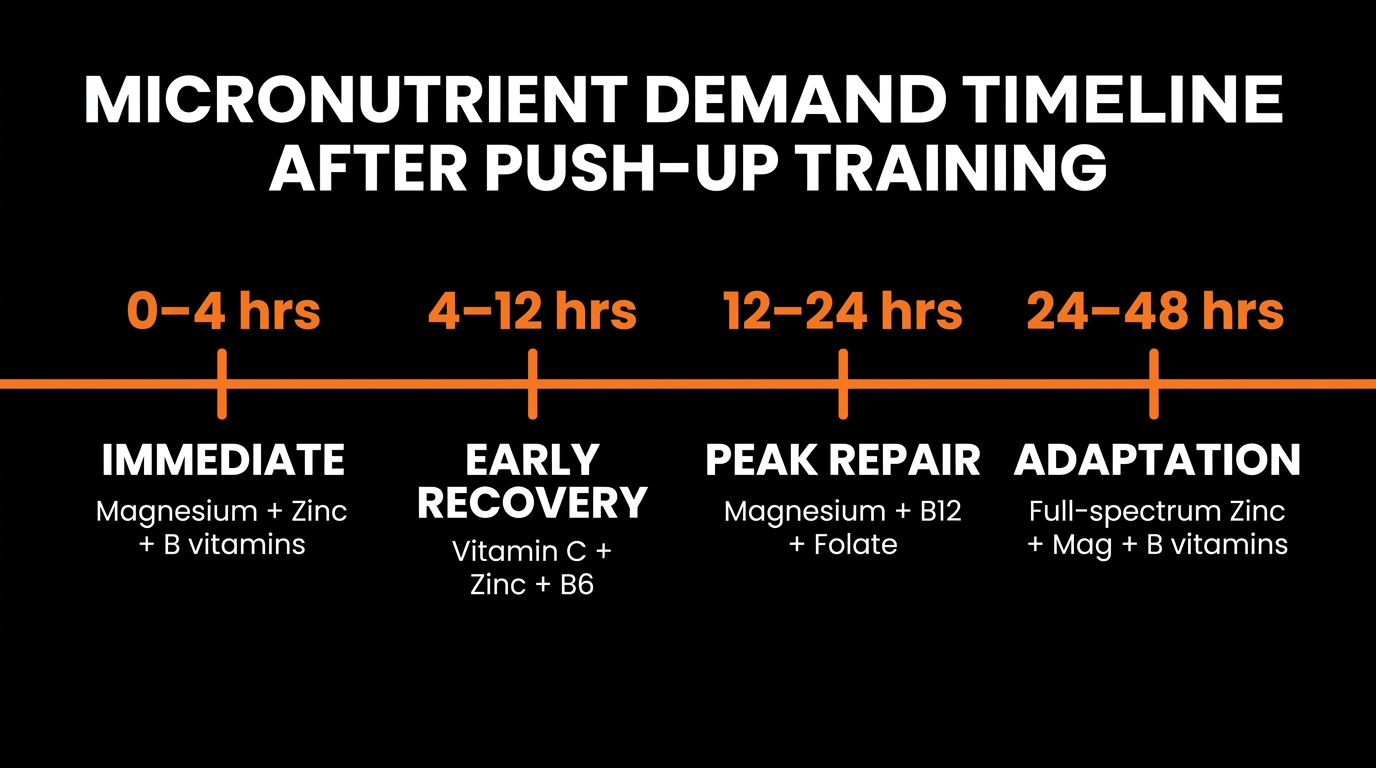
Figure 3: Post-push-up recovery timeline. Micronutrient demands vary across different recovery phases, with each nutrient playing a role at specific times.
FAQ
How do I know if I’m deficient in these minerals?
Deficiency signs include persistent muscle soreness lasting beyond 48 hours, difficulty recovering between training sessions, low energy despite adequate sleep, and weakened grip strength. Blood work (serum magnesium, zinc, and vitamin B12) confirms clinical deficiency. If you suspect deficiency, speak with your doctor before supplementing [12].
Can I take a multivitamin while on TRT?
If you are on TRT or any prescribed medication, speak with your prescribing doctor before adding any supplement. MenTools products are nutritional supplements designed to support general health and normal nutrient status, not medicines and not a replacement for medical treatment.
Which mineral form is actually absorbed better — chelated or oxide?
Chelated minerals (like magnesium bisglycinate and zinc bisglycinate) show superior bioavailability compared to oxide forms in research. Chelation wraps the mineral in amino acids, improving intestinal absorption and reducing gastrointestinal side effects. MenTools One-A-Day uses chelated forms across all key minerals [13].
How long after a push-up session should I take a multivitamin?
Timing is less critical than consistency. Take your multivitamin with a meal once daily (the optimal dose window is broad). What matters more is that magnesium, zinc, and B vitamins are present in your system when your body is repairing muscle tissue, which happens over the 24–48 hours following training.
Do I really need a multivitamin if I eat a balanced diet?
The short answer is: it depends on your diet quality and training volume. Athletes and active individuals lose more magnesium through sweat and require 10–20% more B vitamins than sedentary populations. A multivitamin fills these gaps if whole foods alone don’t meet your needs. Blood tests can confirm whether you have adequate levels [1].
Why do some multivitamins make me feel nauseous?
Nausea commonly results from iron or high-dose zinc taken on an empty stomach. MenTools One-A-Day is iron-free and dosed to avoid GI upset. Always take with food. If nausea persists, reduce dose and consult your doctor.
Is a multivitamin a substitute for protein and sleep?
No. A multivitamin provides micronutrient cofactors — it does not replace protein intake, sleep quality, or resistance training stimulus. These four factors work together: training damages muscle, protein rebuilds it, sleep consolidates adaptation, and micronutrients enable all of it. Miss any one and multivitamins alone cannot compensate.
Final Recommendation
A multivitamin is a reasonable support for men performing regular push-ups or bodyweight resistance training, provided you choose a product with authorised health claims, adequate mineral doses relative to NRV, and chelated mineral forms. It will not build muscle or improve performance on its own — it optimises the nutritional foundation upon which adaptation depends.
If you train consistently and eat a decent diet, a one-a-day multivitamin addresses common micronutrient gaps without risk of overdose.
Options For Men to Take Action
Most men trying to recover from training face fragmentation: they track workouts in one app, buy supplements from another brand, and never connect the two. Recovery depends on closing gaps between your training stimulus, nutrition, and supplement routine.
MenTools One-A-Day Multivitamin is part of a complete training system designed specifically for men. It provides the micronutrient baseline (magnesium for muscle function, zinc for hormone maintenance, B vitamins for energy metabolism) while you handle the training and protein intake. When you integrate supplements into a system rather than buying them piecemeal, consistency becomes automatic.
Here’s what happens when you build a routine: You do push-ups on a schedule, eat adequate protein alongside whole foods, take one capsule with breakfast each day, and let the micronutrient support work in the background. Over 8–12 weeks, you notice muscle recovery improves, soreness resolves faster, and energy levels stabilise.
How you can do this today: Start with MenTools One-A-Day Multivitamin. One capsule per day is all you need — no stacking, no complexity.
- Wins on cost: A month of MenTools One-A-Day costs roughly a quarter of buying magnesium, zinc, and B vitamins separately. Chelated mineral forms are premium, but buying separately costs three times more.
- Wins on time: No need to research which forms absorb best, which doses are safe, or which brands are trustworthy. MenTools One-A-Day is science-backed, compliance-tested, and designed for men. One capsule replaces dozens of decisions.
- Wins on practicality: One capsule with breakfast fits any schedule — gym before work, desk job, travel, long days. There’s no “right time” to take it beyond with food. It works alongside your training system without adding friction.
The result: better recovery, more consistent adaptation, and a multivitamin that actually supports what you’re doing instead of sitting in the cabinet.
Last updated: 2026-04-10 v1.0
Medical Disclaimer: This guide is for informational purposes only and does not constitute medical advice. Always speak with your doctor or another qualified healthcare professional before starting any new supplement or programme if you have medical conditions or take prescription medication.
Supplement Notice: Food supplements should not be used as a substitute for a varied and balanced diet and a healthy lifestyle. Do not exceed the stated recommended daily dose. Keep out of reach of children.
References
- [1] Magnesium supplementation reduces IL-6, muscle soreness and increases post-exercise blood glucose response. Journal of Sports Science & Medicine, PMC. https://pubmed.ncbi.nlm.nih.gov/31624951/
- [2] Zinc status and serum testosterone levels of healthy adults. American Journal of Clinical Nutrition, PubMed. https://pubmed.ncbi.nlm.nih.gov/8875519/
- [3] B vitamins and energy metabolism: role in exercise performance. ScienceDirect. https://www.sciencedirect.com/science/article/abs/pii/S0765159721000411
- [4] Mechanisms of vitamin D on skeletal muscle function: oxidative stress, energy metabolism and anabolic state. European Journal of Applied Physiology, Springer Nature. https://link.springer.com/article/10.1007/s00421-019-04104-x
- [5] Efficacy of Vitamin C Supplementation on Collagen Synthesis and Oxidative Stress After Musculoskeletal Injuries: A Systematic Review. PMC. https://pubmed.ncbi.nlm.nih.gov/30386805/
- [6] Effects of Low-Dose Dairy Protein Plus Micronutrient Supplementation during Resistance Exercise on Muscle Mass and Physical Performance in Older Adults. Journal of Nutrition, Health & Aging, Springer Nature. https://link.springer.com/article/10.1007/s12603-017-0904-5
- [7] Low-load bench press and push-up induce similar muscle hypertrophy and strength gain. PMC. https://pubmed.ncbi.nlm.nih.gov/27091065/
- [8] Role of Magnesium in Skeletal Muscle Health and Neuromuscular Diseases: A Scoping Review. PMC. https://pmc.ncbi.nlm.nih.gov/articles/PMC11508242/
- [9] Use of medicinal doses of zinc as a safe and efficient coadjutant in the treatment of male hypogonadism. Sexual Medicine Reviews, Taylor & Francis Online. https://www.tandfonline.com/doi/full/10.1080/13685538.2019.1573220
- [10] Exploring the Relationship between Micronutrients and Athletic Performance: A Comprehensive Scientific Systematic Review. PMC. https://pubmed.ncbi.nlm.nih.gov/37181357/
- [11] Effect of Vitamin C on Tendinopathy Recovery: A Scoping Review. PMC. https://pmc.ncbi.nlm.nih.gov/articles/PMC9267994/
- [12] Micronutrients and athletic performance: A review. ScienceDirect. https://www.sciencedirect.com/science/article/abs/pii/S0278691521006517
- [13] Nutritional Compounds to Improve Post-Exercise Recovery. PMC. https://pubmed.ncbi.nlm.nih.gov/35982651/