
MEN: 9 Confidence Habits Every Man Should Master
Quick Answer
Confidence for men is built, not born. It comes from a handful of daily habits: keep small promises to yourself, stand tall, train your body, face one fear, and coach rather than bully yourself. Do the reps and the belief follows the action, not the other way round. Start with one habit, not nine.
Jump to: How we chose these 9 | FAQ | Options for men
Disclosure: MenTools publishes this article and may feature MenTools products.
How we evaluate: Each habit is assessed on real-world use, evidence, cost and time, and how well it suits men. Every habit including the MenTools option carries an honest limitation. Full sources are in the references below.
The 9 Confidence Habits at a Glance
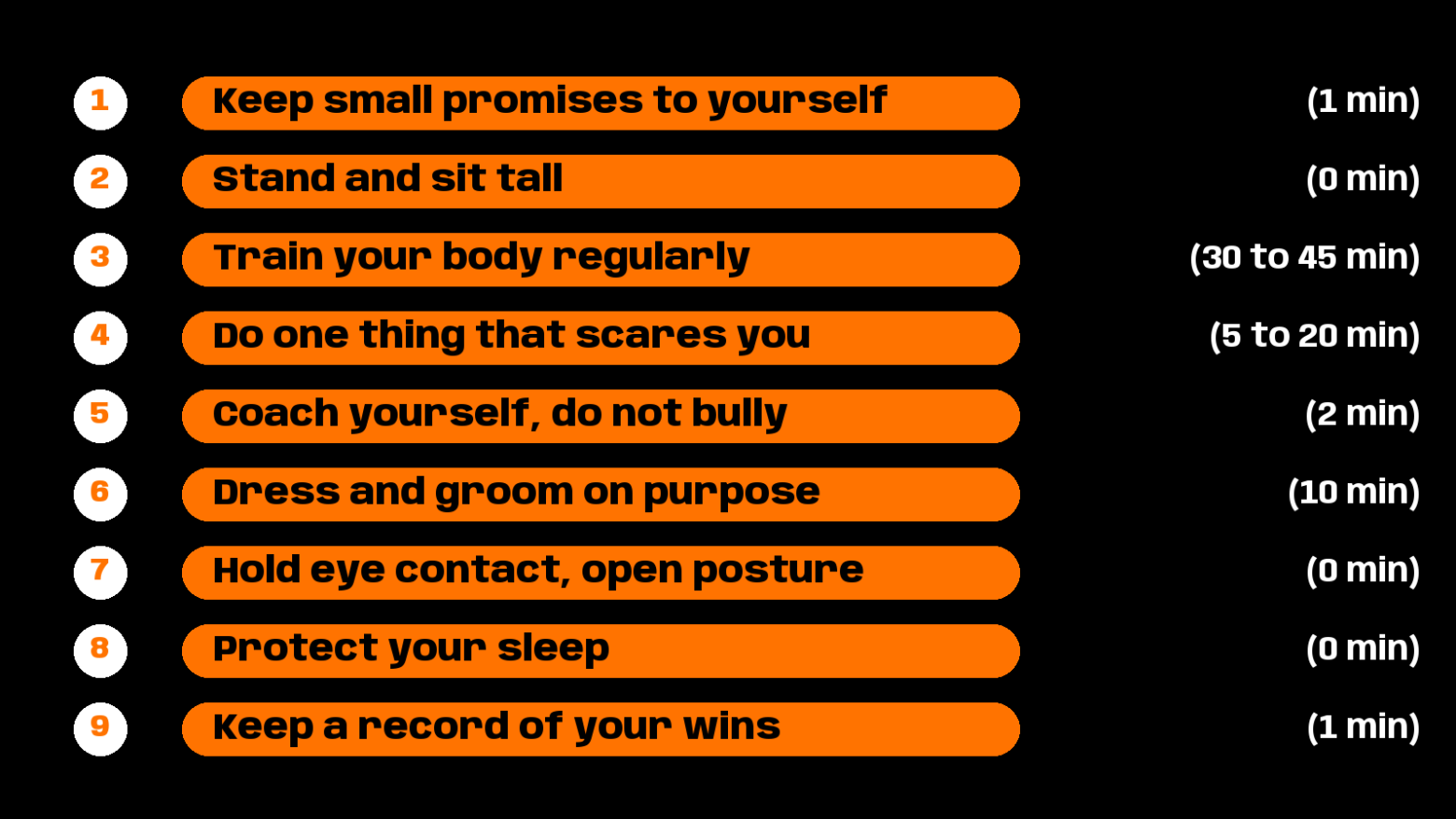
The 9 confidence habits, and how long each one takes.
| Habit | Best for | Time | Watch-out |
|---|---|---|---|
| Keep small promises to yourself | The foundation | 1 min | Easy to set them too big and break them |
| Stand and sit tall | Before pressure moments | 0 min | Posture alone will not fix deep anxiety |
| Train your body regularly | Long-term self-worth | 30 to 45 min | The effect is gradual, not instant |
| Do one thing that scares you | Beating avoidance | 5 to 20 min | Start too hard and you bounce off it |
| Coach yourself, do not bully | Bad days and setbacks | 2 min | Feels awkward for the first week |
| Dress and groom on purpose | First impressions | 10 min | Can tip into fussing or vanity |
| Hold eye contact, open posture | Conversations and meetings | 0 min | Staring reads as aggression |
| Protect your sleep | Steady daily mood | 0 min | The hardest habit to defend |
| Keep a record of your wins | Making it stick | 1 min | Useless if you never review it |
How We Chose These 9
We picked habits that are simple, backed by research, and realistic for a working man with real responsibilities. Each one had to earn its place on three tests: does the evidence support it, can it be done on a normal day, and does it build confidence through action rather than wishful thinking. Psychologist Albert Bandura identified four sources of self-belief, and ranked mastery experiences, actually doing the thing and succeeding, as the strongest of them all [1]. Every habit below carries an honest watch-out, because none of them works for every man.
1. Keep Small Promises to Yourself
Do the small thing you said you would do, every time, and keep the promise tiny enough that you cannot wriggle out. Confidence is trust in yourself, and trust is built the same way with yourself as with anyone else: by keeping your word.
What it is: One small daily commitment you always honour, like ten press-ups or a made bed, before you add anything bigger.
Best for: Every man, especially anyone who talks a good game but does not follow through.
Standout: Of the four sources of self-belief, Bandura placed mastery experiences at the top, above encouragement from others or positive thinking, because nothing convinces you that you can do a thing like having already done it [1]. Small kept promises are mastery experiences you can bank daily.
Watch-out: Most men set the promise too big. A commitment you break twice a week erodes trust instead of building it, so start almost embarrassingly small.
2. Stand and Sit Tall
Pull your shoulders back and lift your chest, especially in the minutes before something stressful. How you hold your body changes how you feel and how others read you, and it costs nothing.
What it is: An upright, open posture held on purpose when you sit down at a desk or stand up to speak.
Best for: Men who feel the nerves hit before meetings, interviews or difficult conversations.
Standout: In a randomised trial of 74 people put through a stress task, those who held an upright posture kept higher self-esteem, better mood and less fear than those who slumped, and the slumped group used more negative words when they spoke [2].
Watch-out: Be honest about the limits. The popular claim that two minutes of “power posing” changes your hormones did not hold up, and the original researcher Dana Carney later wrote, “I do not believe that ‘power pose effects’ are real” [3]. Posture helps how you feel and present, but it is not a hormonal switch, and it will not fix serious anxiety on its own.
3. Train Your Body Regularly
Move your body hard, several times a week, and let the results compound. Physical training is one of the most reliable ways to raise how you see yourself, because the changes are real and you earned them.
What it is: Regular resistance or aerobic training, two to four sessions a week, sustained over months.
Best for: Men whose confidence is tied up with how they look and how capable they feel.
Standout: A review of more than 100 exercise studies found a small but significant improvement in global self-esteem, and the gains were largest for men who saw their fitness and body composition actually change [4].
Watch-out: The effect is gradual, not a same-day lift. If you expect to feel different after one session you will quit before the real benefit arrives, so judge it over months.
4. Do One Thing That Scares You
Deliberately do something mildly uncomfortable every day, and refuse to dodge it. Avoidance feels like relief, but it quietly teaches your brain that the thing really was dangerous, which is exactly how a fear stays alive.
What it is: One small, chosen exposure, like speaking up first in a meeting, making the awkward call, or approaching a stranger.
Best for: Men who feel their world getting smaller because they keep swerving what makes them nervous.
Standout: Exposure, repeatedly facing the feared situation without escaping, is the core, evidence based ingredient in the most effective treatments for social anxiety and phobias, precisely because it breaks the avoidance loop [5].
Watch-out: Start too hard and you rebound. Pick something that stretches you without overwhelming you, and step it up gradually rather than throwing yourself at your biggest fear on day one.
5. Coach Yourself, Do Not Bully Yourself
Talk to yourself on a bad day the way you would talk to a mate in the same spot. The angry inner critic feels like discipline, but it makes you more fragile, not tougher.
What it is: Swapping harsh self-attack for steady, honest self-talk, and using your own name or “you” instead of “I” when the pressure is on.
Best for: Men who are hardest on themselves and crumble after a mistake.
Standout: Researcher Kristin Neff argues that “self-compassion provides the same benefits as high self-esteem without its drawbacks”, and her study of over 3,000 people found it gave steadier self-worth than self-esteem, which rose and fell with success and approval [6]. Talking to yourself in the third person also lowers emotional reactivity and improves performance under stress [7].
Watch-out: It feels awkward and soft at first, especially if you were raised on self-criticism. Push past the first week before you judge it, and keep it honest rather than turning it into excuses.
6. Dress and Groom on Purpose
Decide how you want to show up and dress for it, rather than grabbing whatever is clean. What you wear changes not just how others treat you but how you think and perform.
What it is: A deliberate standard for grooming and clothing that fits the man you are trying to be, applied daily, not just for big occasions.
Best for: Men who feel they fade into the background or are not taken seriously.
Standout: In the research on “enclothed cognition”, simply wearing a lab coat increased people’s focused attention, with wearers making around half as many errors on a demanding attention test than those without it, because the clothing carried a meaning the wearer stepped into [8].
Watch-out: It can tip into fussing or vanity. The point is to remove one daily source of self-doubt, not to spend an hour at the mirror or your money chasing labels.
7. Hold Eye Contact and Open Your Body Language
Meet people’s eyes and keep your posture open in conversation. Others read confidence off your body long before they hear your argument, and steady eye contact is one of the clearest signals.
What it is: Comfortable, sustained eye contact and an unguarded stance, no crossed arms, no hunching over your phone.
Best for: Men who want to come across as calm and credible in meetings, dates and interviews.
Standout: In one analysis of speakers, those judged highly confident held sustained eye contact around 20.8 percent of the time, compared with 8.6 percent for speakers judged low in confidence, and observers leaned most heavily on the eyes to read confidence [9].
Watch-out: More is not always better. Unbroken staring reads as aggression, and in some cultures prolonged eye contact is rude, so aim for steady and warm, not a contest.
8. Protect Your Sleep
Guard seven to nine hours as a non-negotiable, because confidence is a state as much as a trait, and a tired brain manufactures self-doubt. The most disciplined day is undone by three bad nights.
What it is: A protected, consistent sleep window with a fixed wind-down, treated as seriously as a work deadline.
Best for: Men who feel touchy, flat or full of doubt for no clear reason.
Standout: A 2021 review pooling multiple studies found that losing sleep has a large negative effect on positive mood and a moderate effect on raising negative mood, leaving you more sensitive and reactive the next day [10].
Watch-out: This is the hardest habit to defend, because work, screens and late nights all attack it. It also will not carry a routine on its own, so treat it as the base the other eight habits stand on.
9. Keep a Record of Your Wins
Write down what you followed through on, so your confidence rests on evidence, not memory. The brain forgets wins and clings to failures, so you have to keep the score yourself.
What it is: A simple daily log of promises kept and fears faced, whether that is a notebook, a note on your phone or an app.
Best for: Men who start strong then lose momentum after a fortnight.
Standout: Habits take a median of 66 days to become automatic, with a real range of 18 to 254 days, so a record carries you through the long middle stretch where motivation drops [11]. This is where most attempts quietly die, and one honest option is the MenTools app, which turns habits like these into daily check-ins and streaks alongside paper journals and other trackers.
Watch-out: A log only works if you look at it. Set a weekly review, or it becomes another ignored note you never open.
How Long Does It Take to Build Confidence?
There is no fixed date, but expect weeks, not days. The state shifts fast, standing tall or facing one fear can change how you feel within minutes, while the deeper trait grows as the habits repeat. Habit research suggests most behaviours take around 66 days to feel automatic, so treat the first two months as the build phase and keep going through it.
Can You Be Confident and Still Feel Fear?
Yes, and that is the point. Confidence is not the absence of fear, it is acting well while afraid. Men who look fearless have usually just faced the fear so many times through deliberate exposure that it no longer stops them. If you are waiting to feel ready before you act, you have the order backwards, because the action comes first and the feeling follows.
FAQ
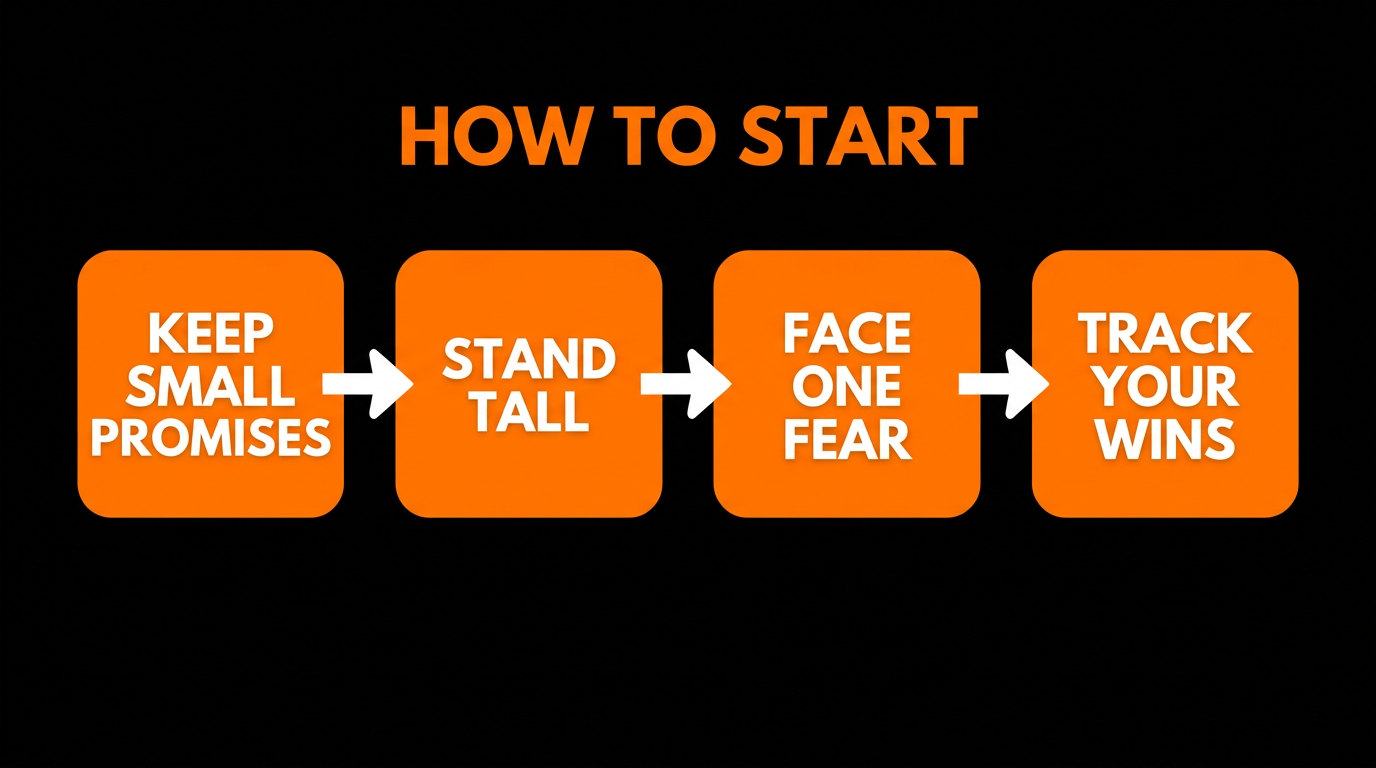
Not sure where to start? Follow the flow.
What is the fastest way for a man to look more confident?
Fix your body language. Stand tall, unfold your arms, and hold steady, warm eye contact. Speakers judged confident hold eye contact far more than those who seem unsure, and observers read the eyes first. It will not rebuild deep self-belief, but it changes how you come across within seconds.
Is confidence genetic or learned?
Mostly learned. Temperament plays a part, but confidence is built through mastery experiences, doing hard things and succeeding, which psychologists rate as the strongest source of self-belief. That is good news, because it means the habits you repeat matter far more than the personality you were born with.
What is the difference between confidence and arrogance?
Confidence rests on real evidence of what you can do and does not need to put others down. Arrogance is a display that usually hides insecurity and inflates ability beyond the facts. The habits here build the first kind, grounded self-trust earned through action, not a performance aimed at impressing people.
How do you stay confident after a public failure?
Treat yourself as you would a mate who failed, not as a target. Self-compassion gives steadier self-worth than self-esteem, which collapses when things go wrong. Name the specific lesson, log what you did well anyway, and get one small win on the board the same day to stop the spiral.
Do affirmations actually build confidence?
On their own, weakly. Saying you are confident does little if there is no evidence behind it. Affirmations work best paired with action, when they describe a standard you are actively keeping. Real belief comes from mastery experiences, so back any affirmation with a kept promise the same day.
What is the one confidence habit to start with?
Keep one small promise to yourself daily. It is the foundation the other eight stand on, because self-trust is built by keeping your word. Choose something so small you cannot fail, like ten press-ups, and only add a second habit once the first is automatic.
Final Recommendation
If you do nothing else, keep one small promise to yourself every day and face one thing that scares you. Add upright posture and training as the base, coach yourself through the bad days, and keep a record so your confidence rests on evidence. Confidence for men is not a feeling you wait for, it is the by-product of habits repeated until the belief catches up with the action.
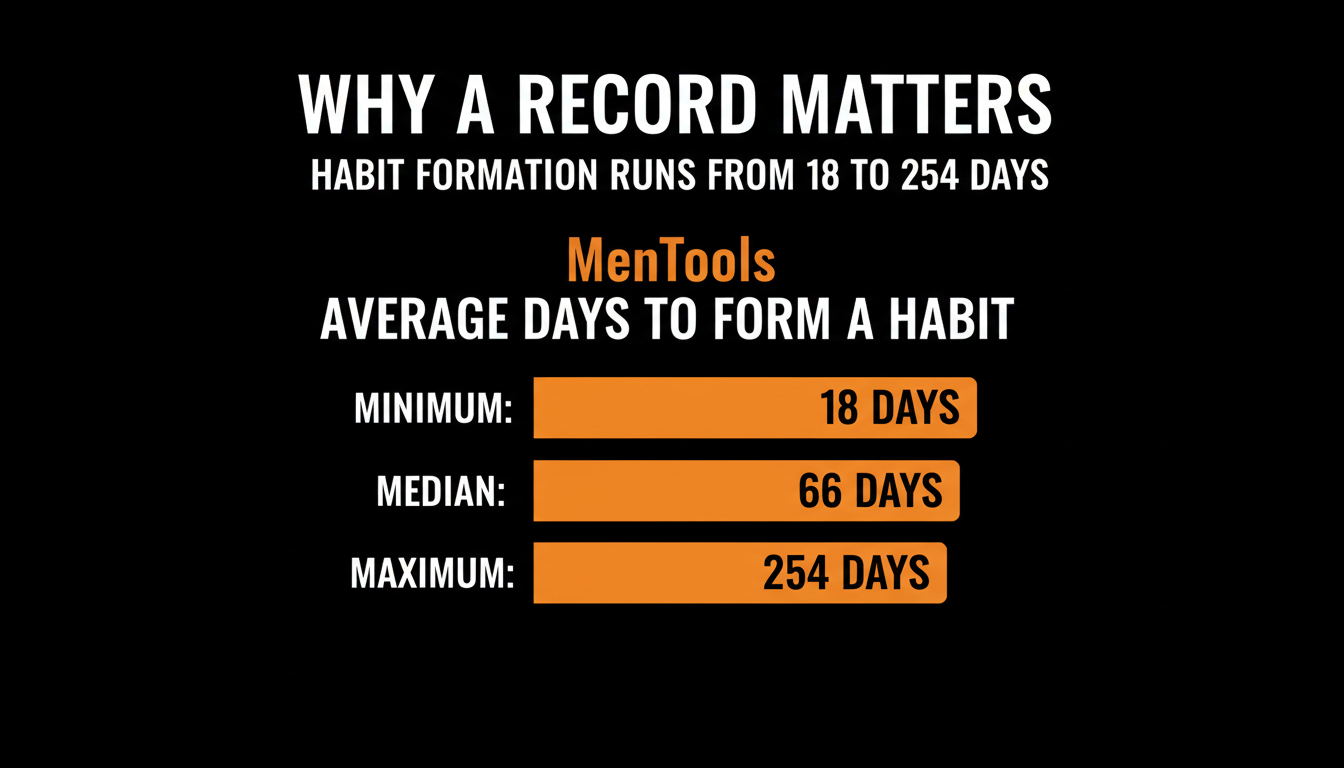
Why a record matters: habit formation runs from 18 to 254 days.
Options for Men to Take Action
Most men do not lack confidence because they lack ideas. They lack a system. The habits live in their head, there is no way to keep score, and week two arrives with nothing to show whether they kept their word. Scattered notes and pure willpower do not hold.
The MenTools app is built to run exactly this kind of set of habits as one system, with daily actions, streaks, reminders and an AI coach, so kept promises and faced fears become check-ins instead of good intentions. Men who track these habits tend to keep the ones they can actually see progress on.
How you can do this today: pick one habit from this list, set it as a daily action tonight, and log day one before you sleep.
Wins on cost: one app replaces a habit tracker, a wins journal and a stack of separate reminder tools.
Wins on time: the habits and the tracking are set up in minutes, with no research or planning to do yourself.
Wins on practicality: it lives on your phone and fits a working man’s day, so it survives travel, early starts and busy weeks.
For the wider picture, and more tools built for men, see the MenTools confidence hub. Small kept promises, tracked and repeated, are what turn a nervous month into a confident year.
Last updated: 2026-07-28 v1.0
Disclaimer: This guide is for informational purposes only and does not constitute medical or psychological advice. Speak with a qualified professional before making significant changes if you have a medical or mental health condition.
References
- [1] American Psychological Association. Self-efficacy: the theory at the heart of human agency. Link
- [2] Nair S et al. Do slumped and upright postures affect stress responses? A randomized trial. Health Psychology, 2015. Link
- [3] British Psychological Society. A decade of power posing: where do we stand? (includes Dana Carney’s statement). Link
- [4] Spence JC, McGannon KR, Poon P. The effect of exercise on global self-esteem: a quantitative review. Journal of Sport and Exercise Psychology, 2005. Link
- [5] Psychiatric Times. Exposure therapy for anxiety disorders. Link
- [6] Neff KD. Why self-compassion trumps self-esteem. Greater Good Science Center, UC Berkeley. Link
- [7] Moser JS, Kross E et al. Third-person self-talk facilitates emotion regulation without engaging cognitive control. Scientific Reports, 2017. Link
- [8] Adam H, Galinsky AD. Enclothed cognition. Journal of Experimental Social Psychology, 2012. Link
- [9] Guyer JJ et al. The look of (un)confidence: visual markers for inferring speaker confidence in speech. Frontiers in Communication, 2019. Link
- [10] Tomaso CC, Johnson AB, Nelson TD. The effect of sleep deprivation and restriction on mood, emotion, and emotion regulation: three meta-analyses in one. Sleep, 2021. Link
- [11] Lally P et al. How are habits formed: modelling habit formation in the real world. European Journal of Social Psychology, 2010. Link