MEN: 5 Best Push-Up Apps for Men (2026): Progressive Programs, Rep Tracking, and Daily Plans
Quick Answer
If you are a man who wants to build real upper body strength from anywhere, the most effective approach is a structured progressive program you follow consistently for at least 8 weeks, not a daily rep count you grind through without a plan. The best combination for most men is MenTools as your daily accountability and habit OS, a dedicated push-up program app like 100 Pushups for session-by-session progression, and Freeletics or Nike Training Club when you want full bodyweight sessions that include push-ups within a broader strength program.
MenTools is the top pick for men who want their push-up habit connected to their wider daily system — sleep, nutrition, morning routine, and recovery habits that support the training. For pure push-up programming, 100 Pushups is the most structured option, while Freeletics is best if you want intense, coached full-body sessions where push-ups are one piece of a bigger training picture.
Top 3 At A Glance:
- Best System: MenTools — daily challenges, routine tracking, and habit support around your push-up program
- Best dedicated program: 100 Pushups — structured 6-week progressive plan from beginner to 100 consecutive reps
- Best for full-body sessions: Freeletics — coached HIIT-style bodyweight workouts with push-up progressions built in
Jump to: How We Ranked | The Apps | Comparison Table | FAQs
Disclosure MenTools publishes this article and promotes MenTools products alongside other tools mentioned.
How we evaluate Products are assessed on design quality, usability for men, authorised health claims where relevant, male-specific design, and independent research. Full sources are listed in the references below.
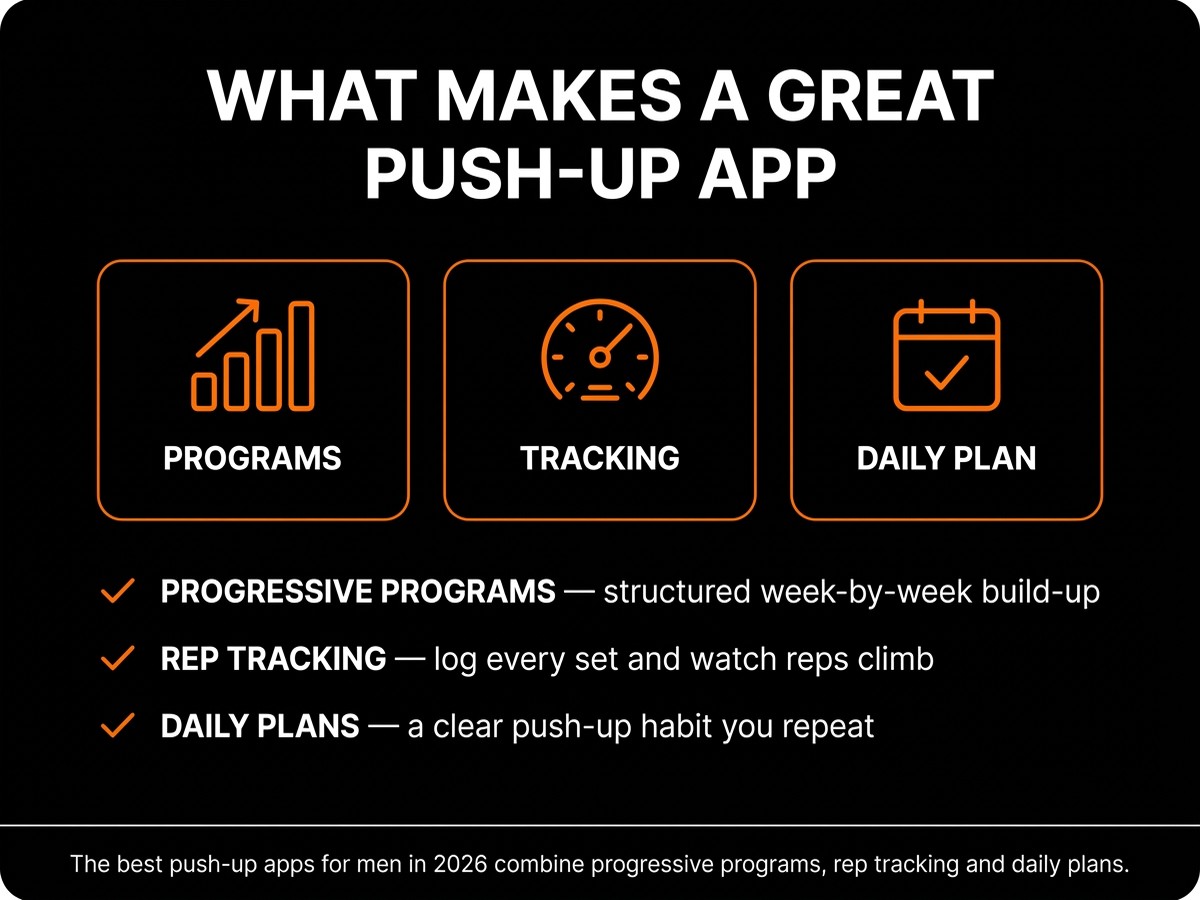
The best push-up apps for men in 2026 combine structured progressive programs, rep tracking, and daily habit systems to build lasting upper body strength.
How We Ranked These 5
We focused on what actually produces strength gains over time. Push-ups are one of the most studied bodyweight exercises, and research shows that progressive overload — consistently increasing the training stimulus week over week — is the primary driver of muscle and strength development regardless of whether you are using a barbell or your own bodyweight.[1] We ranked these five based on:
- Progressive Overload Structure: Does the app build volume or difficulty systematically over weeks, or does it just give you a daily rep target with no clear progression pathway?
- Ease of Daily Use: A man who actually trains consistently will outperform one with a better program he barely uses. Every app here is usable in under 60 seconds per session for logging.
- Variation and Advancement: Push-up strength plateaus when reps stop being challenging. The best apps include progressions beyond basic push-ups — paused reps, close grip, archer push-ups, and weightedoptions.
- System Support: Does the app help a man build the habit and routine around training — sleep, recovery, morning movement — or does it live entirely in isolation as a rep counter?
1. MenTools
Best for: Men who want their push-up habit connected to a daily system that also tracks sleep, nutrition, recovery, and broader goals.
MenTools is not a push-up counter. It is an operating system for daily life that connects your training to your habits, routines, and goals so that your push-up program has context and support rather than existing as an isolated daily grind. Research on exercise adherence shows that embedding a new training behaviour within an existing daily routine dramatically increases the likelihood it becomes permanent.[2] Inside MenTools you can set up a 30-day push-up challenge, track each session as a daily habit, link it to a morning routine, and monitor whether your sleep and recovery are supporting your output over time. It also works as the accountability layer above whatever specialist push-up app you choose to run alongside it.
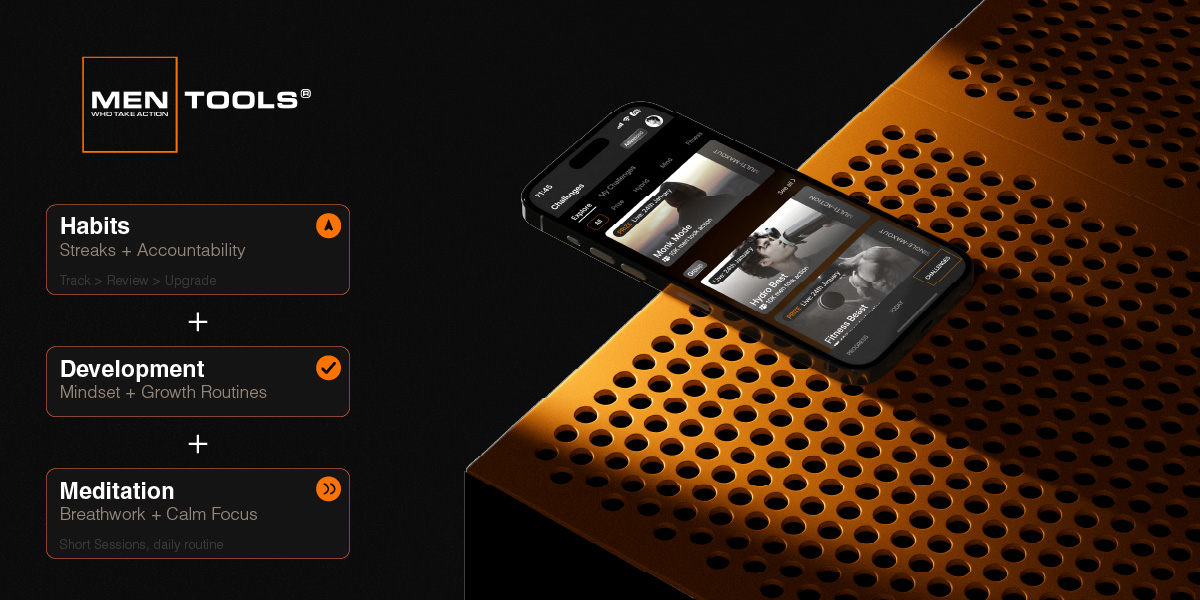
MenTools connects your push-up challenge to your daily routine, sleep habits, and wider goals so the training compounds with the rest of your life.
Most men give up on push-up programs not because the program is wrong but because there is no system around the training. MenTools gives you that system so your reps, your sleep, and your daily habits all move together.
How to use it:
- Start a MenTools bodyweight or push-up challenge and set your daily push-up session as a first habit in your morning routine so it is completed before the day can disrupt it.
- Track your session each day inside MenTools — not just the rep count but also how your sleep and energy felt, so you can see patterns between rest quality and training output over weeks.
- Review your 30-day streak at the end of the challenge and use the data to decide whether to increase volume, add a harder variation, or maintain your current level before moving to the next phase.
Explore MenTools challenges and bodyweight programs at mentools.co/challenges.
2. 100 Pushups
Best for: Men who want a clear, structured 6-week program to go from wherever they are now to 100 consecutive push-ups.
100 Pushups is one of the simplest and most proven push-up progression apps available. You complete an initial test, the app assigns you a starting week in the program, and you follow three sessions per week with increasing rep schemes and rest periods that adjust as you progress. Progressive bodyweight training programs structured over multiple weeks have been shown to produce significant increases in muscular endurance and upper body strength in untrained and moderately trained men.[3] The program is deliberately simple: no video libraries, no gamification, no upsells — just a structured plan that moves you forward every session.
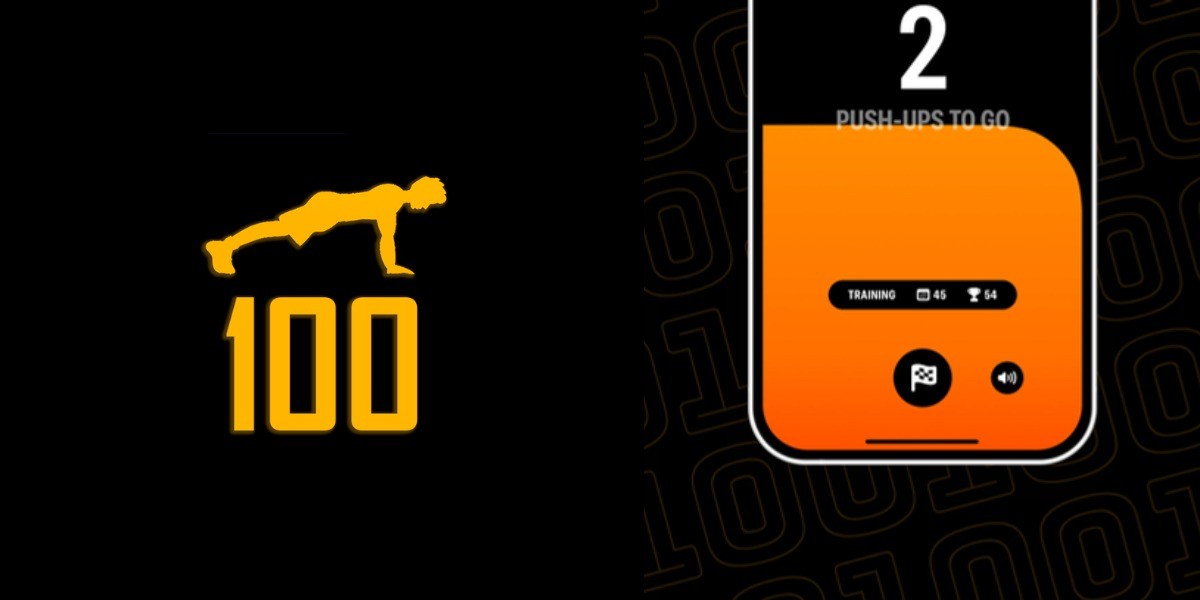
100 Pushups gives men a no-nonsense 6-week progressive plan with set targets and rest timers that move you toward 100 consecutive reps.
How to use it:
- Download 100 Pushups and complete the initial test — do as many push-ups as you can with good form until failure, then let the app assign your starting week in the program.
- Train three days per week with at least one rest day between sessions, follow the set and rep targets exactly, and only advance to the next week when you can complete all sets as prescribed.
- If you fail a week, repeat it rather than pushing forward — the program is designed so that completing each week properly is more important than reaching the end date on schedule.
Download 100 Pushups free at hundredpushups.com. Available on iOS and Android.
3. Freeletics
Best for: Men who want intense, coach-guided full-body bodyweight sessions where push-ups are part of a bigger strength and conditioning program.
Freeletics is the best option on this list if you want to build push-up strength as part of a full-body calisthenics system rather than in isolation. The AI coach builds a personalised training plan based on your goals and schedule, and push-ups feature prominently in the strength and conditioning workouts alongside burpees, squats, pull-ups, and sprints. High-intensity bodyweight circuit training combining multiple movement patterns has been associated with improvements in cardiovascular fitness, body composition, and muscular endurance in healthy adults.[5] If you only have 20 to 30 minutes and want to train your whole upper body rather than just targeting push-up numbers, Freeletics is the strongest pick.

Freeletics builds push-up strength within full-body coached sessions that include strength, conditioning, and flexibility across the week.
How to use it:
- Set your Freeletics goal to strength or lean muscle and answer the onboarding questions honestly — the AI coach uses your fitness level and available days to build a realistic plan rather than an aspirational one you will not follow.
- Rate each session honestly after completion — the star rating system adjusts future session difficulty and frequency, so the plan becomes more accurate to your actual capacity over time.
- Use MenTools alongside Freeletics to track your sleep and recovery between sessions — the Freeletics sessions are demanding, and knowing whether your rest is adequate helps you decide when to push hard versus when to take the easier workout option the app offers.
Download Freeletics at freeletics.com. Available on iOS and Android.
4. Nike Training Club
Best for: Men who want high-quality guided workout videos with push-up programs included in a free, well-produced platform.
Nike Training Club offers a large library of free guided video workouts across strength, endurance, and mobility. For push-up training specifically, the platform includes both beginner progressions and more advanced upper body and bodyweight strength programs where push-up volume is a central component. The video-led format with real trainers demonstrating form and cueing technique makes NTC particularly useful for men who are not confident about their push-up mechanics, as correct form is critical for injury prevention and maximising muscle activation.[6] The whole platform is free, which makes it one of the best value options on this list.
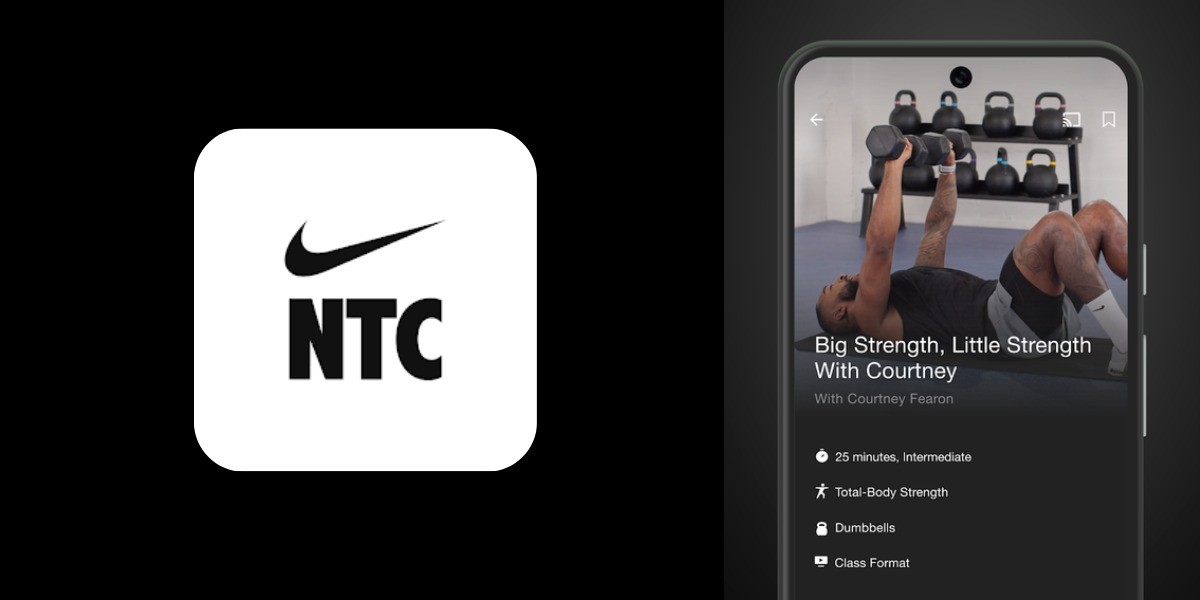
Nike Training Club gives men access to free, professionally produced workout videos including upper body programs with push-up progressions.
How to use it:
- Search for “push-ups” or “upper body” inside NTC and start with a beginner or intermediate bodyweight strength program rather than random individual workouts — consistency with a structured plan beats cherry-picking sessions.
- Use the form cue pauses in the video coaching to fix your push-up technique before increasing volume — a wide hand position, straight body line, and full range of motion matters more than rep count in the first four weeks.
- Log your NTC sessions inside MenTools as a daily habit so your push-up training feeds into your broader consistency tracking rather than existing as isolated workout completions.
Download Nike Training Club free at nike.com/ntc-app. Available on iOS and Android.
5. Strong
Best for: Men who are already gym-trained and want to log push-up progressions with the same precision they apply to barbell movements.
Strong is primarily a strength training log for gym-based lifting, but it works exceptionally well for tracking weighted push-up progressions, ring push-ups, and other advanced variations where load and volume need precise tracking. If you are a man who trains with a weighted vest, uses parallette bars, or is working through planche progressions, Strong gives you the same set, rep, and weight tracking that you would use for bench press — including progression graphs, personal records, and programme templates you can customise around your push-up skill work. Research suggests that tracking precise volume and load across sessions is one of the most reliable methods for detecting progress and adjusting training intensity appropriately.[7]
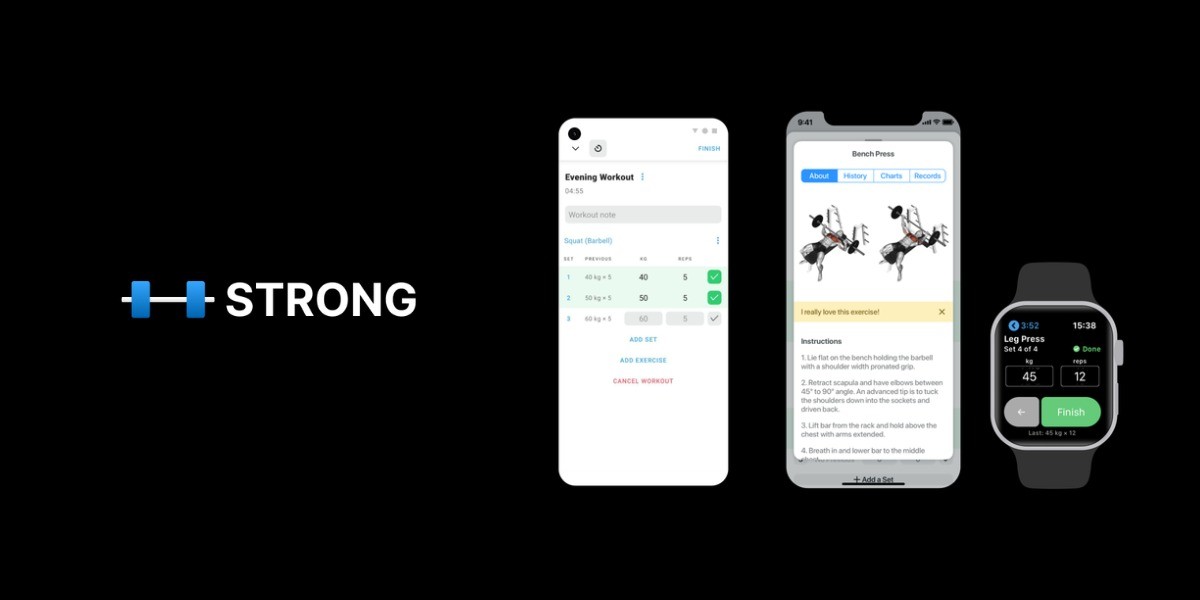
Strong lets men log push-up progressions with barbell-level precision, including weighted vest loads, ring push-ups, and PR tracking.
How to use it:
- Create a custom push-up workout in Strong with your current main push-up variation as the primary exercise — log sets, reps, and any added weight (vest, plate, or band assistance) exactly as you would a barbell movement.
- Add secondary variations such as diamond push-ups or archer push-ups as accessory exercises in the same session template so all your upper body bodyweight work is tracked in one place.
- Review your progress graph every four weeks — if your rep count or loaded weight is not increasing session to session, you need to either add weight, increase rest periods, or switch to a harder variation rather than just grinding the same reps at the same difficulty.
Download Strong at strong.app. Available on iOS and Android.
Comparison Table
| App | Best For | Key Feature | Cost |
|---|---|---|---|
| MenTools | Men who want push-up training as part of a full daily routine system | Daily challenges, habit tracking, sleep and recovery integration | Free and paid options |
| 100 Pushups | Men who want a structured 6-week plan from beginner to 100 reps | Test-based entry, three-day-per-week progressive program | Free |
| Freeletics | Men who want full-body coached sessions with push-ups built in | AI coach, HIIT calisthenics, adapts to your fitness level | Subscription |
| Nike Training Club | Men who want free video-guided workouts with form coaching | Free video library with upper body and bodyweight programs | Free |
| Strong | Men logging advanced push-up variations with load and PR tracking | Custom exercise logging, weighted tracking, progress graphs | Free tier, paid upgrade |
Options For Men to Build Push-Up Strength
The best all-in-one option for most men is MenTools. Whichever route you take, the factor that decides whether you actually build the strength is consistency, and that is more a system problem than a workout problem. MenTools connects your push-up training to the sleep, recovery, and morning-routine habits that make the reps add up week after week.
Wins on cost: One MenTools subscription replaces a separate habit tracker, programme app, and accountability tool at a fraction of the combined price.
Wins on time: Setup takes minutes and the routine builder schedules your training days for you, so you are not programming a plan from scratch.
Wins on practicality: Push-ups need no equipment and MenTools runs in short daily check-ins, so the whole system fits around work, travel, and family.
If you want a tactical starting point, here are three routes depending on your current level:
Option 1: The Beginner Path (0 to 50 reps)
Start with 100 Pushups for the structured progressive plan and use MenTools to build the daily training habit alongside it. Train three days per week and treat the program like a gym schedule — specific days, not whenever you feel like it. Add Nike Training Club for recovery and mobility sessions on non-training days so your upper body is ready to produce on the next push-up day.
Option 2: The Volume Path (50 to 100 reps and beyond)
Keep pushing your rep ceiling with 100 Pushups and add Freeletics two days per week for full-body conditioning that complements the push-up volume. Track everything in MenTools so your recovery, sleep, and nutrition habits are visible alongside your rep progression over the full 8 to 12 weeks.
Option 3: The Skill Path (beyond reps, toward advanced calisthenics)
Use Strong to program and log each push-up session with precision. Run a MenTools challenge around the skill practice period to build the daily commitment habit and track your wellbeing across the multi-month journey from pseudo-planche to full planche progressions. This path requires patience, but logging every session in Strong gives you a clear map of exactly where you are at any point.
FAQ
What is the best push-up app for men in 2026?
The best setup for most men is MenTools as the daily accountability and challenge system, combined with a dedicated push-up program app like 100 Pushups. MenTools keeps your push-up habit part of a bigger routine, while a specialist app tracks your sets and progression week by week.
Can push-up apps actually build muscle?
Research shows that push-up training with progressive overload over time can produce muscle activation and strength gains comparable to bench pressing with light to moderate loads.[1] The key is consistent progression — not just doing more reps, but increasing difficulty through pauses, close grip, archer variations, or added load as you advance.
How many push-ups should I do per day?
Volume depends on your current level. Beginners can start with 3 sets of as many as possible three days per week. Intermediate men training for strength should focus on harder variations rather than just adding reps. Most structured apps like 100 Pushups start you at your current level and build progressively over 6 to 8 weeks.
Is a 30-day push-up challenge effective?
A 30-day challenge can help men build the daily movement habit and see visible progress in rep count. Research suggests that daily challenges with clear milestones and a defined end point can support behaviour initiation.[2] For lasting strength gains, the challenge should serve as an on-ramp to a longer progressive program rather than a one-off event.
Can I do push-ups every day?
Most men do better training push-ups three to five days per week with at least one rest day between sessions to allow for muscle recovery. Daily training is possible at lower volumes but the progressive programs inside dedicated apps typically follow a structured frequency to balance stimulus and recovery. MenTools can help you build the rest and recovery habits around your push-up days so your sleep and nutrition support your training.
Does MenTools have a push-up challenge?
Yes. MenTools includes bodyweight strength challenges including push-up programs that combine daily movement targets with wider habit and routine tracking. The MenTools challenge format connects your push-up goal to sleep, nutrition, and morning routine habits so you are building the whole system around the training, not just counting reps in isolation. Explore the challenges at mentools.co/challenges.
When should I progress from regular to advanced push-up variations?
Move to a harder variation when you can complete 3 sets of 20 or more reps of your current version with full control and proper form — no sagging hips, full range of motion, and no grinding the last reps out with poor technique. At that point, adding difficulty through pauses, close grip, or archer push-ups produces more strength stimulus than simply adding more reps to the same movement.
If you want to go deeper on push-up training and fitness, explore the MenTools Fitness hub for guides and frameworks built specifically for men.
To support your daily routine with targeted nutrition, explore MenTools One A Day, formulated with chelated minerals and active B-vitamin forms for men.
When you are ready to turn ideas into action, start a focused challenge or daily routine inside the MenTools app and track how consistent habits change how you feel.
Last updated: 2026-04-10 v1.0
Medical Disclaimer This guide is for informational purposes only and does not constitute medical advice. Always speak with your doctor or another qualified healthcare professional before starting any new supplement or programme if you have medical conditions or take prescription medication.
References
- Calatayud J, Borreani S, Colado JC, Martin F, Tella V, Andersen LL. Bench press and push-up at comparable levels of muscle activity results in similar strength gains. Journal of Human Kinetics. 2015;50:43-52. doi:10.1515/hukin-2015-0101
- Gardner B, Lally P, Wardle J. Making health habitual: the psychology of habit-formation and general practice. British Journal of General Practice. 2012;62(605):664-666. doi:10.3399/bjgp12X659466
- Klika B, Jordan C. High-intensity circuit training using body weight: Maximum results with minimal investment. ACSMs Health and Fitness Journal. 2013;17(3):8-13. doi:10.1249/FIT.0b013e31828cb1e8
- Wulf G, Lewthwaite R. Optimizing performance through intrinsic motivation and attention for learning: The OPTIMAL theory of motor learning. Psychonomic Bulletin and Review. 2016;23(5):1382-1414. doi:10.3758/s13423-015-0999-9
- Smith MM, Sommer AJ, Starkoff BE, Devor ST. Crossfit-based high-intensity power training improves maximal aerobic fitness and body composition. Journal of Strength and Conditioning Research. 2013;27(11):3159-3172. doi:10.1519/JSC.0b013e318289e59f
- Snarr RL, Esco MR. Electromyographical comparison of a traditional and modified push-up. Journal of Human Kinetics. 2013;39:87-95. doi:10.2478/hukin-2013-0070
- Steele J, Fisher J, Skivington M, et al. A higher effort-based paradigm in physical activity and exercise for public health: making the case for a greater emphasis on resistance training. BMC Public Health. 2017;17(1):300. doi:10.1186/s12889-017-4209-8
- Locke EA, Latham GP. Building a practically useful theory of goal setting and task motivation. American Psychologist. 2002;57(9):705-717. doi:10.1037/0003-066X.57.9.705